
Every surface has a job
Kitchen Cleaning Advice
A useful kitchen routine follows how you prepare food. These guides help you organise greasy areas, fridge shelves, work surfaces and tiles without treating every material as though it needs the same product.

Follow the route food takes through the kitchen
Think about the kitchen as a working space: food comes out of storage, reaches a preparation surface, is cooked and then cleared away. Each stage creates different cleaning needs. A spill in a fridge drawer is not the same task as cooking fat near a hob. Choose a starting point based on what happened there, rather than wiping the whole room with the same cloth. That approach is more practical and helps prevent moving residue from one area to another.
The articles in this category focus on everyday kitchen habits and more thorough cleaning tasks. They are easier to use when you identify the material and purpose of a surface first. Worktops, sealants, grout and appliance finishes can have specific care requirements. Read the relevant instructions before applying a product, and do not mix cleaners. A tidy cupboard and a simple set of suitable tools are often more useful than several strong products with overlapping claims.
Manage grease before it spreads
Cooking fat can settle on nearby splashbacks, cabinet fronts and extractor surfaces as well as the hob. Deal with accessible grease using a method suited to the finish, after allowing hot equipment to cool safely. Avoid flooding edges, hinges or electrical controls. Painted doors and decorative coatings may not tolerate the same treatment as metal. Test where the manufacturer recommends it and use the product as directed rather than increasing the strength in the hope of finishing sooner.
An extractor also has model-specific parts and filters. Some can be washed; others are replaced. Check the manual before soaking a filter or putting it in a dishwasher. Cleaning the visible hood is different from servicing inaccessible ductwork, and a household guide should not encourage you to dismantle unfamiliar fittings. If performance is poor or the equipment makes an unusual noise, consider the operating problem separately. A clean outer surface does not establish that the extraction system is working correctly.

Make fridge cleaning a food-storage task too
Before emptying a fridge for a thorough clean, decide where chilled food will stay safely. Plan the job so that food is not left out while you search for a cloth or wait for a shelf to dry. Follow the appliance guidance on switching off, removing components and handling glass. Sudden temperature changes can damage cold shelves, so do not place them straight into hot water. A little preparation makes the cleaning more orderly and avoids unnecessary risk to both food and fittings.
Wipe spills with a method suitable for food-storage surfaces and the appliance materials. Clean removable drawers and shelves according to their instructions, then check that they are ready before returning them. Avoid forcing a drawer past a fixing or probing drain openings without guidance. Persistent water, unusual odours or temperature problems can have causes beyond a surface spill. If the appliance is not keeping food at a suitable temperature, address that fault rather than treating a clean interior as the solution.
Worktops need material-specific care
A worktop may be laminate, wood, stone, composite or another finish. Identify it before choosing chemicals, abrasives or a soaking method. Seams, cut edges and joints often need particular care because prolonged moisture can cause damage. Do not assume that a household acid is safe simply because it is sold as a natural cleaning ingredient. The right product is the one allowed for the surface and the task, used at the instructed dilution and for the stated purpose.
Food preparation also calls for clean equipment and sensible separation. A cloth used for a dirty task should not immediately wipe an area where ready-to-eat food will be prepared. Follow appropriate cleaning and product instructions for the situation. Remove visible debris before the next stage and keep utensils and cleaning tools organised. There is no benefit in a glossy worktop if the cleaning routine simply transfers residue around the kitchen. Small habits at the time of use make later tasks easier.
Understand tiles, grout and sealant separately
A tiled splashback is made of more than the tile face. The grout joints and flexible sealant can react differently to products and scrubbing. Natural stone needs particular care, while damaged grout or failing sealant may need repair. Explain the material and condition if you arrange a service, and point out loose tiles or open joints. Cleaning can improve deposits on a suitable surface, but it cannot make a failed waterproof joint sound again.
Around sinks and cooking areas, identify whether the mark is grease, water residue or something else before treating it. Avoid combining products in an attempt to tackle every possibility at once. Keep adjacent worktops and metal finishes in mind, since a product intended for one surface may splash onto another. If an area repeatedly becomes damp or discoloured, consider the underlying moisture source. A cleaning routine is more effective when it addresses how the problem develops, rather than repeatedly hiding its symptoms.
Build a routine you can finish
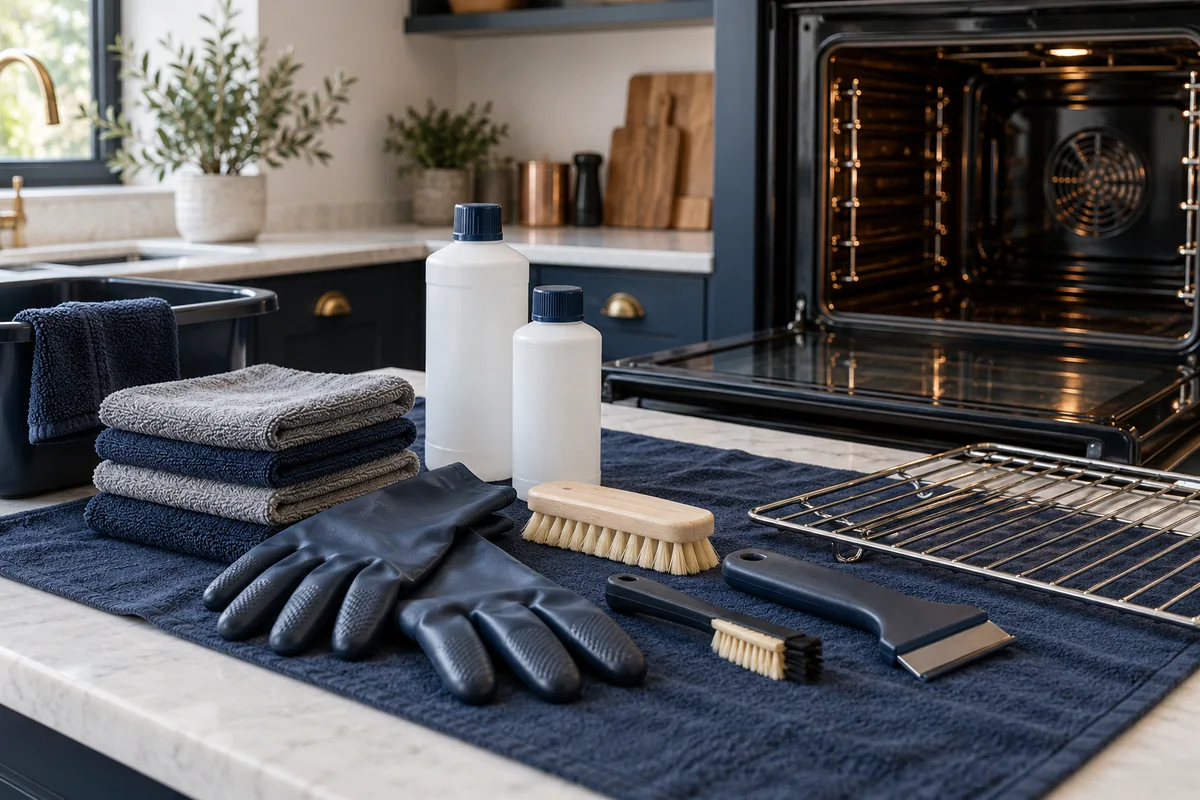
Divide the work into tasks that fit ordinary life. An immediate spill, an end-of-cooking wipe and a planned fridge clean do not need to become the same project. Gather suitable tools, clear the work area and complete one task before opening another. Keep cleaning products away from food and return them to safe storage when finished. A realistic routine can be repeated; an exhausting list that depends on a free afternoon every week is harder to keep.
For larger jobs, use the service pages to prepare a clear enquiry. Describe the oven and accessories, fridge size, tile material or commercial equipment involved. Ask what is included and what needs separate agreement. The guides below can help you understand the work, but they do not replace a proper discussion about your kitchen. Keep the appliance manuals and product labels available, especially where specialist coatings or removable components are involved. Good preparation is part of useful cleaning, not an optional extra.
Match kitchen tasks to the surface and purpose
| Area | Practical starting point | Important distinction |
|---|---|---|
| Worktop | Identify material and remove visible debris | Cleaning method must suit food preparation use |
| Extractor | Read filter and finish instructions | Washable filters differ from replaceable filters |
| Fridge | Plan safe food storage first | Cleaning does not repair temperature faults |
| Tiles and grout | Identify tile and joint material | Cleaning differs from sealing or repair |
| Cabinet fronts | Check finish and avoid excess moisture | Decorative coatings may need gentle care |
From the journal

How to clean oven grease and kitchen tiles without damaging the finish
Grease rarely stays inside the oven. It collects on the door, travels onto nearby tiles and settles into the grout behind the hob. Cleaning these surfaces together makes sense, but treating them all with the same product does not. This guide helps you plan a careful kitchen clean around the materials you actually have, rather than a cupboard full of supposed miracle ingredients.
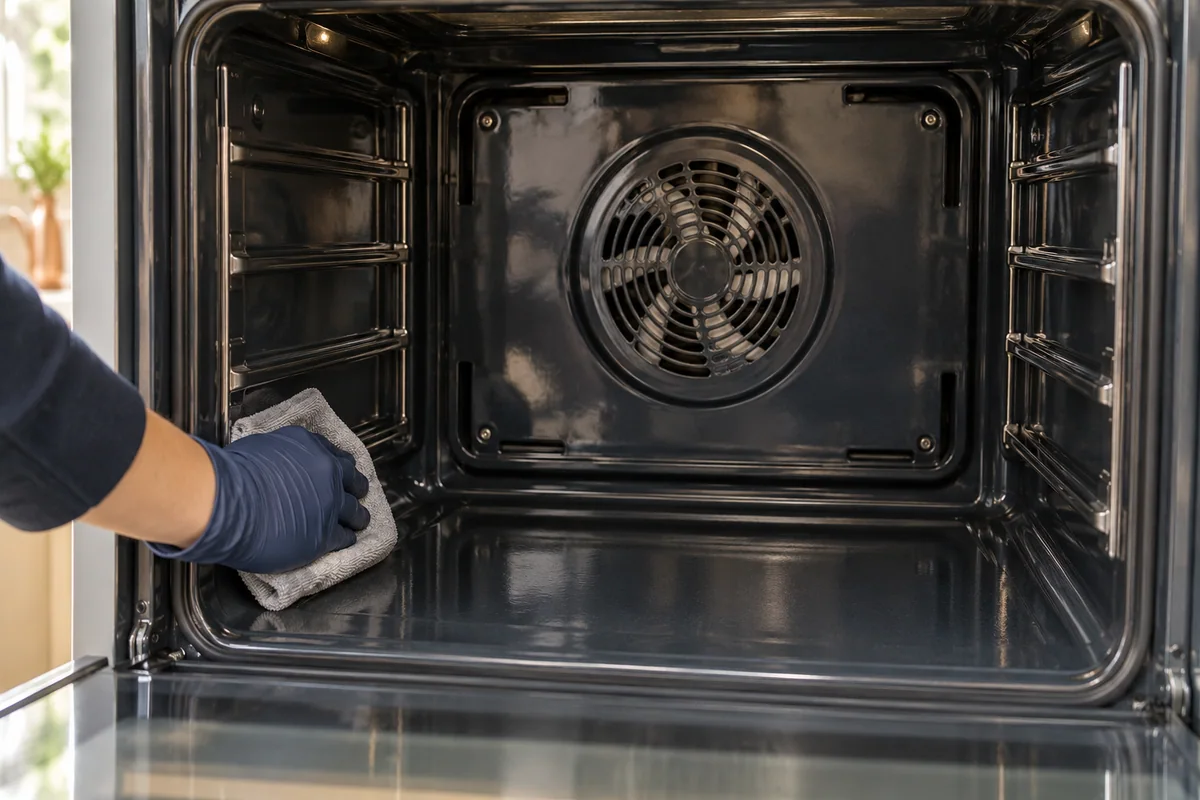
Everyday oven cleaning: a practical guide to spills, racks and glass
The most useful oven cleaning habit is noticing a spill before it becomes part of the appliance. A small sauce splash, a sticky rack and a foggy patch on the door do not all need a full deep clean. They do need the right response. Here is how to separate everyday upkeep from the jobs that deserve more time or professional attention.
Where kitchen grease collects and how to remove it thoughtfully
A kitchen can be freshly washed and still feel sticky around the cooker. The missing areas are often above eye level, underneath a cupboard lip or behind a row of bottles. Following the grease rather than repeatedly polishing the same worktop gives you a better plan. Start with the cooking area, identify the surfaces and work outwards in manageable sections.
How to plan professional oven cleaning around your kitchen
Booking an oven clean should make life simpler. The best preparation is not scrubbing the appliance first; it is knowing what you own, what needs attention and what the quotation covers. This guide explains the decisions that make a professional appointment easier to arrange and easier to assess, whether you have one busy oven or several cooking compartments.
Kitchen hygiene at home: a clear routine from preparation to washing up
A tidy kitchen and a hygienic kitchen are related, but they are not the same task. A polished oven door does not tell you whether a chopping board is ready for salad, and a clear worktop is not useful if the cloth used on it is dirty. A good routine follows what happens to food, hands and equipment throughout a meal.
A low-stress kitchen cleaning routine for busy households
An ambitious kitchen cleaning list often fails at the point where dinner needs cooking. The practical alternative is to define what must be ready now, what can wait for a quieter session and what needs specialist help. You do not need to complete the entire room every evening. You do need a routine that leaves the kitchen usable and does not create more unfinished work.

A year-round kitchen care plan that follows how you actually cook
The calendar can remind you to look at the kitchen, but it cannot tell you how dirty your oven is. A year-round plan works best when it combines occasional reviews with the evidence in front of you. Use seasonal changes as a prompt to check cooking habits, storage and appliance condition, then choose work that will make the room easier to use.
Your questions, answered
Can I use vinegar on all kitchen surfaces?
No. Suitability depends on the material and the manufacturer’s guidance. Acids can damage some stone, metal and specialist finishes. Choose a product approved for the surface rather than treating a familiar household ingredient as universally safe.
What should I clean first after cooking?
Deal safely with the immediate task, such as a food spill or a preparation surface, while keeping clear of hot equipment. Let the hob and oven cool as required before cleaning them. Separate used tools and cloths from food preparation equipment.
Does a clean-looking fridge mean it is working properly?
No. Appearance does not establish safe temperature control. Follow the appliance guidance and monitor how it is operating. If food is not being kept suitably chilled, investigate the fault rather than relying on a surface clean.
Can tile cleaning fix gaps in grout?
Cleaning removes suitable deposits; it does not replace missing grout or repair loose tiles. Point out gaps, cracks and failing sealant before any work. Those areas may need repair to address the underlying condition.
How do I avoid making cleaning feel endless?
Use small tasks linked to how the kitchen is used: clear a spill, reset a preparation area and plan larger jobs separately. Keep the right tools nearby and finish one surface properly before starting several others. A workable routine should fit your cooking habits.
Talk it through with Savvy
Tell us what needs attention.
Have your postcode, appliance or surface details and preferred day ready. We can discuss the work and quote before you book.