
Bring the whole surface back into focus
Tile & Grout Cleaning London
When grout looks darker than the tiles around it, another quick mop rarely feels like enough. Grease, tracked-in dirt and residue collect along joints while the tile face still looks reasonably clean. Savvy offers tile and grout cleaning in London, with the method chosen for your surface and its condition. Tell us about the room, the material and the marks you want addressed so work begins with a sensible assessment.

Identify the surface before choosing the method
The word tile covers materials with different care needs. Ceramic and porcelain are not the same as limestone, marble or other natural stone. A textured floor behaves differently from a glossy splashback. If you have the tile name or installer details, share them when requesting a quote. Photographs of the overall area and close views of joints help explain the problem.
Tell us whether the surface has been sealed, polished or treated before. Mention a product that caused dull patches, discolouration or unusual residue. The aim is to remove suitable soil without choosing a stronger treatment simply because a mark is stubborn. Where the material is uncertain, further assessment may be needed. A cleaner should not promise every method is safe on every tile. Start with the material, grout condition and deposit type.
Separate surface dirt from damage
Some dark grout contains accumulated dirt; other joints have permanent discolouration or failing material. Tiles may have scratches, worn glaze, etched areas or old stains that cannot be washed away. These distinctions matter because aggressive scrubbing can worsen damage without producing the result you want. Clear photographs and a conversation about the history of the marks make expectations more realistic.
Look for cracked or missing grout, loose tiles and deteriorated silicone around wet areas. Cleaning is not regrouting, tile repair or replacement of failed sealant. If water is reaching somewhere it should not, the cause needs attention rather than cosmetic cleaning alone. Tell us if the same patch darkens quickly after washing or moisture keeps returning. A surface can look cleaner and still need a separate repair, so the scope should distinguish those jobs.
Kitchen grease and bathroom residue differ
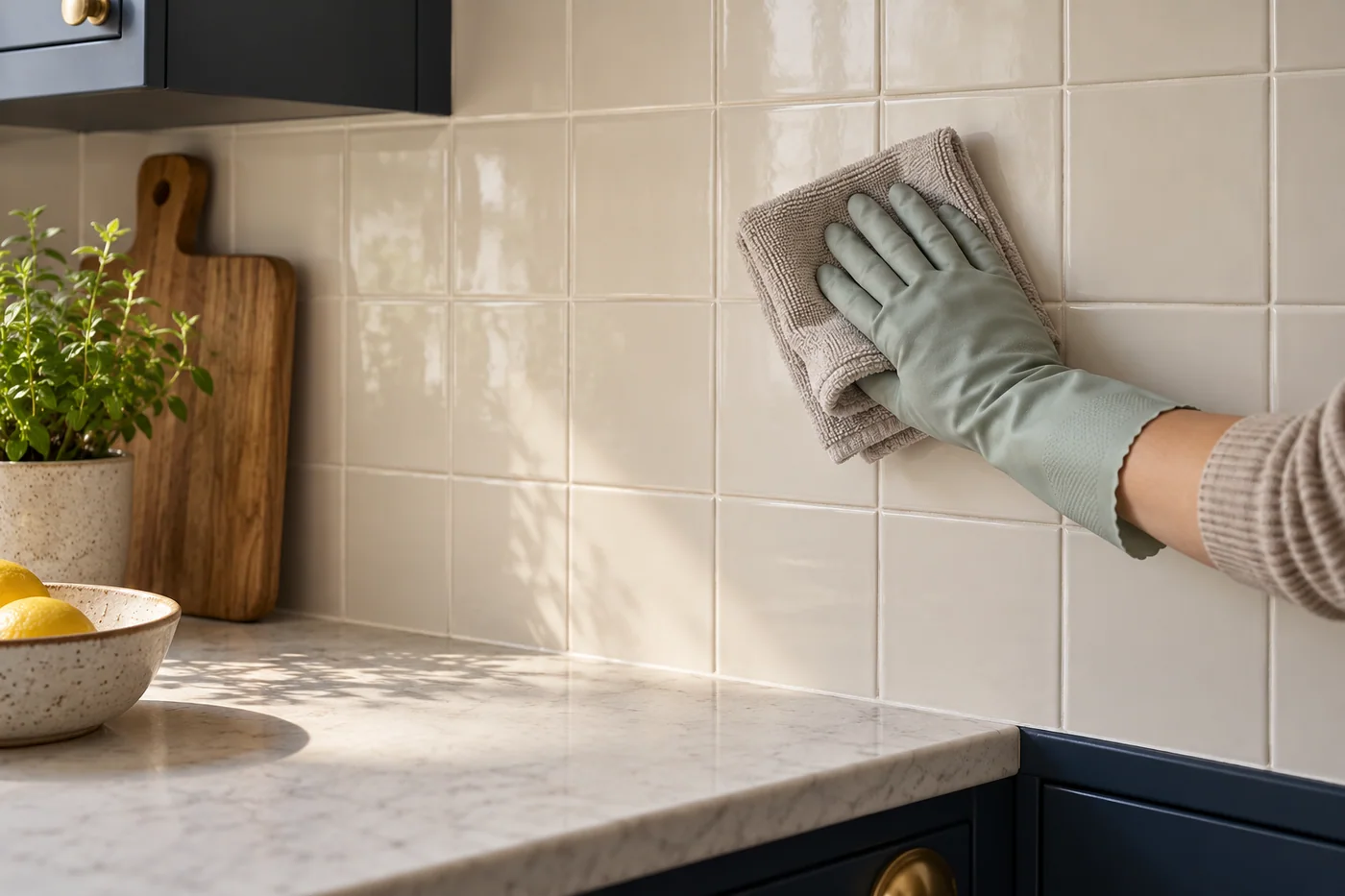
On a kitchen floor, dirt gathers around the cooker, along cupboard edges and between preparation and washing-up areas. A splashback may have fine grease deposits rather than the soil found underfoot. Describe where marks are concentrated and whether the tile is textured. Room size alone does not show how much targeted work is needed.
In a bathroom, soap residue and mineral deposits present different problems, while recurring darkening may be associated with moisture. Visible mould or persistent damp needs assessment; a cleaning visit should not be offered as a cure for a leak or ventilation defect. Explain whether the area is a shower wall, bathroom floor or another surface. This keeps advice relevant and avoids treating every white mark or dark joint as if it has the same cause.
What a planned clean involves
The work starts with the agreed area and assessment of tile and joints. Suitable treatment can target soil, with attention to grout lines and textured sections that hold residue. Products, agitation and rinsing need to suit the surface. A method that works on a robust floor is not automatically appropriate on polished stone or weak grout.
Discuss access to edges and corners. Furniture, rugs and freestanding items may prevent the whole floor being reached. Decide what will be moved and who will move it, especially with heavy or fragile pieces. Understand the rinsing and finishing work as well as initial cleaning. Ask when the surface can be used again, considering any additional treatment. Until it is ready, plan a route keeping people and pets out of the working space.
Grout sealing is an additional decision
Some grout and surfaces may benefit from an appropriate sealer, but sealing should be a defined additional treatment rather than an automatic finish. Material, existing treatment and product instructions matter. A sealer does not repair a missing joint or make a leaking installation sound. It does not remove the need for routine cleaning.
Ask whether sealing suits your area and what preparation, drying or curing conditions it needs. Describe an old sealer if you know the product or application date. Do not book a floor that must be walked on immediately without discussing the implications. A clear quote separates cleaning from optional sealing so you understand the work and time. Claims that every floor needs sealing on one fixed annual schedule are less useful than advice about your material.
Keep residue from building up again
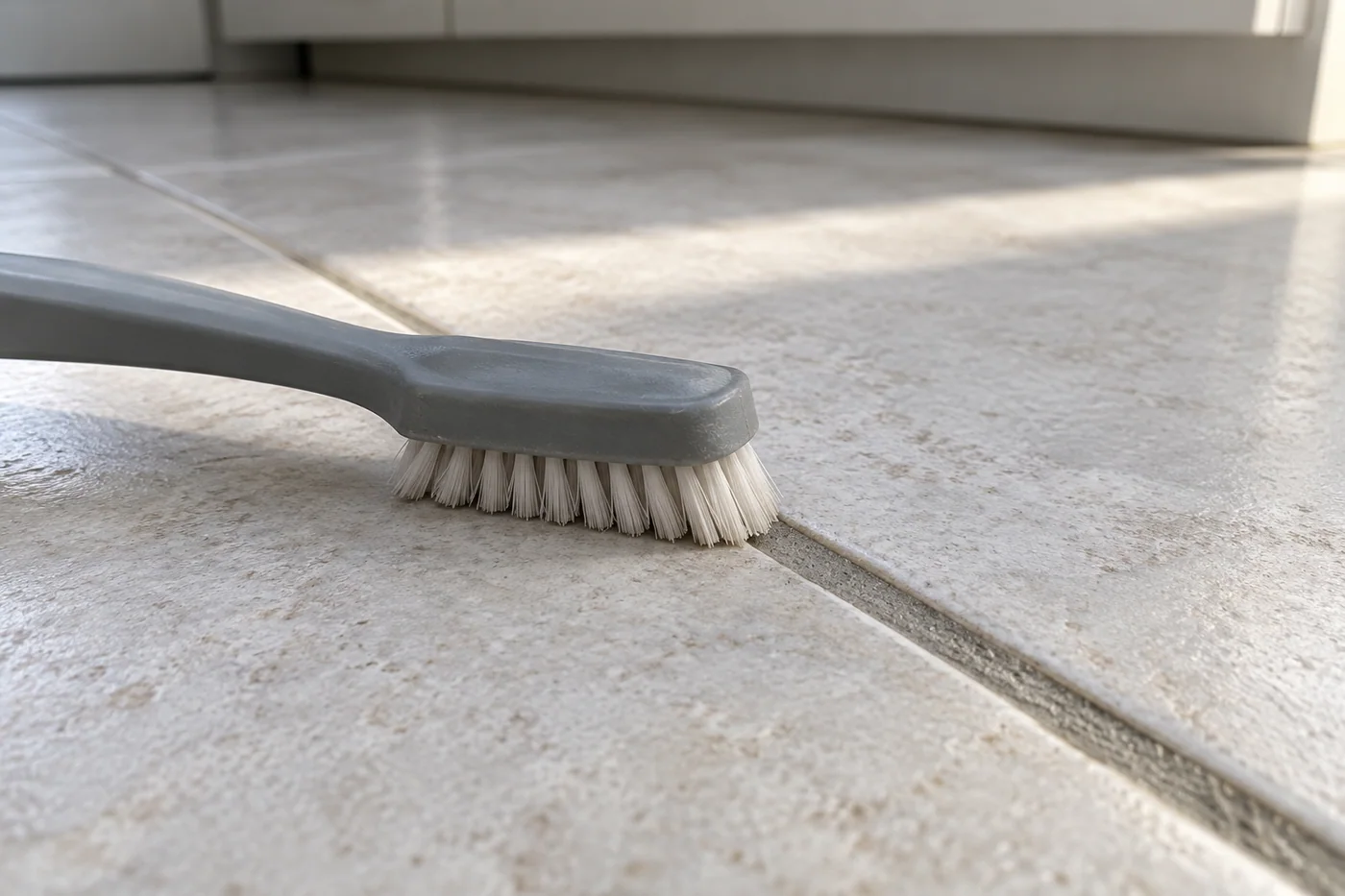
Routine care should suit tile and grout, with products used at their recommended dilution. More product does not necessarily mean a cleaner floor; residue changes the appearance and feel. Deal with spills promptly, rinse where required and keep cleaning tools in good condition. For specialist stone or sealed surfaces, follow appropriate care guidance rather than switch products randomly.
In wet areas, ventilation and attention to recurring moisture are part of looking after the room. If joints crack or sealant pulls away, arrange repair. After a professional clean, review the area in sensible light and ask which marks remain because of staining, wear or damage. This creates a useful baseline for future care. The time for another clean depends on traffic and condition, whether it is a family kitchen, rental bathroom or commercial floor.
Tile and grout assessment: what different conditions may mean
| Area or situation | Useful details | Scope to agree |
|---|---|---|
| Greasy kitchen joints | Location, texture and last treatment | Cleaning deposits from intact grout |
| Dull polished tiles | Material and previous products | Cleaning versus etching or restoration |
| Cracked or missing grout | Photographs and loose tiles | Repair or regrouting rather than cleaning |
| Recurring dark wet-area patches | Moisture history and location | Cleaning versus damp or leaks |
| Request for sealing | Material and existing treatment | Suitable optional treatment and drying requirements |
Your questions, answered
Can you clean natural stone as well as ceramic tiles?
Identify the stone if possible and share care or installation details. Natural stone needs material-specific assessment, particularly if polished or sealed. Agree suitability before choosing a method rather than treat it as a ceramic floor. If the stone is unknown, say so instead of guessing; a wrong identification can lead to unsuitable advice about products or finish.
Will the grout return to its original colour?
That depends on removable soil, permanent staining or deterioration. Cleaning can improve suitable deposits but cannot guarantee the original colour of old grout. Photographs and assessment help set expectations. Grout originally mixed or installed unevenly may also show differences after cleaning; a uniformly bright result should not be promised without considering the existing installation.
Is grout repair included?
Repair should not be assumed. Cracked, loose or missing grout needs identifying separately, along with damaged tiles or silicone. Cleaning and repair are different jobs; explain both concerns so the right scope can be discussed. If grout is failing, it may be sensible to address that condition before deciding on an intensive clean or optional sealing.
Can you seal the grout after cleaning?
Ask when requesting the quote. Suitability depends on material, condition and existing treatment. Where sealing is agreed, it has preparation and drying requirements. It is not automatic. Explain how soon you need the area back in use so the timing can be discussed before you arrange furniture, access and the rest of your day around the work.
Do I need to move all the furniture?
Agree which areas need access and what can safely move. Small freestanding items may be cleared beforehand; heavy or fragile furniture needs a specific plan. Do not assume a quote includes moving fitted units or large appliances. A floor plan or wide photograph can help identify places that would otherwise remain inaccessible beneath furniture.
Can cleaning stop bathroom mould from returning?
A surface clean cannot promise to fix persistent moisture. Repeated dark patches, leaks or failing joints need assessment alongside cleaning. Tell us where it occurs and how quickly it returns so the appointment is not based on a cosmetic promise. Where the underlying condition remains, a visually improved surface may darken again despite the cleaning work.
Talk it through with Savvy
Tell us what needs attention.
Have your postcode, appliance or surface details and preferred day ready. We can discuss the work and quote before you book.