
Indoor & outdoor cooking
Caring for your BBQ and oven without treating them as the same appliance
A greasy BBQ grate and a sticky oven shelf may look similar, but the appliances around them are very different. Outdoor cookers face weather and storage, while an oven contains glass, seals and specialised liners. Looking after both is easier when you organise the work together but choose the method separately. Here is a practical way to do that without a collection of risky shortcuts.
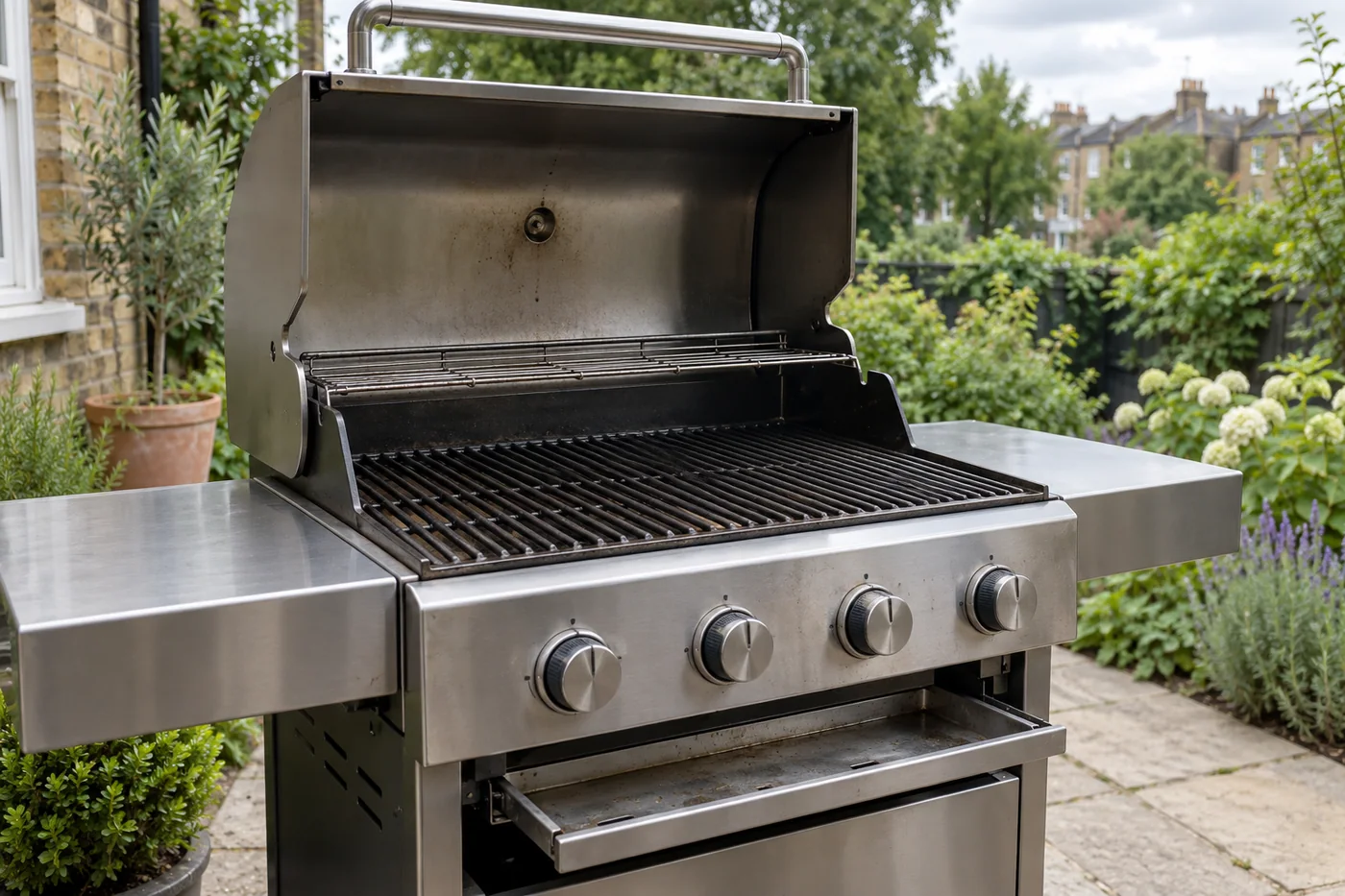
Make two appliance lists before you start
For the oven, record the model, cavities, racks, trays and any special cleaning function. For the BBQ, identify whether it is gas, charcoal or another type, then list its cooking grates, plates, grease collection parts and removable accessories. Find the manuals for both. Their instructions decide what can be removed, washed, soaked or treated with a particular product.
Do not assume a method is suitable for both simply because each appliance gets hot during cooking. Painted finishes, porcelain-coated grates, cast iron and oven enamel have different requirements. Keep the lists separate even if you are planning to clean on the same day. That makes it easier to prepare the right equipment and to recognise a component that should stay untouched rather than be added to a general soak.
Choose a workable day and a protected space
Both appliances must be in the condition required by their manuals before cleaning starts, including cooling and any isolation. Outdoor work also depends on weather and safe access. Choose a sheltered, appropriate area where runoff will not damage the surroundings. Keep products and dirty components away from food preparation areas, children and pets, and use the protective equipment stated on the labels.
Allow enough drying and refitting time instead of planning to cook halfway through the job. If a part turns out to need a different treatment, set it aside safely rather than improvising. Indoors, protect the area used for oven racks and trays. Outdoors, make sure there is somewhere stable to place removed parts. Balancing a heavy grate on a narrow garden wall makes a simple clean unnecessarily awkward.
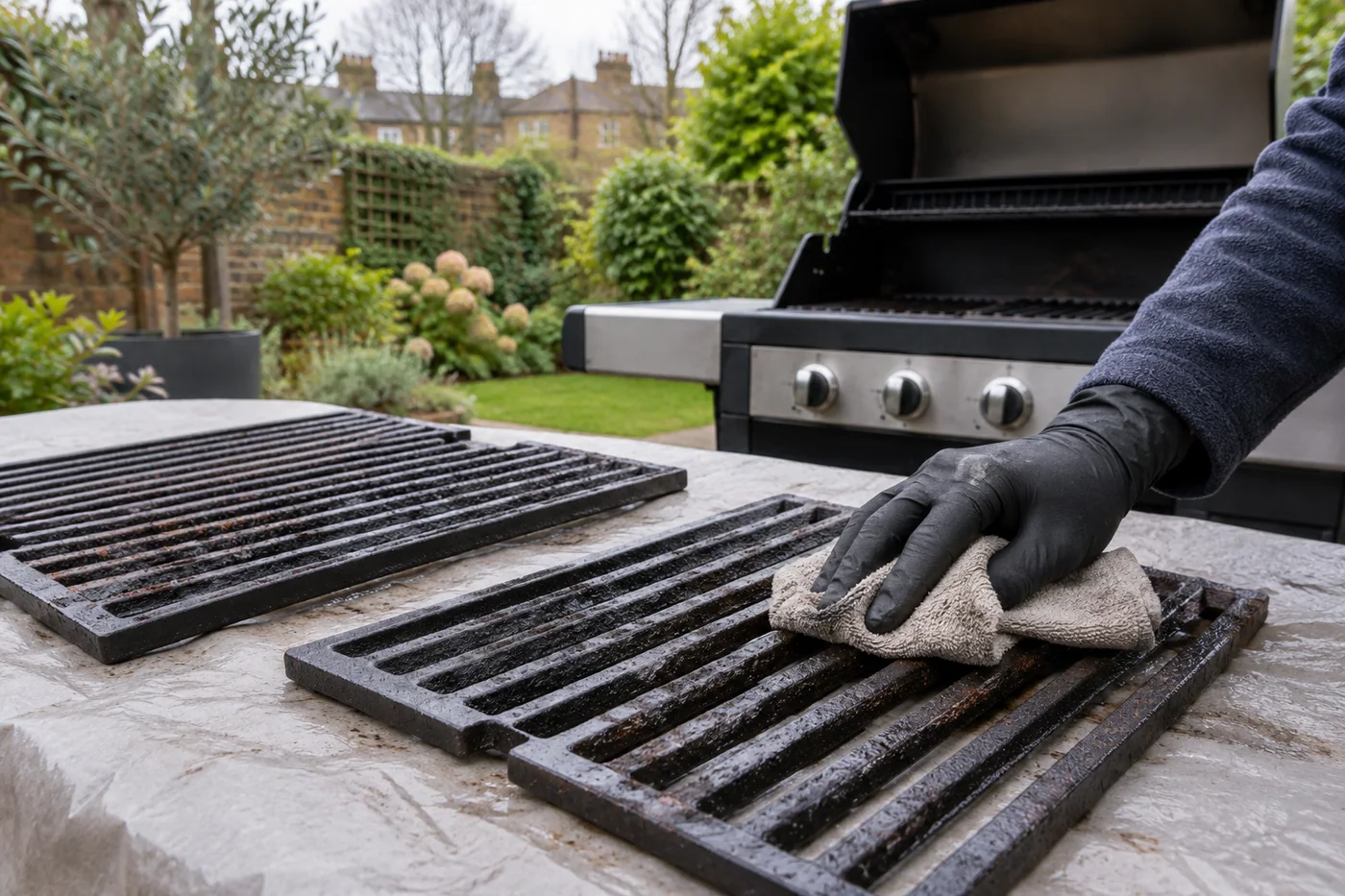
Remove loose deposits before applying product
Follow the BBQ instructions for handling cooled ash, debris and grease collection parts. Never assume ash is cold because the last meal was yesterday; use the maker’s directions and appropriate disposal arrangements. Inside the oven, remove accessible loose food gently without dragging hard particles across the surface. Getting rid of the loose material makes the remaining soil easier to assess.
Keep the tools for each task separate and in good condition. A brush with loose or damaged parts should not be used on a cooking surface. Do not attack a coated grate or glass pane simply because a hard scraper is available. The useful starting point is the least aggressive method approved for that component. Once the loose debris is removed, you may find that a smaller targeted treatment is enough.
Match treatment to the rack or grate
Check the material and care instructions before soaking either oven accessories or BBQ grates. A chrome oven rack, coated grill grate and cast-iron cooking plate can require different handling. Some accessories cannot go into a dishwasher, and some should not be left soaking. Use the correct product and contact time, then remove it as directed.
Take particular care with runners, bearings, plated edges and any surface treatment that needs maintenance. Do not apply a seasoning method to a component that is not intended for it. After cleaning, examine the surface while dry so you can distinguish remaining soil from corrosion, chips or wear. A damaged coating is not a cleaning challenge to solve by scraping until the underlying metal is exposed.
Keep water and cleaner out of unsuitable areas
The inside of a gas BBQ includes parts that are not treated like the grate above them. Burners, ignition components and connections require the exact maintenance instructions for the model. Do not flood them or dismantle a gas system as part of an ordinary clean. If a component looks damaged or operation seems abnormal, stop and seek the appropriate qualified support.
The oven has similar boundaries around elements, controls, vents and electrical parts. Use controlled application and respect excluded areas. Door seals and fan covers are not universal removable accessories. Cleaning an accessible surface is different from opening the appliance. Being clear about that distinction allows you to make useful progress without turning a day of household cleaning into a repair attempt.
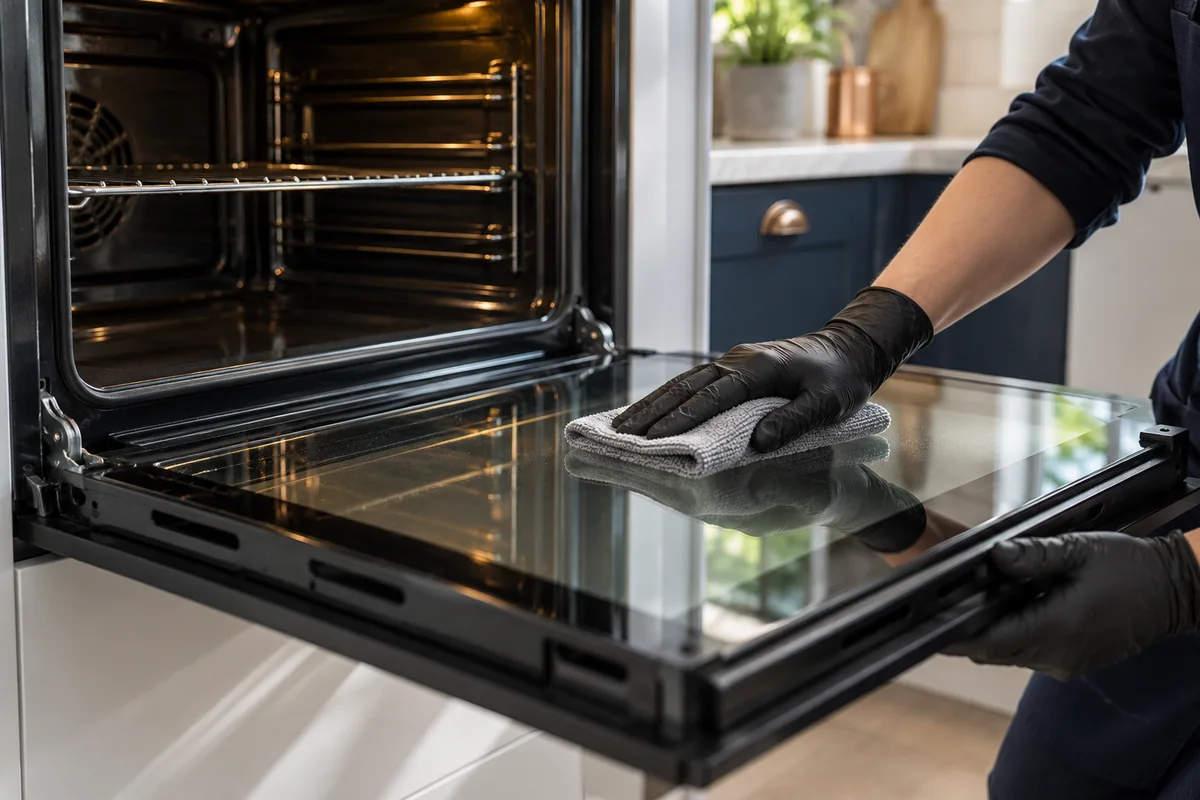
Refit parts with the next meal in mind
Once components are cleaned and dried as required, refit them according to the instructions. Check positions and supports rather than assuming that a grate or shelf sitting roughly level is correct. Keep any screws or spacers with the component they belong to if the manual authorises their removal. Do not cook with a part missing simply because the rest of the appliance looks ready.
Follow any manufacturer-specified procedure before use. This might differ between the BBQ and oven, so keep their aftercare separate. Avoid inventing a prolonged burn-off to compensate for product residue or uncertain cleaning. The right finishing process is the one appropriate to the appliance, surface and product used. If you have booked professional cleaning, ask for that process to be explained before the cleaner leaves.
Plan professional help around the difficult component
You may be comfortable cleaning a BBQ exterior but not tackling a heavily soiled cooking chamber. Or the outdoor appliance may be manageable while the oven door is badly obscured. Describe the actual problem when asking for help and include photographs. A professional BBQ clean and an oven clean can be discussed together, but ask how each is scoped and priced.
Mention the fuel type, BBQ make and size, number of oven compartments and accessory count. Tell the provider about rust, chipped coatings, loose seals or possible faults. Cleaning can address suitable deposits, but a quote should not quietly imply gas servicing, repair or replacement of damaged parts. Keeping the distinction clear makes it easier to decide whether one appointment meets your needs or a technical assessment is also required.
Create a small routine for each appliance
For the oven, inspect accessible surfaces when cool after messy cooking and deal with removable spills as instructed. For the BBQ, follow the after-use procedure and check grease collection parts. Store accessories appropriately once dry and cover the outdoor cooker only under the conditions the manufacturer specifies. A damp or still-hot appliance should not be put away on guesswork.
Keep a short record of the products and methods approved for each item. This is particularly useful if several people use the BBQ or if the manuals are stored away for winter. Before the next cook, look at the cooking surfaces and refitted parts rather than assuming the previous clean settled everything indefinitely. Good care is a series of sensible checks, not a single dramatic cleaning trick.
Similar-looking components can need different care
| Component | Useful check | Avoid assuming |
|---|---|---|
| Oven shelf | Coating and runner instructions | Every metal part can soak together |
| BBQ grate | Cast iron, stainless or coated finish | One brush suits all surfaces |
| Gas BBQ interior | Manufacturer maintenance guidance | Cleaning includes gas servicing |
| Oven door | Permitted glass access | Every pane is removable |
| Outdoor cover | Cooling and drying instructions | Covering immediately is always helpful |
Your questions, answered
Can I use oven cleaner on the BBQ?
Only if the BBQ maker and the product instructions allow it for the exact component. A formula suitable for oven enamel may damage paint, coatings or other BBQ parts. Keep it away from excluded areas and follow the required removal process.
Should I clean both appliances on the same day?
It can be convenient if you have enough protected space and time for each process. Keep tools and component care separate. If the kitchen or outdoor area becomes overcrowded, divide the work rather than balancing parts wherever they fit.
Does a BBQ clean include checking gas safety?
Do not assume that it does. Cleaning and qualified gas maintenance have different purposes. If you suspect a fault or notice damage, stop using the appliance and seek the appropriate technical support.
Can I soak cast iron with the oven racks?
Check the instructions for the cast-iron part first. Its cleaning and surface-care requirements may differ considerably from a chrome rack. Do not apply a long soak or seasoning method without confirming that it is appropriate.
What makes a combined quotation more accurate?
Supply the oven model, cavity and accessory count, plus the BBQ type, make and photographs. Describe the condition and any damage. Ask for each appliance’s scope, price and preparation instructions to be confirmed separately.
Talk it through with Savvy
Tell us what needs attention.
Have your postcode, appliance or surface details and preferred day ready. We can discuss the work and quote before you book.