
A clearer view starts with locating the mark
Oven Cleaning Leytonstone
Before asking for every pane to be separated, find out where the mark actually sits. Your Leytonstone oven-cleaning enquiry can begin with photographs of the door when cold and open, showing whether residue is on the cooking face or appears deeper inside. That distinction turns a vague request for clearer glass into a useful discussion about suitable treatment and safe access.
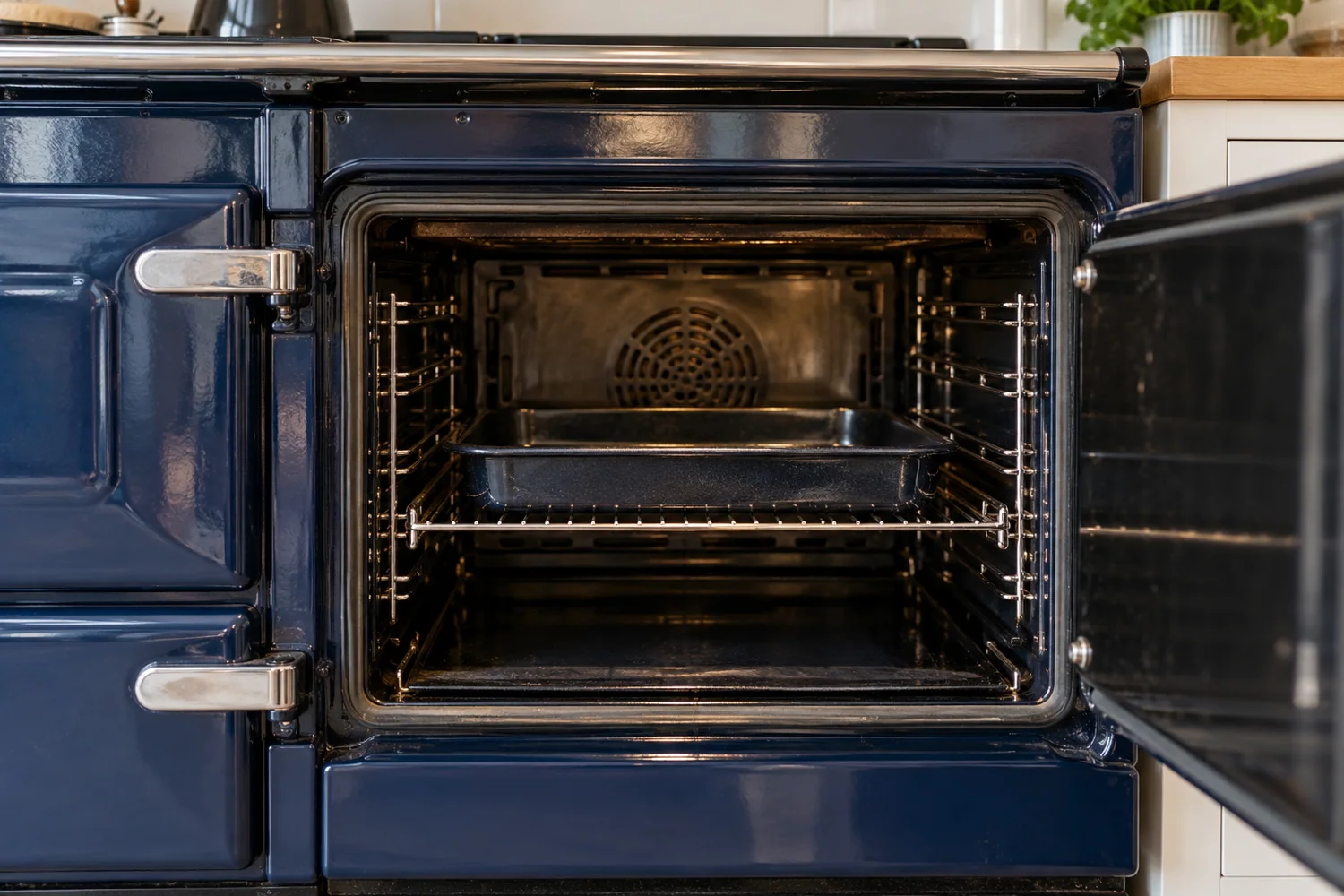
A useful starting point
Where is the stain?
Exposed glass and enclosed faces raise different treatment questions.
Before the appointment
A simple plan, before anyone arrives.
Locate the concern with photographs before making access assumptions.
Change the viewing angle
A second image can distinguish reflections from the mark itself.
Keep panels assembled
An enquiry does not require loosening unfamiliar clips.
Include the interior
The clearer door should not hide an undefined cavity request.
| Action | Useful method | Avoid |
|---|---|---|
| Photograph | Normal light and two angles | Forcing a panel apart |
| Identify | Accessible model information | Pulling the unit out |
| Explain | Previous products and damage | Testing another abrasive |
| Prepare | Clear workspace and entry route | Handling hot parts |
| Confirm | Scope beyond the door | Assuming glass means every cavity |
Start with a useful description
Photograph the mark from more than one angle
Reflections can make an exposed splash appear enclosed, while a greasy cooking face can hide a separate internal streak. Take a normal-light photograph of the whole door and another that shows the location more clearly. Do not prise at an edge or remove a screw to investigate. If the appearance changes when the cooker heats, describe that observation without repeatedly running an appliance that seems faulty.
Add the whole appliance view and a picture of the cavity. Cloudy glass may be the reason you noticed the problem, but shelves, tray undersides and the lower interior can also carry deposits. The London oven-cleaning service guide establishes the broad scope. Your own information should identify the cooker, its compartments and the accessories to be considered, not only the door that prompted the enquiry.

Different equipment, different details
Identify functions as well as the number of doors
A compact combination appliance may have care requirements different from a conventional oven of similar size. A second door might conceal another cooking cavity or a storage drawer. Explain the functions and give the model where available. For a double oven, distinguish the upper grill from the main cavity and say which are wanted. For a range, describe each heated space and any separately requested cooking surface.
If a heat-storage cooker is involved, the AGA service information is a better starting point for discussing its model and preparation. Its cooling requirements need planning in advance. Do not infer readiness from the feel of the exterior or treat a retained-heat compartment as identical to an ordinary oven that has simply been switched off after dinner.

The cleaning work
Access to glass is a construction question
Some door designs provide serviceable access between panels; others have sections that should remain sealed or fittings whose condition limits removal. The assessment considers the specific assembly rather than assuming a familiar-looking edge means it opens like a previous oven. Cracked glass, deteriorated clips and an insecure handle need to be flagged before any decision about handling the door.
The cavity and accessories have a related but separate treatment discussion. Appropriate removable metal items may receive dip-tank cleaning, while liners, coatings and seals require care suited to their own construction. Taking out suitable racks can expose the residue behind their positions. Around a fan guard or a control, the question remains whether access is useful and safe, not whether dismantling looks thorough in a photograph. Leave those decisions until the appliance has been assessed.
Compare the parts, not just the name
A clearer scope for the quote.
| Observation | Show or describe | Next question |
|---|---|---|
| Exposed splash | Location with the door open | Surface treatment |
| Deeper streak | Angle showing its position | Assembly access |
| Loose handle | Existing movement | Safe handling limits |
| Scratch or etching | Condition before cleaning | Permanent finish change |
| Dirty cavity behind glass | Shelves and lower interior | Wider cleaning scope |
Know the limits
Clean glass may still carry a permanent change
A scratch or etched area does not disappear when grease is removed. Likewise, trapped staining may remain inaccessible without a suitable route into the assembly. Establish what the concern is before expecting an invisible repair. Show earlier abrasive damage or a mark that appeared after another product was used, and avoid escalating to stronger treatment merely because one attempt failed.
If the glass is cracked, the hinge insecure or the cooker behaves unusually, explain that separately from the cleaning request. A cleaner does not certify the door or repair its mechanism through degreasing. Electrical tripping, a non-working fan or poor heating also needs relevant technical attention. Leave the unit installed and its connections untouched; moving it or disturbing fitted cabinetry is not a routine step in arranging access to cooking surfaces.
Your Leytonstone arrangements
Use the Leytonstone street rather than the postcode district alone
The council’s Waltham Forest parking-zone plan names several Leytonstone zones. Check the intended street using current parking information, then establish the conditions at the chosen bay. The district name alone does not show which visitor arrangement applies, and a plan does not show every current suspension. Private parking requires permission from its responsible manager.
Supply the entrance that leads to the kitchen, including any internal door number or shared gate procedure. Confirm how the access person can be contacted and whether equipment travels by stairs or a lift. They should know the requested work and be able to discuss the outcome. Make room beside the cooker for handling parts instead of trying to remove the installed appliance.
For other nearby enquiries, coverage pages exist for Leyton and Wanstead. Provide the second address’s own arrangements rather than assuming a nearby location has the same parking or entrance rules.
Several zones share the neighbourhood name
Identify the exact street zone
Verify the proposed visitor arrangement
Inspect signs for the chosen bay
Explain the internal entrance
The same guide rates across the site
Know the figure. Confirm the details.
Single oven
£75
Double oven
£93
Range cooker
£123+
AGA cleaning
£103+
Put the glass concern inside a complete price enquiry
If the door was what prompted your call, take another look at the interior before agreeing the work. List the cavities and accessories that need attention alongside the glass, and identify any additional hob or extractor request. The response should make those choices recognisable. Show heavy deposits or an unusual fitting in advance so the proposed charge relates to what is present. Include an agreed access expense in the total rather than leaving two separate figures to be reconciled later.
A pressing deadline can be raised using the same-day service enquiry. Give the actual address and when entry can be provided. Once a slot is offered, establish the preparation and confirm the appointment before relying on it for another commitment. Arrange for the completion advice to reach the next user of the cooker, especially if somebody else is meeting the technician.
Confirm the full cost, included parts and any agreed access charges before booking.
After the visit
Keep daily glass care gentle and accessible
After cooking and suitable cooling, inspect the exposed inner face for fresh splashes. Use the method allowed by the manual rather than a blade or harsh pad chosen for another surface. Do not pour liquid into panel gaps in an effort to wash an internal mark: a surface you cannot reach to wipe may also be difficult to dry. Inaccessible staining needs assessment rather than improvised flushing.
The rest of the appliance still matters. A greasy rack or old pan can create fresh deposits after the view through the door improves. Choose a dish that contains the cooking juices, observe airflow instructions and avoid unauthorised floor coverings. Keep model-specific cleaning guidance available. If a mark reappears or smoke continues, describe what changed before treating it as evidence that a stronger chemical or more dismantling is required.
A useful handover
Do not flush inaccessible gaps
If a surface cannot be reached to dry it, improvised rinsing creates another problem.
Questions with practical answers
A little more detail.
Why does a mark look different from another viewing angle?
Reflections and several glass layers can change its appearance. Send more than one view and describe what you see without removing fittings. The photographs help locate the concern, while the appliance still needs assessment.
Can I rinse a stain out through a gap in the door?
Do not improvise that method. Liquid may enter areas that cannot be wiped or dried safely. Use the manual’s accessible care instructions and discuss internal staining instead.
Does internal glass access depend only on the model?
No. The condition of clips, screws, seals and the glass itself also matters. A familiar design with damaged fittings may not permit the same handling as a sound assembly.
Will polishing remove etched glass?
Cleaning removes appropriate deposits, not necessarily physical alteration of the surface. Ask whether the mark is residue, a scratch or etching before applying stronger or more abrasive treatment.
Does the Leytonstone name identify my parking zone?
The council plan distinguishes several local zones. Establish the actual street and bay conditions, including current signs and suspensions, before choosing a visitor arrangement.
Can a door clean be quoted without seeing the cavity?
Show the overall appliance and clarify what you want included. The door may prompt the enquiry, but the quotation needs to establish whether the cavity and accessories form part of the same request.
Ready to discuss the work?
Show the glass and the cooker
A wider appliance view and two clear door photographs make a useful starting brief.