
When yesterday’s overflow becomes tomorrow’s hard layer
Oven Cleaning Lewisham
An overflowing dish rarely leaves its mark in only one place. It can coat the pan beneath it, harden on the oven floor and splash the door at the same time. Describe that pattern when enquiring about oven cleaning in Lewisham, so the proposed work addresses the connected deposits rather than just the first dark patch visible through the glass.
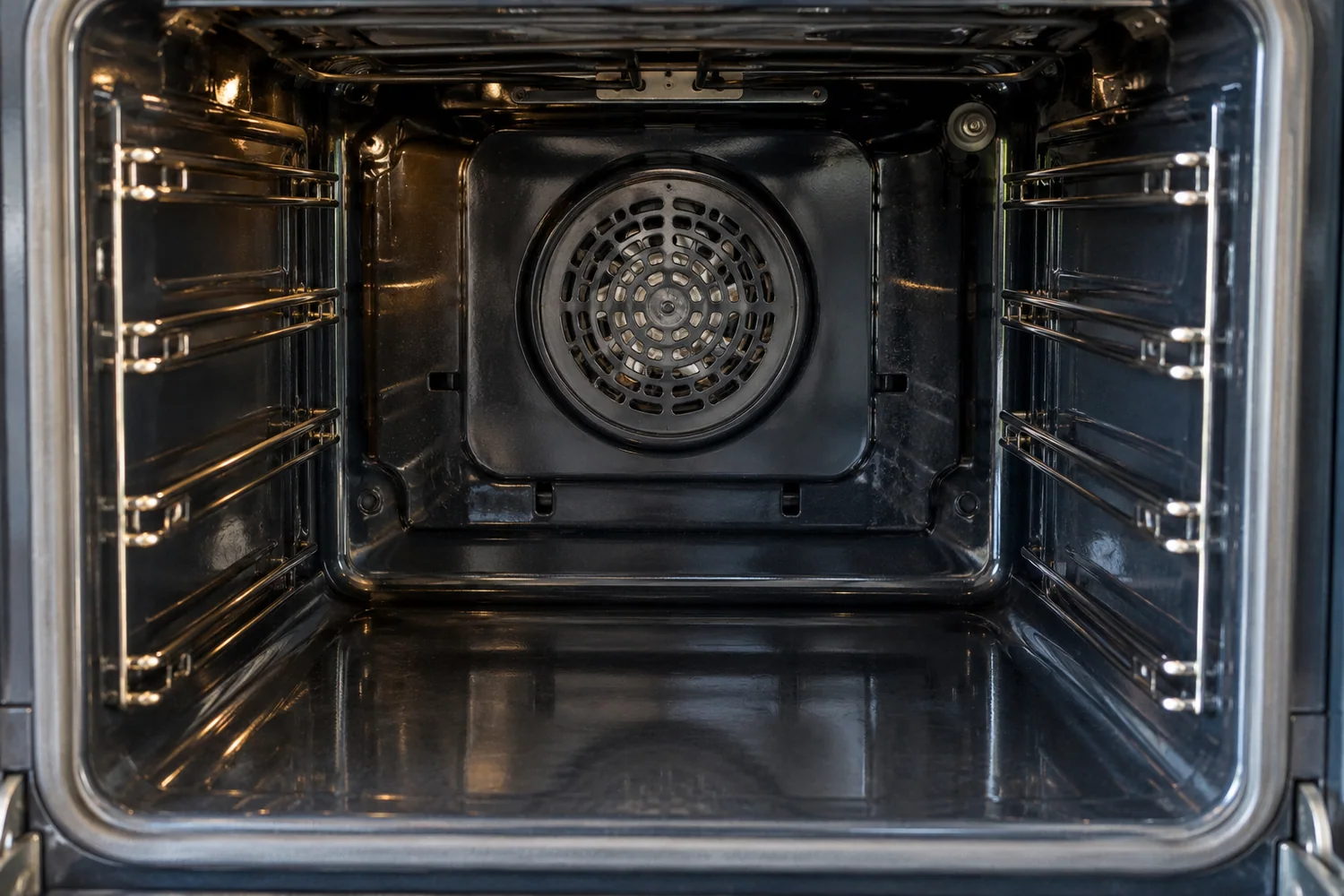
A useful starting point
One spill, several surfaces
The same residue can reach parts with very different care requirements.
Before the appointment
A simple plan, before anyone arrives.
Show the full route of the spill, not only its darkest point.
Capture the pattern
Include the tray, shelf and cavity affected by the overflow.
Explain previous attempts
Identify products, scraping or programmes already used.
Reserve cooling time
Leave the appliance ready for assessment rather than another cooking session.
| Information | What to provide | Why |
|---|---|---|
| History | What overflowed, if known | Explains the pattern |
| Previous treatment | Product or cycle used | Avoids an uninformed next method |
| Condition | Chips or exposed patches | Clarifies cleaning limits |
| Access | Door and entry contact | Makes the visit workable |
| Deadline | When the cooker is next required | Tests appointment practicality |
Start with a useful description
Describe what spilled and where it travelled
You need not diagnose a cleaning chemical, but you can explain the history. Tell us if the deposit followed a sugary overflow, repeated roasting or a grill pan that has been left between uses. Photograph the affected cavity after it cools, including nearby racks and the tray involved. Do not chip at a hardened pool to discover what is underneath: that can damage a finish before the assessment begins.
A wider picture establishes the appliance layout and any second compartment. Add the model where available and say which areas you want treated. The oven-cleaning overview for London gives the service background; your own enquiry should explain the particular cooking residue and accessories. Mention any cleaner already applied, including whether it remains on the surface, rather than adding another product to improve the photograph.

Different equipment, different details
Do not let a second cooking space disappear from the request
One large spill in the lower oven can distract from the smaller grill above. Inspect both and decide which belongs in the quote. In a range, identify the separate ovens and distinguish a storage drawer from a heated space. If the hob caught the overflow too, say so explicitly. A whole-cooker photograph establishes context, but is not a request to clean every appliance shown behind it.
For a workplace cooking area, explain the equipment and workload through commercial kitchen cleaning. A domestic cavity and several business cooking units need different descriptions. Any broader requirement for surrounding preparation surfaces, extraction work or documentation should be named at enquiry stage. Avoid fitting an entire kitchen request into a single-oven label merely because one visible spill prompted the call.

The cleaning work
Treat the spill path without treating every surface alike
The same overflow can land on materials with different care requirements. A removable wire shelf may be suitable for dip-tank treatment, while a specialist liner beside it is not simply another item for immersion. Assessment separates those decisions. Taking appropriate fittings out makes the affected surfaces easier to reach, but removal itself is not the objective if a component or fixing is vulnerable.
Explain whether the door mark is on the face you can touch when open or enclosed between panels. The latter raises an access question governed by the assembly, not by how dark the stain looks. Keep unfamiliar screws untouched and point out anything already cracked or loose. Around fan openings, seals and controls, the chosen method needs to respect the construction instead of forcing access to satisfy a claim that no part can ever remain in place.
Compare the parts, not just the name
A clearer scope for the quote.
| Where it landed | Show in the enquiry | Decision to make |
|---|---|---|
| Cooking tray | Top and underside | Whether included as an accessory |
| Lower cavity | Extent of hardened material | Surface condition beneath it |
| Shelf wires | Edges around the affected area | Appropriate separate treatment |
| Door | Exposed face or enclosed mark | Safe access possibilities |
| Adjacent hob | Separate photograph | Additional work requested explicitly |
Know the limits
Distinguish dark residue from damage left after it
Colour alone cannot establish that a surface is still dirty. Old heat staining or damaged enamel may remain visible after removable material is lifted. Explain where a previous scrape, product or cleaning cycle changed the finish. If the surface feels rough or has an exposed patch, show that concern without testing a stronger treatment. Cleaning cannot reconstruct the missing material.
Persistent smoke also warrants an honest description rather than an automatic promise. Food residue is one possible source, but faults and other conditions require appropriate assessment. Report when smoke occurs and any electrical tripping, failed fan or heating problem. Stop using equipment that appears unsafe and seek relevant appliance advice. A clean does not certify the cooker, and pulling it out or disturbing connections is not normal preparation for treating its interior.
Your Lewisham arrangements
Make a Lewisham booking specific to the street and entrance
Lewisham Council provides a parking hub with links to permits, restrictions and bays. Identify the proposed vehicle arrangement for your street rather than assuming a town-wide rule. Check signs and any suspension for the space concerned. Driving access and permission to leave a vehicle are different questions; private land can also have conditions separate from council parking.
Now describe the route to the kitchen. Include an entrance that differs from the postal frontage, any gate procedure and how the access person will be contacted. Say whether stairs or a lift are involved and make enough clear space for equipment. Do not move a connected cooker to create a working area. Whoever opens the door should know which compartments and accessories the booking covers.
For another nearby property, existing coverage includes Catford and Greenwich. Give that address separately, including its own access contact and postcode, rather than borrowing arrangements from this enquiry.
Two separate access questions
Check the route into the street
Identify a lawful vehicle stay
Describe the property entrance
Brief the person meeting the cleaner
The same guide rates across the site
Know the figure. Confirm the details.
Single oven
£75
Double oven
£93
Range cooker
£123+
AGA cleaning
£103+
Let the quote reflect the deposits you have shown
Heavy residue should appear in the description before a price is accepted. Supply the photographs and accessory list, then ask which cavities and extras are covered by the amount. Establish any agreed parking-related charge at the same time. If another tray appears later, send its details rather than relying on an assumption that every additional object can fit into the visit.
Where the cooker is needed urgently, use the same-day availability page and explain the latest useful appointment window. Confirmation matters before arranging a meal or handover around it. Include a cooling break beforehand and time to receive the advice afterwards. A clean that ends before dinner does not automatically mean every model needs no further drying, ventilation or first-heating step.
Confirm the full cost, included parts and any agreed access charges before booking.
After the visit
Change the overflow pattern as well as the cleaning routine
If the same dish repeatedly bubbles over, consider its capacity and positioning rather than accepting a fresh spill every week. Choose cookware appropriate for the food and appliance instructions. An improvised foil sheet on the cavity bottom is not a universal solution; it can conflict with heat and airflow requirements. Deal with accessible new residue once handling is safe, using the care permitted for the surface.
Check the pan that caused the problem before returning it to service. Fat or food underneath can become a fresh source of deposits even when the oven interior has been treated. Follow model instructions for specialist linings and any cleaning programme. If a dark mark remains, ask what it represents before escalating to a harsher product. The useful follow-up is understanding where new residue starts and catching it earlier.
A useful handover
Choose a dish that contains the food
Preventing the repeated overflow can matter as much as wiping afterwards.
Questions with practical answers
A little more detail.
Should I chip off a thick spill before sending photographs?
Leave it for assessment. Chipping can damage enamel or another underlying finish. Show the deposit and explain what happened, including any treatment already tried.
Does a black patch always mean burnt food remains?
No. Heat discolouration or a damaged finish can remain after removable residue has gone. The location, condition and treatment history help distinguish those possibilities.
Can the pan responsible for the spill be included?
Identify it before the quote and describe the material. Treating the cavity while returning an uncleaned greasy accessory may leave another source of residue, but extra cookware must still be agreed.
Will a professional clean diagnose persistent smoke?
Cleaning addresses appropriate deposits, not every possible cause of smoke. Describe when it occurs and any operating symptoms. If the appliance appears faulty or unsafe, seek suitable technical assistance.
Does permission to drive to my Lewisham street establish parking?
No. Check the specific bay, permit or private-space arrangement independently. Traffic access and the right to leave a vehicle for the work are separate matters.
How can I avoid another sugary overflow?
Use a dish with capacity suited to the recipe and the oven instructions, then inspect for fresh residue when cool. Do not substitute a foil-covered floor for suitable cookware and correct airflow.
Ready to discuss the work?
Show where the residue travelled
Send the appliance view and spill photographs so the work can be described accurately.