
Work out what each space in the cooker actually does
Oven Cleaning Eltham
Not every space behind a cooker door is an oven. Oven cleaning in Eltham starts by identifying the compartments you cook in, the drawers you store things in and the accessories you want assessed. That simple distinction makes a request clearer, particularly when a freestanding cooker or range has accumulated more tins than originally came with it.
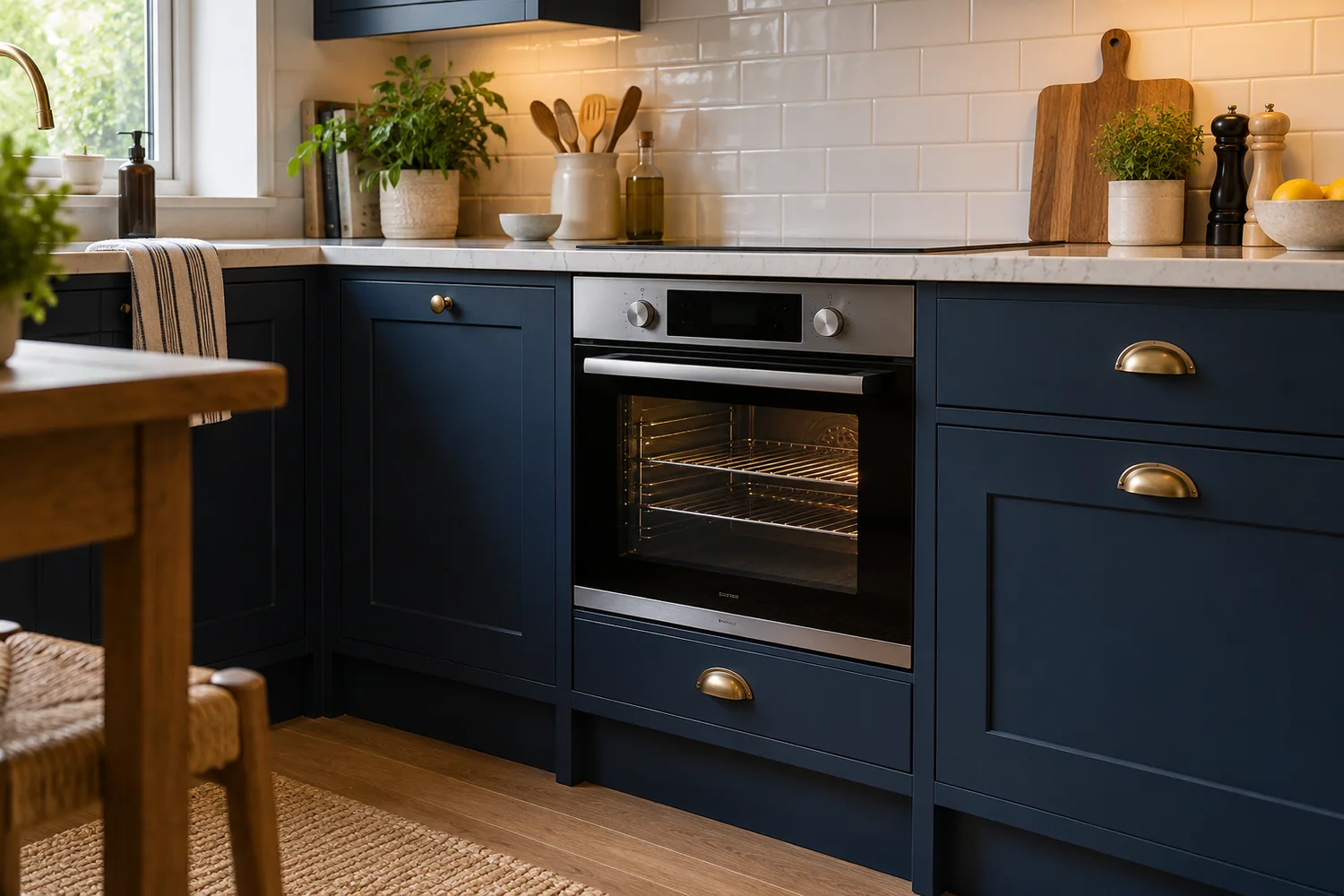
A useful starting point
A drawer is not automatically a cavity
Explain what heats and what merely stores equipment.
Before the appointment
A simple plan, before anyone arrives.
Take a look behind every door before choosing the category. Keep fixed fittings intact and select the loose pieces you genuinely want included.
Name the function
Separate cooking, warming and storage spaces.
Select the contents
Choose accessories instead of submitting an unspecified pile.
Leave installation alone
Make front access clear without moving the connected cooker.
| Action | Good preparation | Unagreed alternative |
|---|---|---|
| Photographs | Move loose contents safely | Unfasten fixed panels |
| Route | Clear approach and turns | Pull connected cooker forward |
| Accessories | Select those requested | Offer every stored tin |
| Parking | Check specific Eltham scheme | Assume one local rule |
| Completion | Identify storage locations | Leave objects in heated cavity |
Start with a useful description
Empty the contents for a look, not a dismantling exercise
When the appliance is cold, note what is stored inside and which pieces belong to the cooking setup. A stack of tins can hide the floor and make a storage drawer look like another cavity in a photograph. Remove loose contents safely for the image, keeping unfamiliar fixed parts in place. Say which spaces actually heat and which simply hold accessories.
The categories on the London oven cleaning service page help organise the enquiry, but the layout should establish the choice. Include the front and each requested cooking space. Photograph an accessible model label if available. Do not disconnect a freestanding cooker or pull it forward in an attempt to show more than the normal opening reveals.

Different equipment, different details
Give each heated compartment its own line
A range may combine a main oven, grill and warming area while another drawer only stores pans. Explain those functions rather than counting doors. If a smaller cooking cavity is excluded, make that deliberate and visible in the quote. Hob supports and extractor work should also be requested explicitly; their proximity does not automatically include them.
For a heat-storage model, discuss preparation through AGA oven cleaning. Its cooling requirements need agreement before the day is chosen. Identifying the model and compartments helps distinguish a practical appliance clean from a broad request that assumes all surfaces, fuel types and finishes can follow one routine. Use the instructions for your actual equipment.

The cleaning work
Look beneath the pile of trays
An accessory that has sat unused at the bottom may still be coated with an older spill. Decide whether you want it considered instead of adding the entire pile by default. State material and condition. Plain metal components suitable for separate dip-tank treatment differ from coated tins, aluminium pieces or mechanisms that need assessment for their own care requirements.
With appropriate parts moved, accessible interior surfaces can receive attention without shelves screening the edges. Door marks need location details too: describe the exposed face or internal gap involved. The cleaner should assess panel fittings, seals and damage before deciding on internal access. A familiar screw head is not a reason to start separating the glass as preparation.
Compare the parts, not just the name
A clearer scope for the quote.
| Space or piece | Evidence | Scope decision |
|---|---|---|
| Main cooking cavity | Open interior photo | Requested oven work |
| Upper grill | Roof and pan view | Separate compartment inclusion |
| Warming drawer | Function from instructions | Heated space or storage? |
| Spare tin stack | Materials and condition | Selected extras only |
| Rear-of-cooker concern | Describe location | Separate access question |
Know the limits
Do not move a cooker to chase a cleaning result
A freestanding appliance still has connections and installation requirements. If your concern is dirt behind it, say so as a separate access question rather than pulling it out ahead of the appointment. Routine oven cleaning is not a promise to disconnect, move and reinstall equipment. The working route around the front matters more than creating an unagreed gap at the back.
Record worn surfaces and operating defects independently. Cleaning cannot rebuild enamel, cure an electrical trip or fix a door that does not shut. A tray with a failing coating may remain unsuitable after residue comes off. Show those conditions before treatment and obtain appropriate repair advice where needed, instead of assuming every visible or functional problem belongs in the same cleaning request.
Your Eltham arrangements
Check the Eltham parking location by scheme
Provide the address that matches the correct entrance and explain the final route to the kitchen. If another person admits the visitor, give them the selected-item list rather than only the time. Mention a step, gate or awkward turn where equipment must pass. Clearing the path is useful preparation; changing the cooker installation is not.
The Royal Borough of Greenwich lists controlled parking zones, including distinct Eltham entries. Check the relevant scheme and bay before offering an arrangement, without assuming identical controls throughout the area. Existing coverage for Sidcup and Greenwich helps with other nearby requests. Use your own full postcode and confirm private parking separately if that is the proposed option.
Match the parking check to the scheme
Correct Eltham postcode recorded
Relevant Greenwich zone identified
Private space permission confirmed where needed
Entry contact has selected accessory list
The same guide rates across the site
Know the figure. Confirm the details.
Single oven
£75
Double oven
£93
Range cooker
£123+
AGA cleaning
£103+
Make a small request explicit rather than leaving it ambiguous
If only the main oven is wanted, identify that space and its selected shelves. If the whole cooker is wanted, list the additional cooking compartments and extras. Check the listed appliance price against the compartments and accessories you want included. Confirm any parking expense alongside the work so a narrower request is not compared with a more extensive quotation.
For a changing schedule, same-day oven cleaning is an enquiry route. Give hours when entry is genuinely available and wait for an accepted appointment before reorganising cooking. Keep the chosen accessories accessible and the appliance ready under the agreed instructions. A drawer full of unrelated tins need not become an unexpected decision for the cleaner at arrival.
Confirm the full cost, included parts and any agreed access charges before booking.
After the visit
Keep storage separate from cooking readiness
After cleaning, decide what belongs back in the cooker and what should be stored elsewhere. Check the manual before leaving trays or utensils inside a heated compartment. Forgetting stored objects can complicate the next cooking session, so a clear distinction between storage and cooking spaces is useful beyond the appointment itself.
Ask for treatment-specific advice before first use and keep it with the model instructions. When new residue appears, address it using the permitted method once safe to handle. Dry suitable accessories before putting them away. If a door, fan or heating function still behaves incorrectly, follow that symptom through the appropriate appliance assessment instead of expecting another clean to correct installation or mechanical wear.
A useful handover
Put things back deliberately
Use the manual to distinguish storage from heated spaces before returning utensils to the cooker.
Questions with practical answers
A little more detail.
Is a pan drawer counted as an oven compartment?
Its function matters. Explain whether it is heated, used for warming or purely storage, using the manual if uncertain. The number of external doors does not automatically establish the cleaning category or include every space behind them.
Should I pull out my freestanding cooker before arrival?
Leave it in its installed position unless a specific arrangement has been agreed. Freestanding does not mean disconnected. Explain any concern behind the appliance separately so moving, connections and safe access are not assumed inside a routine cleaning visit.
Do I need to include all the tins stored underneath?
Select the items you actually want assessed and describe their materials and condition. Some may not belong to the cooker or suit the same method. A storage drawer full of accessories is not automatically included in an oven quotation.
Can I request only one part of a range?
Describe the particular cooking space and accessories wanted, then confirm the quotation reflects that choice. A partial request should be clear rather than implied by photographs. Equally, asking for the range does not silently add every adjoining appliance.
Are Eltham Centre and Outer parking arrangements interchangeable?
Check the council’s current scheme information and the bay concerned. Distinct entries are a reason to verify the actual location, not assume all nearby streets share conditions. Private controls require their own permission and cost discussion.
Can a clean fix a cooker that rocks or has a badly closing door?
That is an installation or mechanical concern to disclose before booking. Cleaning removes suitable residue; it cannot promise to correct the appliance’s stability or door alignment. Seek the appropriate assessment and do not move connections as a makeshift preparation.
Ready to discuss the work?
Describe the spaces you want cleaned
Show the layout and selected accessories. A precise request prevents a storage drawer or extra cooking cavity becoming an assumption.