
Clean the deposits while respecting the finish
Oven Cleaning Crouch End
Knowing which surfaces are inside your oven helps choose suitable cleaning methods. For oven cleaning in Crouch End, describe accumulated fat, food spills and the racks or trays you want treated. Mention catalytic liners, self-cleaning functions and damaged finishes where present. The model and condition help distinguish components that need different care, even within the same cooker.
Racks, trays & accessible glass
Care matched to your appliance
The scope agreed before you book
A useful starting point
For the way your kitchen works.
Look beyond the self-cleaning label
A cooker may have a self-cleaning programme and still contain greasy shelves, a marked door or spills that need separate attention. Check the manual rather than assuming every part can stay inside a cleaning cycle. Describe which function the appliance has and whether you have recently used it. There is no need to run an extra cycle just before a professional appointment; ask what preparation is actually required.
Photograph the cavity, door and removable accessories while cool. Include any textured panels or surfaces that look different from the smooth enamel around them. The London oven cleaning overview is a starting point, but your Crouch End enquiry should identify your model and its condition. A clear description of a small damaged patch is more useful than a request to apply the strongest possible treatment throughout the oven.
Glass, metal & enamel
Let the surface determine the cleaning method
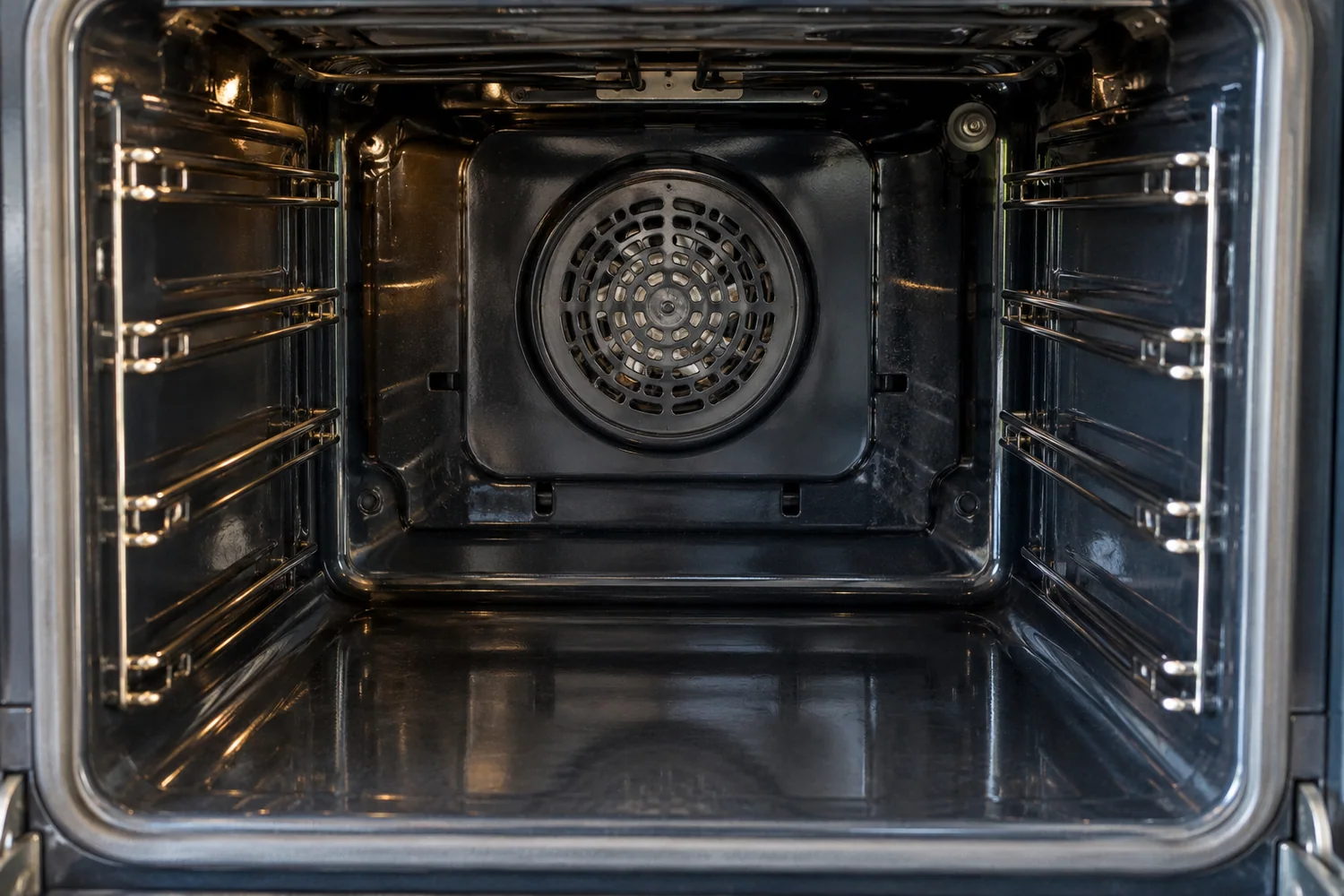
A textured side panel is a reason to pause before applying a product that works on smooth enamel. Identify the panel through the appliance instructions wherever possible. During the clean, the lining is considered separately from loose shelving; appropriate metal accessories may be treated in a dip tank, while coated cookware and moving assemblies require their own decisions. This avoids treating every item removed from an oven as chemically interchangeable.
Glass raises another material and access question. The cooking face may be directly reachable, but an internal mark needs the door construction checked. A serviceable fitting might allow access that a damaged one does not, even on the same model. Show cracked glass, worn seals and insecure handles before work. Similar care applies to fan guards: removing one is not an achievement in itself if the fixing or underlying component makes that action unsuitable.
A clear scope
Know which parts need attention.
| Surface or component | Tell us | Why it changes the assessment |
|---|---|---|
| Catalytic liner | Textured panels and model | Not the same as smooth enamel |
| Coated tray | Peeling or scratched finish | Treatment must suit the coating |
| Door glass | Location of marks | Exposed face or panel access |
| Plain metal rack | Number and deposits | Separate removable-part treatment |
| Heat-storage cooker | Model and compartments | Cooling and scope need planning |
More than one compartment
Include the cooker you own, not a standard list
A single oven booking should identify the cavity and its shelves and trays. A double needs both compartments considered, even if the upper grill is used only occasionally. For a range, list the separate cooking spaces and any hob or extractor request. A drawer used for storing baking sheets is not automatically another cooking compartment, and its contents should not be assumed to form part of the quote.
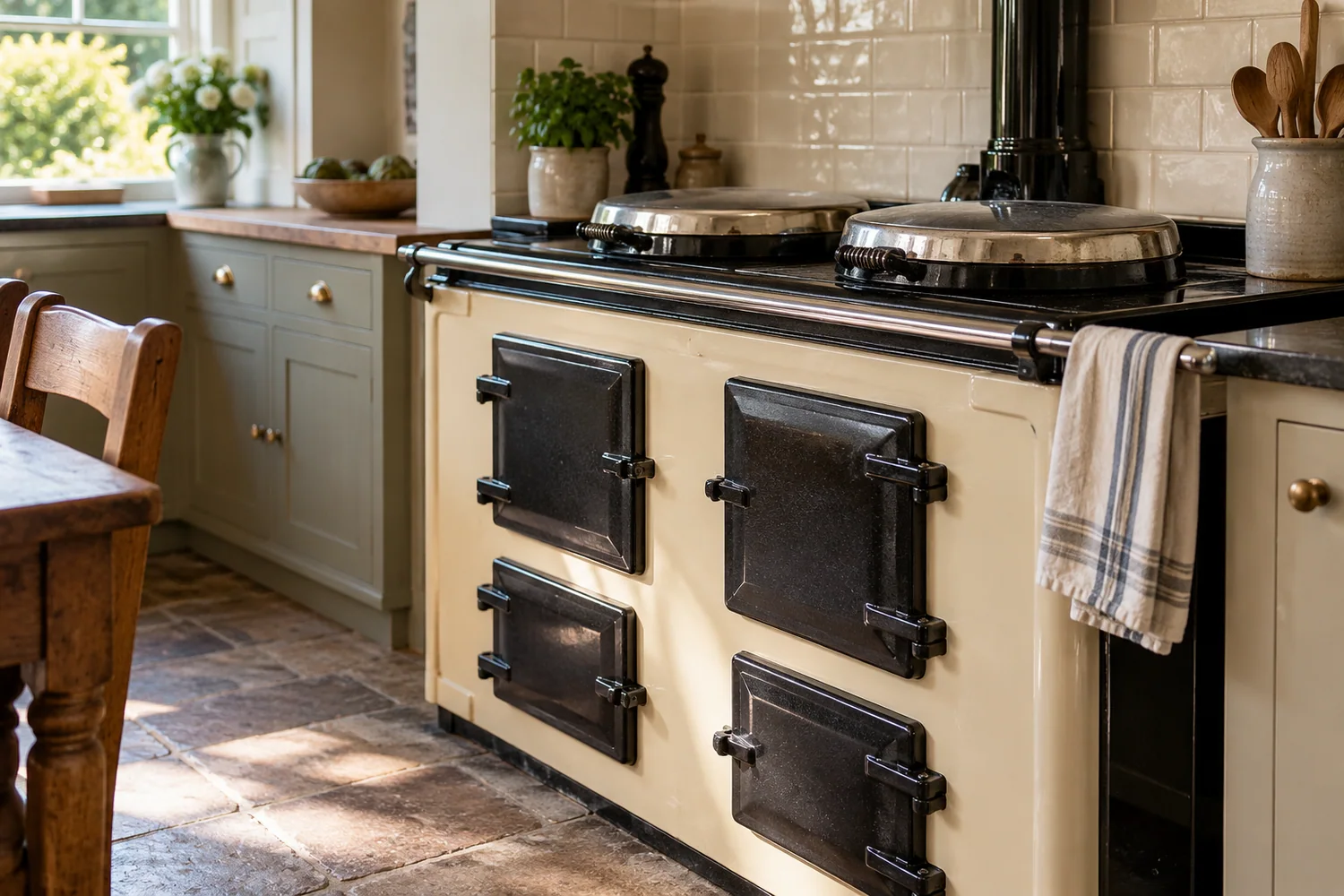
Heat-storage models require a more specific conversation. The AGA cleaning information helps frame that enquiry, including the need to discuss model and cooling. Give those details before arranging the day. Do not guess how long an insulated appliance will take to cool, and do not assume a general oven appointment has allowed for every compartment of a model that remains warm in routine use.
A realistic result
Recognise when a mark is no longer cooking residue
Cleaning does not replace the original surface. Etched glass, worn enamel, rust and discoloured coatings may remain after grease has been removed. Explain where a previous product or abrasive pad was used and whether it changed the finish. This is particularly helpful if the oven looks patchy: a lighter area may be damage rather than a clean spot that the rest of the appliance can be made to match.
Faults need separate attention too. A cooker that trips the electricity, has a broken fan or does not hold temperature should not be booked on the assumption that cleaning will repair it. Mention the symptoms and seek the appropriate appliance advice. Leave fitted equipment in place, with connections undisturbed, unless a specific alternative has been agreed. A cleaner should not discover a damaged door or unsafe fitting only while trying to remove it.
Your Crouch End appointment
Work out the approach to your Crouch End kitchen
Walk through the route a visitor carrying equipment would take. Mention a basement stair, a shared corridor or a lift that needs unlocking, where any of these apply to your property. Put small belongings away from the work area and leave the fitted cooker in place. If the access contact will be elsewhere in the building, agree how they will meet the visitor rather than relying on an unanswered entry phone.
Haringey’s Crouch End parking map shows separate A and B zones beside neighbouring controls. Find the intended street on the relevant council information, then read the restrictions displayed for the space itself. A permit for one location should not be offered as permission for another. For private parking, ask the person managing that land; the street-zone map cannot grant access to a private bay.
Arranging another property as well? The coverage information for Muswell Hill and Hampstead Heath provides separate starting points. Send each complete address with its own entry details, so a useful instruction for one visit is not accidentally attached to the other.

Protected clear worktop beside an open domestic oven
Before the visit
A little preparation makes room for a thorough clean.
| Check | Useful preparation | What to avoid |
|---|---|---|
| Manual | Find model and care guidance | Guessing from another oven |
| Cooling | Follow the agreed instructions | An unnecessary last-minute cycle |
| Products | Describe anything already applied | Mixing cleaning chemicals |
| Accessories | Gather the agreed items | Assuming every stored pan is included |
| Street | Check actual zone and bay | Using a neighbouring zone’s rules |
Oven cleaning prices in Crouch End
Ask for a quote with preparation included in the discussion
The useful questions are what will be cleaned, what needs assessment and what you should do before arrival. Confirm the compartments, agreed accessories and final cost, including any access charges. Set aside extra shelves for the booking only if they have been included. If you have used a cleaning product recently, say which one and follow its instructions rather than applying another treatment to get ahead of the visit.
If the oven is needed by a fixed date, make that clear. A same-day cleaning enquiry needs the Crouch End postcode, appliance details and access window. Availability still requires confirmation. Allow time for cooling beforehand and any drying or first-use directions afterwards; an appliance should not be heated for dinner simply because a requested appointment time has passed.
| Appliance | Price |
|---|---|
| Single oven | £75 |
| Double oven | £93 |
| Range cooker | £123+ |
| AGA cleaning | £103+ |
Confirm the appliance, included parts and full cost before booking.

After the clean
Keep the manual involved in everyday care
After cleaning, use a gentle method suited to the part you are wiping. A smooth glass door, catalytic side panel and coated baking tray can have different care instructions even within the same cooker. Avoid testing a new abrasive tool on an inconspicuous patch unless the manufacturer allows it. A small scratch can create a lasting problem that another professional clean cannot undo.
Catch cooking juices in an appropriately sized dish and remove fresh spills once cool. Keep the oven floor and vents clear of improvised foil coverings unless expressly permitted. Check racks and tray undersides before putting them back, as grease there can smoke at the next use. Plan future cleaning from the actual build-up and cooking frequency, keeping an eye on the less visible surfaces rather than using the door alone as a guide.
The practical details
Questions before you book.
Does a self-cleaning oven still need its racks cleaned?
Check the appliance manual. Some programmes require accessories to be removed and do not clean them. Describe the shelves and other fittings when enquiring so the appointment addresses the parts that still carry deposits.
Are textured side panels cleaned like the oven floor?
Not automatically. They may be catalytic liners with specific care requirements. Provide the model and a photograph so their construction can be assessed before a method is selected.
Can you make a scratched baking tray look new?
Cleaning can remove appropriate deposits but cannot replace a damaged coating or remove a physical scratch. Show the condition beforehand, particularly where the underlying material is exposed or the finish is peeling.
Are Crouch End A and B the same parking zone?
The council map identifies them separately. Check your exact address and the current bay signs, along with the conditions of any permit or visitor arrangement, rather than assuming a nearby street has the same controls.
Should I buy a liner after the clean to protect the floor?
Only use a liner if the manufacturer allows that product and placement. Covering the floor or airflow paths can interfere with an appliance. A suitable cooking dish and prompt spill removal are often more straightforward precautions.
What should I say if a cleaner was used recently?
Name the product if possible, explain where it was applied and mention any remaining residue or change in finish. Follow its instructions and avoid adding another product before the appointment without discussing it.
Let’s talk about your oven
A clearer plan. A cleaner cooking space.
Tell us your oven type, postcode and the parts that need attention. We’ll discuss the work and quote before you book.