
Summer oven care
Getting your oven ready for summer meals and busy weekends
Summer does not necessarily mean the oven gets a holiday. Roasted vegetables, baked fish, family gatherings and food prepared ahead can still keep it busy. Preparing the appliance is mainly about checking its condition and making sure the parts you need are ready. A thoughtful clean before a busy weekend is easier than discovering a greasy tray while ingredients are already on the counter.

Begin with the meals you expect to cook
Think about how you are likely to use the oven over the coming weeks. A large gathering may need several shelves and trays, while ordinary weeknight meals might use just one roasting dish. Check that the accessories you plan to use are suitable for the oven and correctly fitted. The manual’s arrangement and loading instructions matter more than making every available dish fit at once.
This simple review helps define the cleaning task. You might need to focus on trays and the viewing glass rather than every cupboard in the kitchen. If the appliance has several cavities, inspect each one you intend to use. A compartment that has been ignored for months deserves a look before you rely on it. Separate a cleaning concern from a fault, such as a damaged seal or a control that is not operating normally.
Inspect the cool cavity before buying products
Once the oven is cool and ready for inspection under its instructions, look at the floor, walls, racks and glass. Note loose food, greasy areas and marks you cannot identify. Find the exact care guide, especially if there are textured liners, telescopic runners or a cleaning programme. Those features can change which treatments and accessory handling are permitted.
Choose a product only after identifying the surface and checking compatibility. A general oven cleaner is not necessarily suitable for every part inside an oven. Keep it away from excluded materials and openings. Do not combine a commercial formula with household ingredients. You are aiming to remove deposits in a controlled way, not create a more elaborate treatment because the season has changed. A small suitable test can be useful where the guidance permits one.
Give the accessories their own preparation session
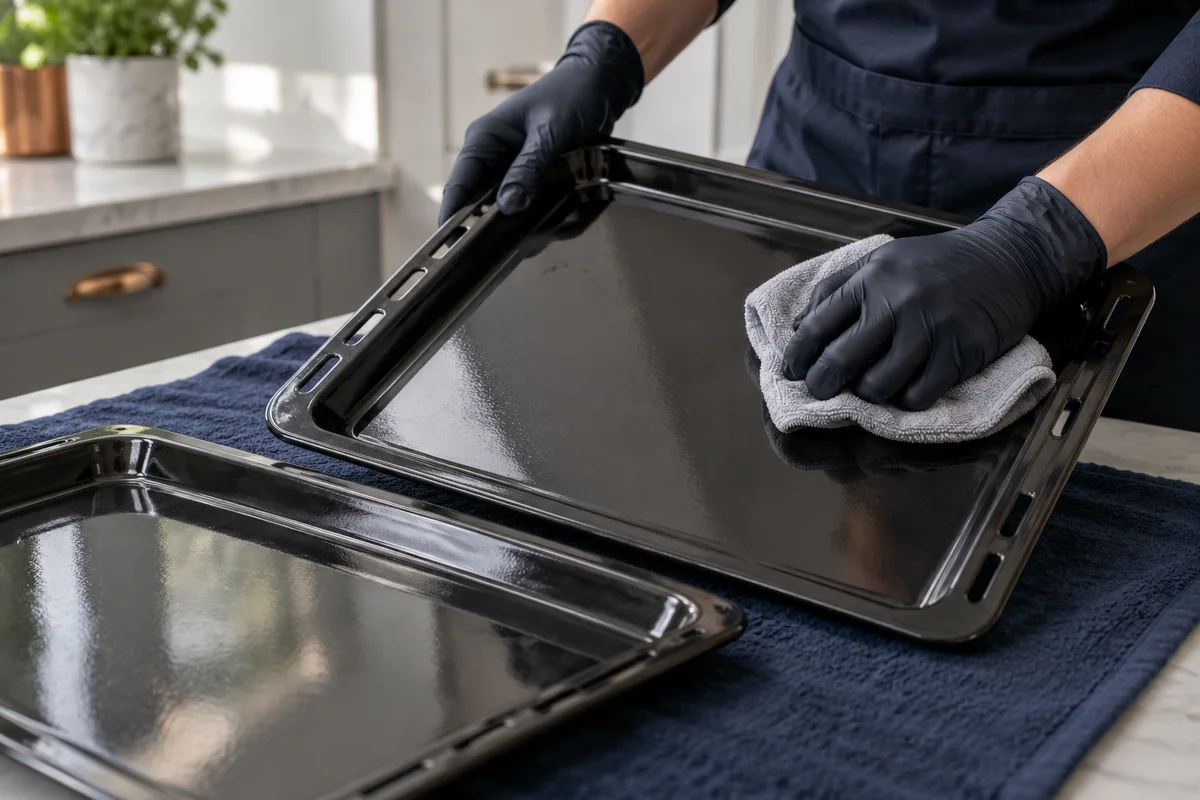
Remove racks and trays as the manual describes and set them on a protected surface. Check their materials and whether soaking or dishwashing is permitted. Large accessories need a container or work area that fits them without scratching another part of the home. Plan the rinsing and drying as well as the initial cleaning, so the kitchen is not left full of unfinished parts.
Treat runners and moving components separately if their care requirements differ. Do not put every metal item into the same solution for convenience. When clean, inspect the parts for wear, damaged coatings or distortion and seek advice if anything is concerning. Refit the shelves in the correct orientation. Summer cooking is easier when the accessories are ready to use, not merely cleaner but waiting in a pile beside the sink.
Make the glass useful without dismantling on guesswork
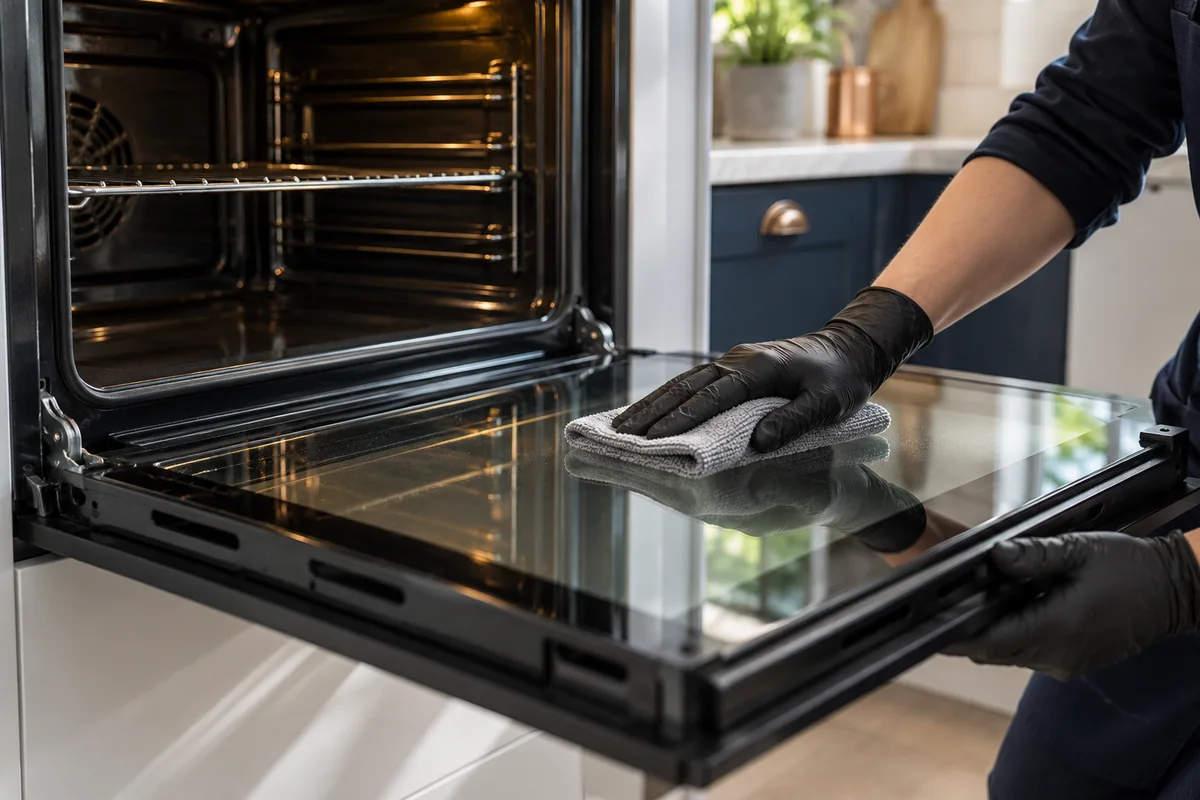
Clear accessible glass helps you see food during cooking, but the treatment must suit the door. Follow the maker’s method, protect markings and trim, and keep liquid out of unsuitable edges or openings. Remove the product residue thoroughly. Inspect after drying before deciding whether the remaining haze is grease, cleaner film or a mark within the assembly.
If the dirt sits between panes, check whether the exact model permits removal and whether you can follow the procedure safely. A similar-looking door in an online video is not enough information. Pane order, spacers and hinge handling matter. If you prefer professional help, explain where the mark is and ask whether glass disassembly is possible within the agreed service. There should be no blanket promise that every door can be dismantled.
Coordinate the clean with food preparation space
A summer gathering often fills the kitchen with ingredients, serving dishes and containers. Schedule a deep oven clean before that happens. Clear an appropriate working area, keep food away from cleaning products and allow enough time for finishing and aftercare. Starting a long treatment while chilled ingredients sit out waiting for space is poor planning, even if the oven eventually looks excellent.
Review the fridge and counter layout as part of the cooking plan. Make room before shopping and follow food storage instructions. If fridge shelves need cleaning, arrange suitable chilled storage for their contents rather than emptying everything into the room. Keep the oven job distinct from food handling. A tidy plan lets both happen properly without turning one afternoon into a collision between appliance parts, cleaning solutions and meal ingredients.
Do not improvise barriers against summer spills
Use suitable dishes with enough capacity for the food you are cooking and follow the oven’s placement guidance. A shallow dish packed with vegetables and oil may spill even when the oven is clean. Think about the vessel and loading before adding a liner. Foil or a mat placed on the base can be unsuitable; only use accessories and positions the manufacturer permits.
After cooking, respond to accessible spills once the appliance is cool and the instructions allow cleaning. Removing a manageable deposit can be more practical than waiting for the end of the season. Do not reach into a hot cavity or scrape glass to maintain an appearance. The useful habit is a calm inspection and appropriate action, not an urgent clean whenever a splash occurs. Keep the manual’s restrictions in the routine throughout summer.
Arrange professional work before the important date
If the cavity and accessories have heavy build-up, a professional clean may be a useful part of preparation. Send the make, model, number of compartments and condition photographs. Confirm whether racks, trays and door glass are included and mention specialist liners, damage or restricted access. Ask about the total price and any optional hob or extractor work separately.
Choose a date with room before the event where possible. Find out how the oven should be prepared and when it can be used afterwards. If you need a same-day slot, confirm actual availability directly. A cleaning service name does not reserve a technician. Also keep repairs separate: an oven that heats unpredictably or has a damaged component needs appropriate technical advice rather than an assumption that cleaning will solve the problem.
Leave a simple after-summer handover
When cooking habits change again, look at the oven’s actual condition. Review the racks, trays and accessible surfaces you used most. Complete any suitable cleaning before storing rarely used accessories, following their instructions. Make a note of unresolved marks or damage so that the next busy cooking period does not begin with the same surprise.
Keep the products and care information that proved appropriate, but do not treat the summer plan as a universal timetable. A household cooking frequently in the oven may need attention sooner than one relying mainly on outdoor meals. Use visible deposits and the manufacturer’s guidance to decide. The result should be an appliance that is easier to prepare and look after, with realistic expectations about what cleaning can change and what needs repair.
Prepare around the cooking job you actually have
| Upcoming use | What to check | Useful preparation |
|---|---|---|
| Several dishes for guests | Shelf positions and available trays | Clean and refit the accessories in advance |
| Roasting vegetables or meats | Dish capacity and current deposits | Use suitable vessels and inspect cool surfaces |
| Food prepared ahead | Counter and fridge space | Separate cleaning from ingredient handling |
| A rarely used second cavity | Condition and care instructions | Inspect before relying on it |
| An important cooking deadline | Cleaning availability and aftercare | Arrange the appointment with a useful margin |
Your questions, answered
Should I deep clean the oven just because summer starts?
Inspect it first. The useful task depends on deposits, accessories and planned cooking. A seasonal reminder can prompt a check, but it does not mean every oven needs the same treatment on the same date.
Can I line the bottom to catch oil from vegetables?
Only if the oven manufacturer permits that accessory and position. Avoid improvised foil or mats on the floor. A suitable dish with enough capacity and correct placement is a more dependable starting point.
Is cleaning the oven the same as servicing it?
No. Cleaning removes suitable deposits from the agreed areas. It does not diagnose or repair a thermostat, damaged seal or electrical problem. Seek appropriate technical advice if you suspect a fault.
How early should I book before a party?
Leave enough time for preparation, the appointment and the provider’s aftercare instructions. Confirm the actual slot and when the oven can be used. Booking earlier is easier than relying on an uncertain same-day visit.
What should I clean if I mostly use the BBQ in summer?
Inspect the oven before it becomes less used and deal with suitable accessible deposits. Store accessories as instructed. Give the BBQ a separate care plan because its materials and maintenance requirements differ from the indoor oven.
Talk it through with Savvy
Tell us what needs attention.
Have your postcode, appliance or surface details and preferred day ready. We can discuss the work and quote before you book.