
BBQ season preparation
Preparing your BBQ for the season: condition, cleaning and cooking space
The first outdoor meal is easier to plan when the BBQ has been checked before the shopping arrives. Storage can hide dirt, damp and worn components, while the cooking area may need organising as much as the grill itself. Set aside a separate preparation session, find the manual and work through the appliance’s condition before choosing the menu.
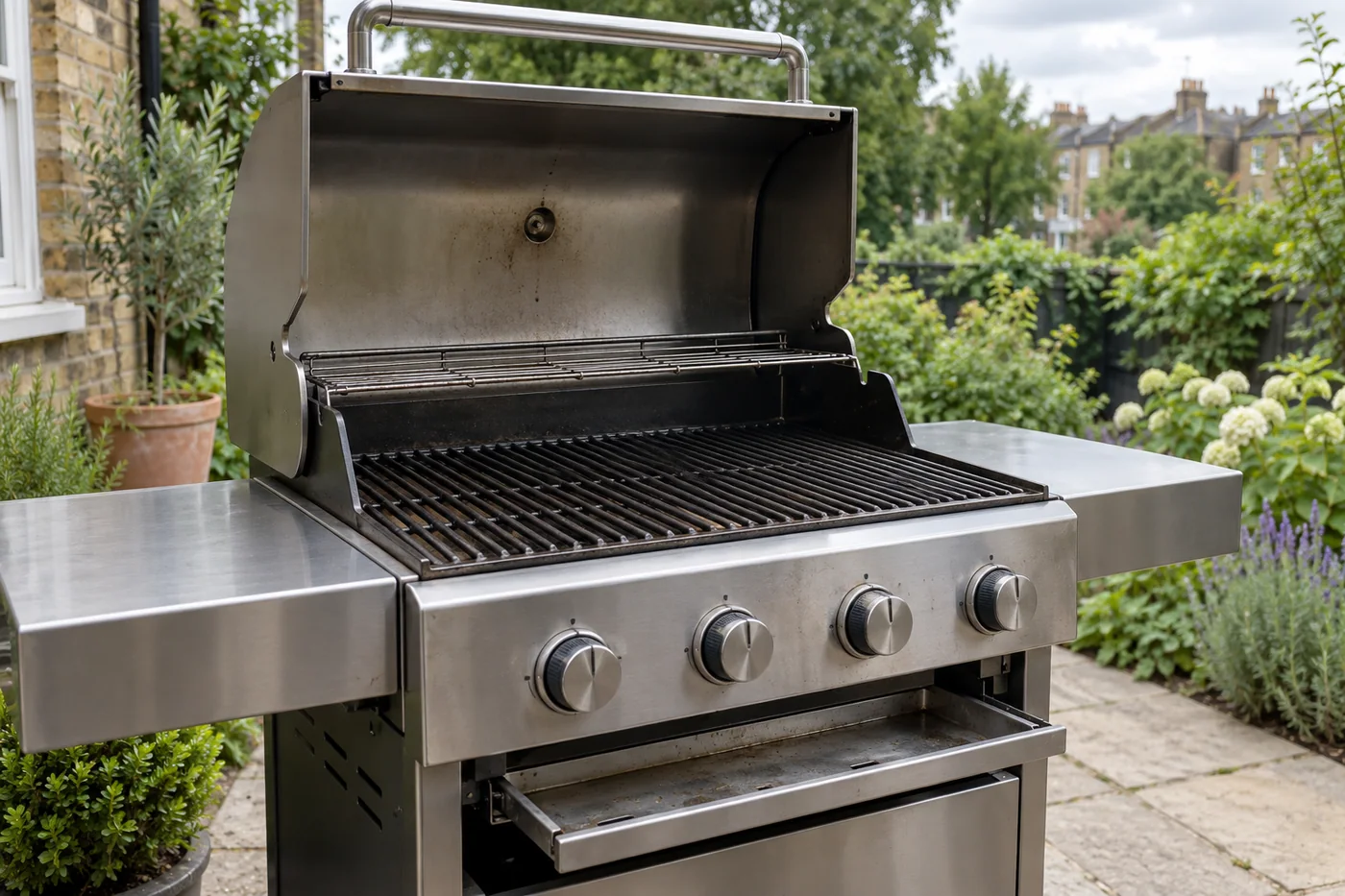
Uncover the BBQ and inspect it while cold
Choose an appropriate outdoor working area and make sure the appliance is fully cool. Remove the cover under the maker’s instructions and look at the overall condition before moving or dismantling anything. Check stability, handles, wheels and accessible surfaces. Note rust, loose parts, damaged coatings and anything that seems different from the last use. Cleaning does not repair those issues.
Keep the model information available and locate the maintenance section of the manual. If the BBQ was left in a damp space, look carefully at components rather than assuming a surface wipe makes it ready. Photograph concerns before disturbing them. This gives a supplier or technician a clearer starting point if you need advice. Do not use a damaged appliance while waiting to see whether cooking heat changes the problem.
Identify what you can remove and clean
Lay out the components the manual permits you to remove: these might include grates, warming racks, plates or grease collection parts. The list varies by model. Keep fixings and parts organised and avoid taking apart the fuel or ignition system as part of an ordinary clean. You need to be able to return each component to its correct place.
Check the material before choosing a product. Stainless steel, cast iron and coated surfaces do not have identical care requirements. Do not assume a cleaner labelled for ovens is approved for every BBQ part. Read the appliance guidance and product label together. If they conflict, ask the maker rather than choosing the stronger treatment. A careful compatibility check can prevent a simple grease problem becoming a damaged cooking surface.
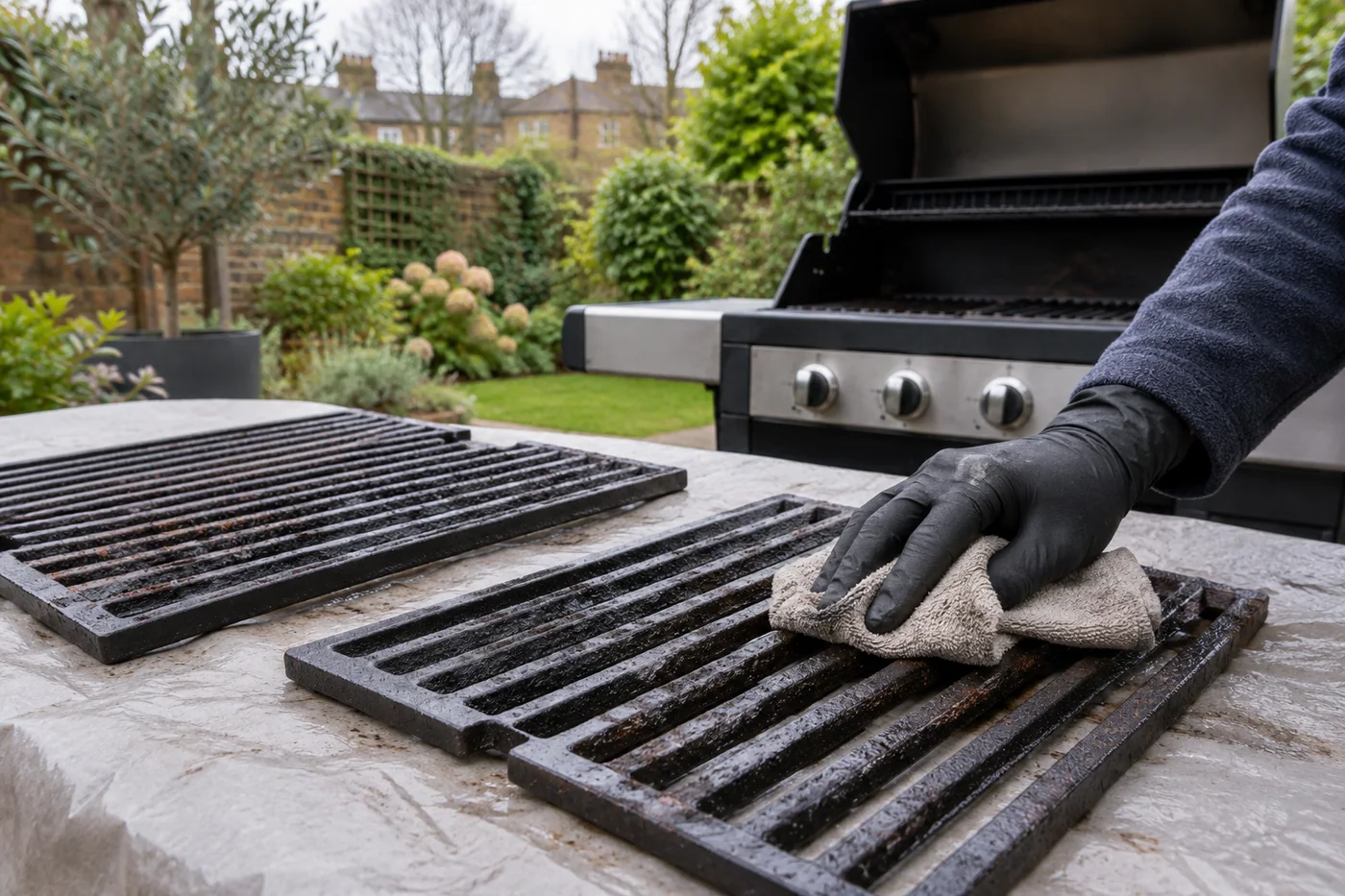
Handle ash and collected grease as separate jobs
For a charcoal BBQ, follow the maker’s directions for confirming that ash is fully cold and for disposing of it safely. Do not judge this by the outside of the appliance or by elapsed time alone. Grease collection parts have their own removal and cleaning procedure. Prepare a suitable container and protect the surrounding area from spills.
Remove loose debris before applying a cleaning treatment to suitable surfaces. This makes it easier to see the actual condition and prevents a small clean from becoming a slurry of ash, grease and product. Keep waste away from food preparation items. Never tip material into an unsuitable drain or garden area because it seems convenient; follow the disposal instructions and local arrangements that apply. Finish this stage before setting out clean cooking tools.
Clean the cooking surfaces without damaging them
Use the method approved for the grate or plate, paying attention to whether soaking, abrasives or particular products are prohibited. Work in a stable protected area and follow any specified contact time. Check brushes and cleaning tools for damage before use, and replace tools with loose parts. A worn tool is not improved by applying more pressure.
Rinse or remove the cleaning product as directed, then dry and treat the surface as the manufacturer requires. Some components have particular surface-care requirements; do not add oil or a seasoning procedure simply because a general BBQ guide recommends it. Inspect the dry result. Chipped coating, deep corrosion or distortion needs an appropriate assessment, rather than repeated scraping in pursuit of an appearance the material can no longer provide.
Keep technical checks separate from a cleaning session
For gas appliances, follow the exact model’s safety and maintenance instructions for the fuel system. If you suspect damage, a leak or an operating fault, stop using the BBQ and obtain the appropriate qualified advice. Do not improvise a test or treat a connection as another part to scrub. The same boundary applies to electrical components on equipment that has them.
A professional BBQ cleaning service should explain what it does and does not include. Removing suitable deposits is different from servicing a regulator, repairing an ignition system or confirming an appliance is safe to operate. When requesting a quote, tell the provider about any concerns rather than assuming the cleaning visit will settle them. You may need a technical appointment before a cleaning appointment is appropriate.
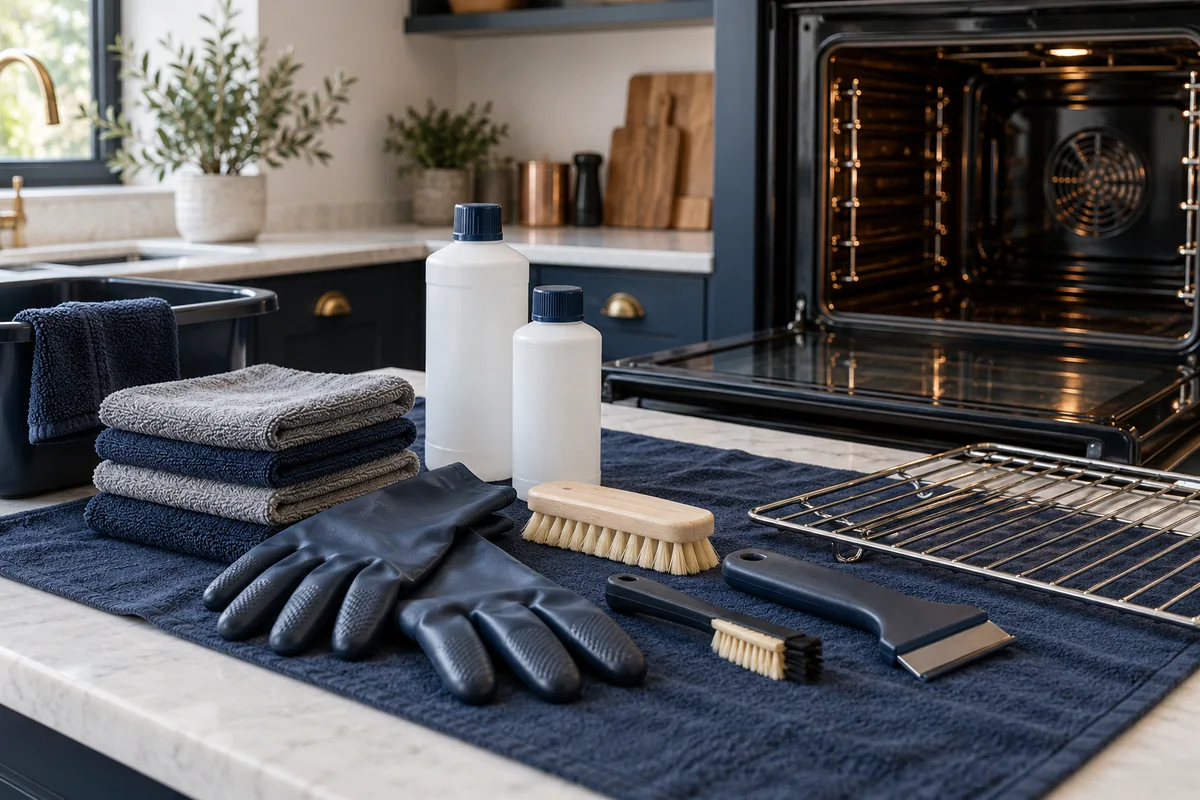
Organise the outdoor food preparation area
Plan where ingredients, clean plates and serving tools will sit before cooking starts. Give used utensils a separate destination rather than setting them back among clean equipment. Follow current food safety guidance for raw and ready-to-eat food, handwashing and chilled storage. A cleaned grate is only one part of the practical arrangements around an outdoor meal.
Keep cleaning products, brushes and waste away from the serving area. If the garden table is doing several jobs, establish which part is for food and clean it with a suitable method before use. Think about the route back to the kitchen as well. Making room in the fridge and clearing a preparation counter can be more helpful than adding another decorative outdoor accessory while basic working space remains cramped.
Refit and prepare according to the manual
Once the cleaned components are ready, refit them in the correct order and position. Check that supports and grease collection parts are properly located. Follow any pre-use procedure specified by the manufacturer. Do not use an improvised high-heat burn-off to deal with uncertain residues or to compensate for skipping a rinse required by the cleaning product.
Plan the first meal with time to spare so that an unresolved issue does not turn into pressure to cook anyway. If you find a missing or damaged part, source the appropriate replacement or advice rather than modifying the appliance. Keep the manual handy for normal operation, not just cleaning. Starting the season with clear information makes later after-use care easier too.
Set up an after-use and storage routine
Follow the manufacturer’s after-cooking procedure and wait for the conditions required before cleaning or covering. Deal with grease collection parts at the appropriate time and keep the cooking area free of food scraps. Store cleaned accessories as directed. The correct routine depends on the appliance and conditions, so avoid assuming that every BBQ should be brushed, washed or covered at the same temperature.
Before storing for a longer period, review the manual’s storage guidance, including any fuel-related requirements. Make a note of parts that need replacing before the next season so they are not forgotten under the cover. If the build-up has become too much for a comfortable household clean, ask about a professional BBQ service with the model and photographs ready. A specific request helps establish scope and realistic expectations.
Decide what needs cleaning and what needs another kind of attention
| Finding | Appropriate response | Do not assume |
|---|---|---|
| Greasy permitted removable grate | Use the material-specific cleaning method | All grates can soak |
| Cold ash or collected debris | Follow removal and disposal instructions | Elapsed time proves ash is safe |
| Damaged coating or heavy corrosion | Ask the manufacturer or suitable specialist | Scraping will restore the original surface |
| Suspected gas or electrical fault | Stop and obtain appropriate technical advice | A cleaning booking includes repair |
| Unclear assembly after removal | Refer to the exact manual | A similar model uses the same arrangement |
Your questions, answered
When should I prepare the BBQ for the first meal?
Give it a separate session before buying food for an important event. That leaves time to identify damage, obtain the correct advice and complete any cleaning, drying and refitting required by the manual.
Does rust mean I should scrub harder?
No. Its significance depends on the component, material and extent of the damage. Consult the maker’s guidance or a suitable specialist. Cleaning should not remove a protective coating or conceal a component that needs replacement.
Can I use a household pressure washer on it?
Only if the manufacturer explicitly permits the method for that appliance. Water can enter unsuitable areas or damage finishes and components. Controlled, model-approved cleaning is a better starting point than treating the BBQ like paving.
What should I tell a professional BBQ cleaner?
Provide the make, model, fuel type, overall size, accessories and photographs of the condition. Mention rust, damaged parts or suspected faults and ask which components, products and finishing steps are included in the proposed service.
Should I cover it straight after cooking?
Follow the appliance and cover instructions for cooling and drying. Do not put a cover over a hot appliance or rely on guesswork about stored moisture. Proper after-use preparation is part of looking after the equipment.
Talk it through with Savvy
Tell us what needs attention.
Have your postcode, appliance or surface details and preferred day ready. We can discuss the work and quote before you book.