
Bring the bakeware into the conversation
Oven Cleaning East Dulwich
Look at the baking tin you reach for most often. If its corners are crusted while the cooker itself seems fairly tidy, include that contrast in your enquiry. For oven cleaning in East Dulwich, a photograph of your chosen bakeware beside the cold appliance makes a useful starting point: it shows both the everyday problem and the different materials that need consideration.
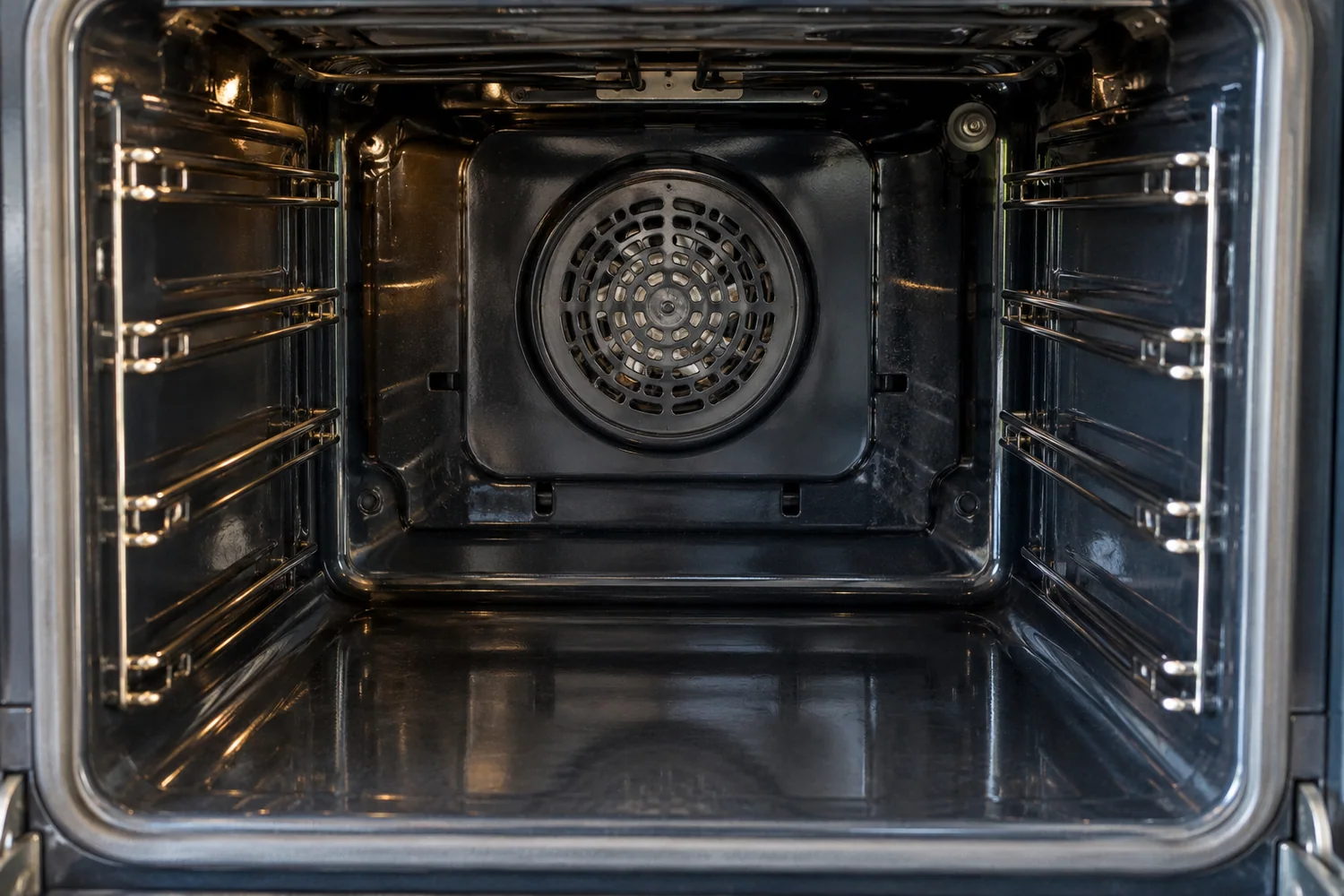
A useful starting point
The tray is part of the question
An oven category describes the appliance. Loose bakeware needs its own description.
Before the appointment
A simple plan, before anyone arrives.
Gather the pieces used for one typical bake and decide which ones you actually want assessed. A short, selective request is easier to quote than a cupboard full of unspecified tins.
Lay out the pieces
Show shelves, grill pan and extra bakeware as distinct items.
Flag the coating
Photograph scratches or peeling before discussing treatment.
Check the reply
Make sure the quotation’s item count matches your request.
| Stage | Your action | Useful outcome |
|---|---|---|
| Photographs | Group requested tins beside cold oven | Scope is visible |
| Quotation | Reconcile accessory count | No missing loose pieces |
| Arrival plan | Describe entry beyond street door | Equipment route understood |
| Before work | Leave working surface available | Parts handled without balancing |
| Completion | Ask about each delicate coating | Future care matches material |
Start with a useful description
Photograph the tools behind an ordinary baking session
Think about the last time you used two shelves at once. Which rack supported the dish, and which tray caught the drips? Bring those pieces together when describing your request. Include the forgotten grill pan if it needs work too. Showing the accessories beside the open cooker helps explain the job without requiring you to know every fitting’s technical name.
On the London oven cleaning homepage, the guide categories refer to appliance layouts. Your photographs add the accessory details those labels cannot carry. Include one image showing all cooking doors, then closer views of anything fragile or unusually dirty. Only photograph a cold appliance; leave fixed panels and connections alone.

Different equipment, different details
Separate oven work from the other parts of a baking kitchen
A double oven may have a small grill that is used less often but still needs its pan assessed. Identify both interiors rather than counting control dials. On a range, distinguish each cooking space and any warming drawer. The amount of bakeware can matter as much as the external width when you explain the requested work.
If sticky floor grout is another concern, describe it through tile and grout cleaning. That request concerns different surfaces and preparation. It does not follow automatically from photographs showing the kitchen around the cooker. Ask whether appointments can be coordinated, while keeping the equipment, surface area and cost of each job understandable.

The cleaning work
Do not put every baking tin in the same treatment group
A plain rack and a tin with a worn non-stick layer are different propositions even when both are brown with residue. Identify coatings, loose edges and manufacturers’ care notes before requesting treatment. Suitable metal pieces may be cleaned using a specialist dip tank, but that is a material decision, not an automatic destination for every removable item.
Once appropriate pieces are lifted out, attention can reach cavity corners previously screened by the tray. Glass is assessed according to where the dirt sits. An exposed splash and a mark inside the door require different access. Clips, seals and panel condition decide whether separation is sensible; do not pre-empt that assessment by loosening screws yourself.
Compare the parts, not just the name
A clearer scope for the quote.
| Piece | Information to provide | Decision |
|---|---|---|
| Wire rack | Fittings and underside deposits | Suitable separate cleaning |
| Coated tin | Condition of cooking face | Care limits or replacement |
| Enamel tray | Chips and baked edges | Residue versus finish damage |
| Grill pan | Whether stored outside cooker | Named accessory inclusion |
| Door panel | Exact face carrying marks | Safe access to affected glass |
Know the limits
Know when a tray needs retiring rather than stronger cleaning
A damaged food-contact coating is not repaired when the grease comes off. Show peeling edges and deep scratches before anyone selects a method, and consider replacement where the accessory is no longer serviceable. Similarly, a dull patch of enamel may remain dull after cleaning because the finish has changed, not because a layer was missed.
Avoid linking every disappointing bake to dirt. A faulty thermostat, damaged fan or door that fails to close deserves the relevant appliance assessment. Explain symptoms independently of the residue photographs. Cleaning cannot be sold as a reliable cure for uneven heating, and an unsafe electrical symptom should not be tested repeatedly to demonstrate it at a cleaning visit.
Your East Dulwich arrangements
Check the visitor arrangement at the East Dulwich address
The useful address is the one that gets equipment to your kitchen, including a separate entrance or a few steps beyond the front door. Provide that route and a reachable contact. If a neighbour holds the key, establish whether they can merely admit a visitor or also discuss an unexpected accessory or damaged fitting.
Southwark’s parking permit information is the starting point where council controls apply. Identify the relevant conditions before offering a visitor arrangement, and inspect the bay signage. An empty place is not automatically unrestricted. For adjoining enquiries, existing pages include Peckham and Lewisham; always distinguish the actual postcode from a convenient area description.
Agree the entry contact’s role
Postcode attached to this booking
Usable entrance described
Applicable Southwark parking option checked
Person authorised for scope questions named
The same guide rates across the site
Know the figure. Confirm the details.
Single oven
£75
Double oven
£93
Range cooker
£123+
AGA cleaning
£103+
Make the accessory count part of the agreed cost
Suppose you want four loose tins considered but the quotation mentions only the oven racks. Resolve that difference before accepting the booking. Ask whether the listed oven price covers those four tins, or whether they need a separate charge. Include any parking expense in that discussion so the person paying can understand the complete arrangement.
For a baking deadline, give the date you need the kitchen rather than asking vaguely for the earliest visit. Same-day oven cleaning can be enquired about when the gap is short. Confirmation, cooling and treatment-specific first-use advice still have to fit the plan. Keep an alternative meal option until those points are settled.
Confirm the full cost, included parts and any agreed access charges before booking.
After the visit
Store each clean accessory with its care method in mind
After the visit, check which pieces received treatment and ask about any surface left with permanent wear. Keep coated tins apart from tools likely to scratch them in a cupboard. Dry suitable pieces before stacking and use the manufacturer’s advice for their next wash; a previous professional method is not an instruction to repeat unfamiliar treatment at home.
Notice the first new spills rather than waiting for the entire oven to look dark. A deeper dish or less filling can address an overflow at its source. Deal with residue when handling is safe and the surface permits it. If smoke continues unexpectedly, examine the cause instead of assuming that another scrub or hotter cycle must solve the problem.
A useful handover
Keep fragile pieces identifiable
Tell other kitchen users which coatings need gentle care instead of leaving them to choose a stronger product.
Questions with practical answers
A little more detail.
Can I request cleaning for tins that did not come with the oven?
Describe each one, including its coating and condition, before accepting the quotation. Extra bakeware is not automatically included. A photograph of the whole group helps avoid an agreed set of shelves being confused with every tin in the kitchen.
Why does the tray coating matter if the residue looks identical?
The underlying material determines suitable handling. Two equally dirty pieces can respond differently, especially if one has a damaged coating. Do not assume a method suitable for an ordinary rack is equally appropriate for every baking accessory.
Should I remove the glass before sending pictures?
Keep the door assembled. Show which surface appears dirty and provide the model if accessible. Internal panel access can depend on vulnerable clips or fixings; a photograph should explain the concern without creating a new dismantling task.
Can kitchen grout be included in the oven price?
It requires a separate request identifying the tiled surface and its condition. Ask about coordination and the combined cost rather than assuming an oven clean covers surrounding walls or floors because they appear in your kitchen photograph.
What if a neighbour will provide access in East Dulwich?
Give them the agreed item list and establish who can decide about a scope change. Holding a key does not automatically mean they know which tins belong to the booking. Keep the paying or responsible contact reachable.
Will clean trays guarantee better baking results?
Cleaning removes suitable residue; it does not diagnose temperature or airflow problems. If cooking performance is unreliable, describe that separately and seek appropriate appliance advice. A damaged thermostat or fan needs attention beyond a clean.
Ready to discuss the work?
Show us the bakeware you want included
Send the cooker layout and the selected accessories together. We can discuss a useful scope before you plan the next baking day.