

Look underneath before deciding where the mess ends
Oven Cleaning Tooting
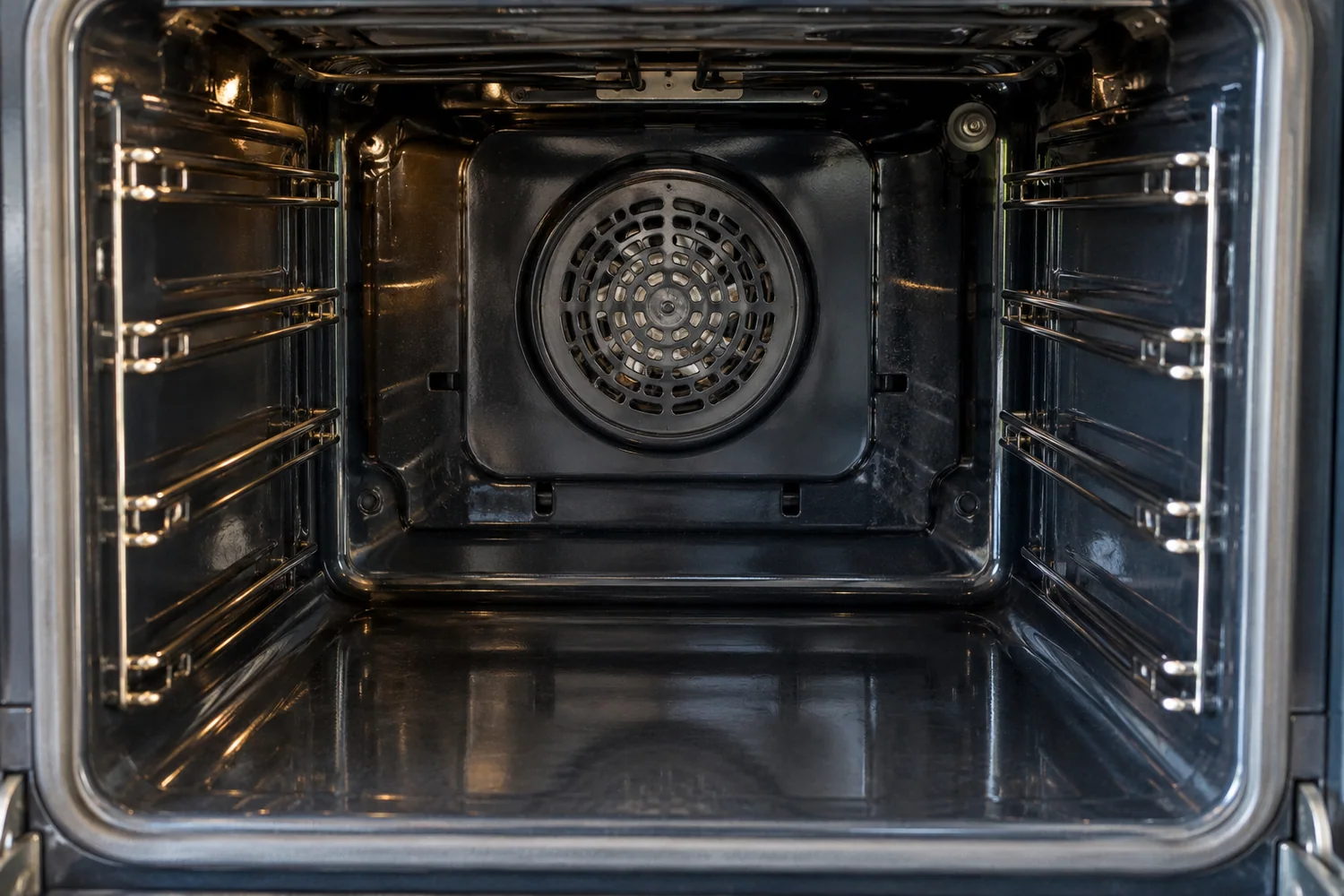
The top of a tray can look reasonably clean while its underside carries an older layer. Similar deposits can hide below shelves and behind the parts most often wiped. Oven cleaning in Tooting starts with a fuller look at that equipment, once it is cool. Show the accessible areas that ordinary care misses and explain what you want improved, rather than trying to make every part presentable before asking.
A useful starting figure
Your oven. A clear price.
Hob £26 · Extractor £26 · Microwave £14. Discuss optional appliances when arranging the quote.
| Appliance | Guide price |
|---|---|
| Single oven | £75 |
| Double oven | £93 |
| Range cooker | £123+ |
| AGA cleaning | £103+ |
The kitchen you actually use
Turn ordinary loose cookware over for a better picture
If it is safe and designed for everyday handling, show both faces of the requested pan after cooling. Include a wider view of the cavity it came from. This can explain why washing the visible cooking face has not dealt with the whole build-up. Keep fixed parts in place. A useful enquiry shows where residue sits without becoming an investigation behind panels and connections.
The London oven cleaning overview sets out the general categories. Add your own priorities and the accessories wanted with the job. A count matters, but a description matters too: a pan, its grill insert and a coated baking sheet are not three identical pieces. Mention existing wear and any earlier attempts at treating them.
The underside belongs in the picture too
A clean-looking cooking face can conceal older residue on the equipment below it.

Behind a better view
Consider the cavity and loose equipment as linked but different work
Removing a suitable rack creates access to a wall; treating the rack does not clean that wall automatically. Appropriate metal pieces may receive dip-tank work separately from the interior. The cleaner can then address accessible cavity surfaces without the everyday equipment obstructing them. Identify any delicate or deteriorating finish so the choice is based on the item, not merely on how heavily soiled it appears.
The same principle helps with glass. Point out the face that seems affected, including whether the mark looks internal to the door assembly. Its position determines the question to ask; the construction and hardware determine suitable access. Do not loosen a handle or cover for a clearer photograph. Showing intact fittings preserves the condition information needed for sensible handling.
A thoughtful approach to the finish
Use a worn tray as a reason to ask, not to scrub harder
Imagine the deposit comes away and reveals a patch of missing coating. The cleaner has removed food, but the pan has not become a renewed surface. Tell us about damage already visible, including scratches or rust. The expected improvement should distinguish those features from removable build-up. Further abrasion cannot replace the lost finish, even where the original mark looked like grease.
Another example is a cooker with a door that closes badly: cleaner glass will not correct the hinge. Heating and electrical concerns require suitable appliance help. Existing defects can also limit handling of fixed components or access inside a door. Discuss that condition before work, rather than expecting an indiscriminate strip-down to overcome a problem that belongs to repair.
| Part | Overlooked area | Useful description |
|---|---|---|
| Roasting pan | Underside and edges | Material and damage as well as grease |
| Wire shelf | Bars beneath cooking dishes | Count of requested pieces |
| Main cavity | Space hidden by stored cookware | Open view with loose items removed |
| Door assembly | Mark behind the reachable face | Position without dismantling |
Get to know the equipment
Map the equipment to the chamber that uses it
An insert may belong to an upper grill while a large tray serves the main oven. Explain that relationship when several chambers are requested. For a double, decide whether both are wanted now. With a range, describe extra baking spaces, warming areas and the hob individually. The shape of the front alone cannot tell us which equipment is used most or which tasks you are choosing.
If outdoor cooking equipment is part of the plan, keep it distinct through the barbecue cleaning service. A grill grid outside is not simply another oven shelf. Explain the appliance, its present state and access before treating its loose components as part of an indoor booking. Each can then be considered on a useful, accurate basis.
Making the visit work locally
Write arrival notes that a visitor could use without guessing
Look at the entrance from the street and notice what is not obvious. Perhaps the bell uses a different name or the door is reached through a side gate. Send that detail with the postcode. Ask your access contact to set out the agreed loose equipment and make a little room alongside the cooker. If furniture limits opening, explain the arrangement as found; there is no need to shift connected equipment.
For a street space, consult Wandsworth’s guide to its parking zones and compare the relevant information with the bay signs. An arrangement used on another road is not sufficient evidence here. Coverage information is also available for Balham, while Earlsfield has its own service guide. Include the equipment’s location in the booking, even when someone at a different address is organising it.
| Useful action | What it reveals | Keep intact |
|---|---|---|
| Show a loose pan’s underside | Hidden residue | Fixed supports |
| Photograph the open chamber | Relationship of parts and cavity | Covers secured with hardware |
| Identify the glass mark | Which surface concerns you | Door layers and handle |
| Collect agreed accessories | Full chosen equipment list | Installed cooker and connections |
Agree the work
Use your equipment photographs when checking the offer
Have the images beside you when discussing the job. Ask, for example, whether the insert shown inside the pan is included and whether the cupboard tray is an addition. That is a more useful conversation than repeating the word complete. If a hob or extractor is wanted, identify that task too. Make the final charge understandable, including any parking arrangement that affects it.
Timing can be raised through the short-notice cleaning enquiry. Explain the periods when entry is possible and when the cooker can be left ready. Treat the response as a proposal to check against your kitchen plans, not an automatic reservation. The person at home should know the chosen work and be able to pass on any change before the visit begins.
Keep the improvement
Keep checking the faces that are easiest to overlook
At completion, review the requested equipment and ask about preparing the appliance for another meal. If a surface still carries a mark, ask what it is rather than adding another treatment later. Share the explanation with other cooks. It can distinguish a retained stain from a worn area and make future care more straightforward.
For ordinary upkeep, inspect both sides of loose equipment when safe and cool. Address recent spills with a method suited to the material, and look beneath the pan before putting it away. Follow the manual on liners and airflow instead of covering the base to hide the problem. A regular glance at these overlooked places can be more useful than repeatedly polishing only the visible front.
Before you make the call
Answers for a smoother visit.
Should I photograph the underside of a pan?
If it is an ordinary loose item and safe to handle after cooling, that view can help explain deposits not visible from above. Include the surrounding appliance too, so the request has context.
Does a shelf treatment include the wall behind it?
They are separate surfaces in the work described. Tell us about both if wanted. Removing equipment can provide access, but treating that equipment alone does not establish that the surrounding cavity has been cleaned.
Can I include an insert hidden inside the grill pan?
List it and show it with the pan. It is easy to miss when the enquiry only counts large trays. Ask about its inclusion while the job is being discussed rather than treating it as an unnoticed extra later.
Why might a clean tray still look patchy?
Old staining or a deteriorating finish can remain after deposits are removed. Cleaning does not replace coating. Point out existing damage and ask about a realistic result before treatment.
Should I remove a fixed panel to show hidden dirt?
Leave secured parts intact. A photograph of the accessible area and model information can support the enquiry. Appropriate access depends on the construction and condition, not a need to reveal everything yourself.
What should I inspect between professional visits?
After cooling, check the faces and corners normally hidden by pans. Follow surface-specific care for recent residue and keep the manual’s airflow guidance in mind. The obvious glass is not the only place build-up returns.
Let’s make a plan
Describe the parts an everyday wipe misses
Share the Tooting address and useful views of the cooker and loose equipment you want cleaned.