
Treat the residue with respect for the finish
Oven Cleaning Chelsea
A cooker can need a thorough clean without needing aggressive treatment on every surface. Oven cleaning in Chelsea begins with the distinction between removable grease and the finish beneath it. Describe the appliance, the marks you want addressed and any delicate or damaged components. The result should come from a suitable method and an agreed scope, rather than a promise to make every older surface look new.
Racks, trays & accessible glass
Care matched to your appliance
The scope agreed before you book
A useful starting point
For the way your kitchen works.
Show the material underneath the mark where you can
Before sending an enquiry, inspect the cool oven in ordinary light. Note whether the affected area is glass, enamel or a tray coating, and photograph it from a position that shows its location. Do not scrape a sample clean to prove the difference. Tell us about any product already applied and whether the surface felt rough before the latest spill occurred.
Use the oven cleaning service guide to identify the appliance category, then add the details that distinguish yours. Which compartments need attention? Is the extra tray coated? Does the handle move when the door opens? These observations support a sensible scope. Include an overall picture too: a close view of one imperfection cannot establish the full cooker layout or the accessories you expect treated.

Glass, metal & enamel
Distinguish a suitable treatment from a stronger treatment
More force is not the useful answer to every dark surface. A component may carry both hardened residue and a finish that must be respected. For loose metal equipment, suitability for dip-tank work is assessed before treatment. Other parts need a different approach or may not be appropriate to treat at all. Report deteriorating coatings honestly rather than asking for the same method on every item.
The cleaning plan should also explain access. Removing an ordinary shelf can reveal the wall behind it; opening a door assembly involves a different judgement about the hardware. Describe marks inside the glass and ask what can reasonably be reached. Seals, control fittings and covers should remain in position when safe removal is unsuitable. A careful result comes from choosing the right action for the part, not from dismantling the largest possible number of pieces.
A clear scope
Know which parts need attention.
| Surface or part | Tell us about | Realistic treatment decision |
|---|---|---|
| Door glass | Grease location and existing scratches | Accessible faces and model-dependent gaps |
| Enamel cavity | Food residue and worn patches | Remove deposits without promising recoating |
| Coated tray | Coating type and damage | Assess suitability separately |
| Metal rack | Build-up and worn plating | Suitable removable-part treatment |
| Seals and fittings | Loose, brittle or damaged areas | Handle within the model’s limits |
More than one compartment
Describe specialist cookers in useful detail
A double oven has more than one cavity to account for, even if the upper compartment is mainly a grill. A range can add several ovens, a hob and warming sections. Explain which you want cleaned and how heavily each is used. Include the grill pan and insert, not just the shelves visible in the main oven, so the quote reflects the equipment you actually rely on.
For a heat-storage cooker, consult the AGA cleaning guidance and supply the model. Preparation and cooling should be agreed before the appointment, especially when the cooker normally stays warm. Avoid applying instructions intended for a different model. The right scope is specific to the appliance, including any surfaces or components that should remain in place.
A realistic result
Distinguish improvement from restoration
Grease can disguise scratches, heat staining and worn enamel. Once it is removed, those underlying marks may still be visible. Cleaning does not recoat a tray, repair corrosion or restore a damaged glass surface. Point out existing imperfections beforehand and ask about the likely result. This allows a useful comparison between the condition before and after, without an unrealistic new-appliance expectation.
Operational faults are a separate matter too. Tell us about a door that does not close evenly, a fan that catches or an oven that trips the supply. Cleaning is not an appliance repair. If a fixing is already damaged, it may limit access rather than justify more force. A careful clean should work within the condition of the cooker, leaving unsuitable components undisturbed.
Your Chelsea appointment
Describe the property-specific route, then settle parking
The visitor needs to know which doorway reaches your kitchen, not simply which street to find. Add the bell name and a contact able to authorise entry. Where a manager oversees the property, check their procedure before fixing the visit. Put the agreed loose accessories somewhere the person meeting the cleaner can identify them, and flag any door-opening restriction that cannot be changed by clearing clutter.
Use the parking section of Kensington and Chelsea Council’s website to investigate the intended location. Do not extend a street arrangement to a private space without the operator’s permission. For a different address, Kensington and Belgravia have existing coverage pages. Give the actual postcode when enquiring, so access and availability are checked for the property where the work is needed.

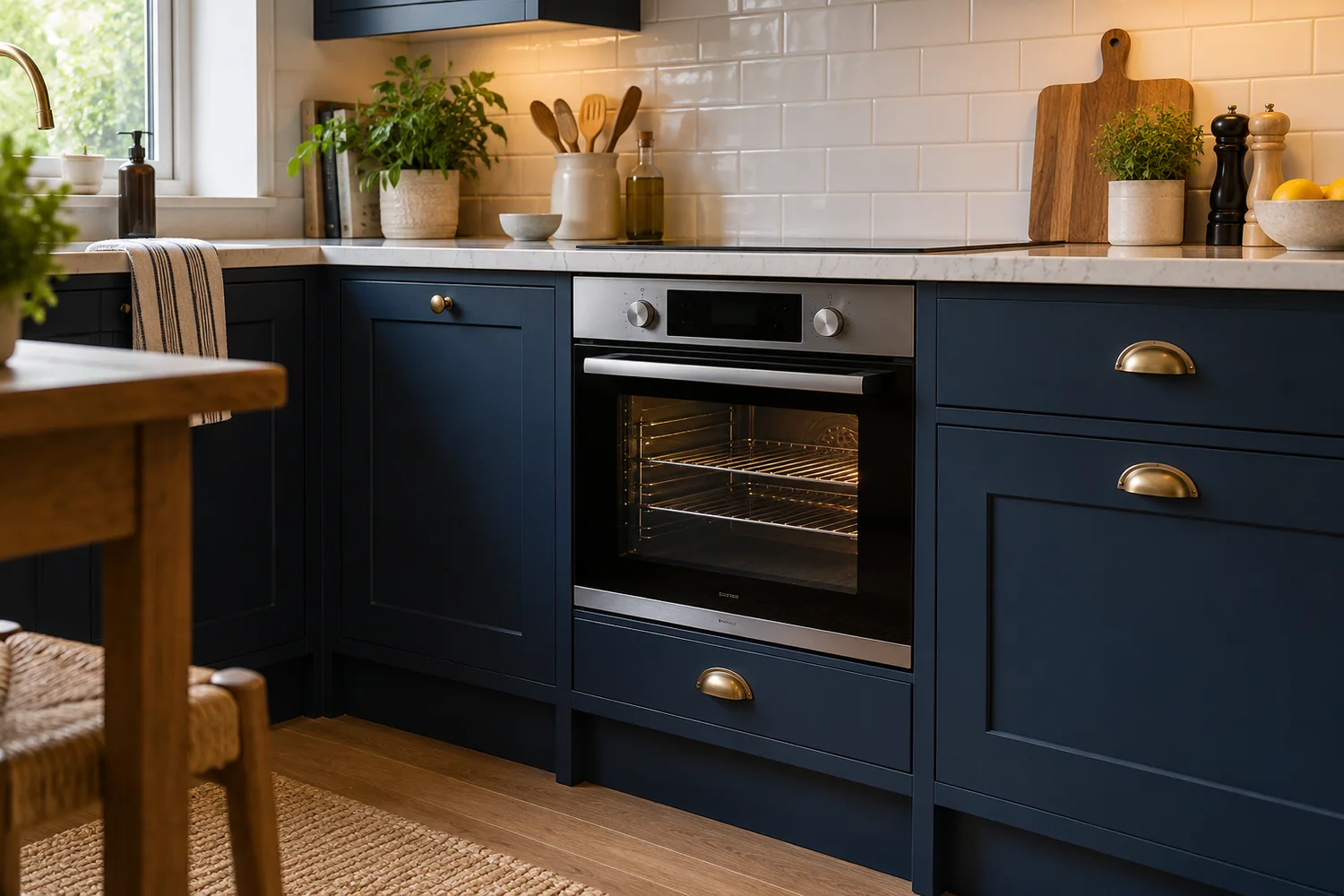
Protected clear worktop beside an open domestic oven
Before the visit
A little preparation makes room for a thorough clean.
| Before the visit | Useful action | Avoid |
|---|---|---|
| Condition record | Photograph existing marks | Trying to scrape them away first |
| Accessories | Identify each material and count | Treating every tray as bare metal |
| Kitchen space | Clear nearby loose items | Moving installed equipment |
| Parking | Agree permission for the actual location | Assuming street and private rules match |
| Handover | Review surfaces and cooking instructions | Expecting worn finishes to be renewed |
Oven cleaning prices in Chelsea
Use a material-by-material list for additional kitchen work
If you want the splashback considered too, say what it is made from and where the marks are. The separate tile and grout cleaning guidance provides a starting point for that discussion. Nearby surfaces do not become part of an oven booking merely because they are within reach. Keep each requested task visible so treatment suitability can be considered on its own terms.
For the cooker quotation, read the appliance category alongside the details you supplied. Confirm whether every cavity, pan and extra shelf appears in the agreed job. Establish the complete charge and any access-related expense before accepting. If you later decide the extractor needs attention, ask while arrangements can still be reviewed rather than assuming it can be accommodated when the cleaner is already working.
| Appliance | Price |
|---|---|
| Single oven | £75 |
| Double oven | £93 |
| Range cooker | £123+ |
| AGA cleaning | £103+ |
Confirm the appliance, included parts and full cost before booking.

After the clean
Pass the surface-care advice to everyone who cooks
A useful handover includes more than a look at the clean oven. Ask which remaining marks are wear, what to do before the first meal and which routine methods suit the materials. Share that advice with other people using the kitchen. Otherwise, one person can unknowingly reach for an abrasive tool on a surface that another has just been told to treat carefully.
Watch where new residue appears during normal use. If roasting juices frequently reach a corner, consider the cooking dish and its position rather than waiting for the same heavy patch to return. Clean recent splashes only once it is safe and cool, following the manual. Do not experiment with foil over the base or ventilation paths. Arrange further attention when deposits become difficult to manage instead of choosing an interval solely from the age of the cooker.
The practical details
Questions before you book.
Can a dark mark be permanent even if the oven is clean?
Removing a greasy layer can reveal a stain or worn finish underneath. Point out the patch you are concerned about so the discussion can distinguish removable deposits from damage to the material. Missing enamel and damaged coatings need a different solution from cleaning.
Should I use a scraper on the glass before the visit?
Send a photograph rather than experimenting with a blade. The wrong implement can scratch a pane, and lifting the surrounding grease later will not undo that scratch. Explain whether the mark sits on the exposed face or appears deeper inside the door.
Are all range-cooker compartments included automatically?
Describe the chambers by their function: main oven, grill, second cavity or warming space. Identify the ones you want addressed and compare that list with the proposed work. The outside dimensions cannot explain what is behind each door, and a hob needs its own request.
Can a house manager coordinate the appointment?
A manager can help when the access arrangements and requested tasks have been passed on clearly. Share the appliance photographs and the final booking details. Decide how they will contact you about a newly discovered accessory or another question, and who receives the advice when work is finished.
Does the oven price cover my tiled splashback?
A splashback is a different surface with grout and tile finishes to consider. Ask about it as an additional task, giving its size and condition, rather than adding it to the oven description by proximity. Only the work actually accepted in the booking should be expected.
What if the door handle is already loose?
Tell us before the appointment and leave its fixings undisturbed. The door may need a different handling decision when a component is insecure. Arrange suitable appliance attention for the fitting itself; removal of cooking residue does not tighten or replace a faulty handle.
Let’s talk about your oven
A clearer plan. A cleaner cooking space.
Tell us your oven type, postcode and the parts that need attention. We’ll discuss the work and quote before you book.