
Oven Cleaning Advice
Steam-Clean Oven Settings: What They Can and Cannot Remove
Steam-assisted cleaning can loosen fresh, light deposits, but it is not designed to erase every baked-on stain. Learn how to use the setting within your oven’s instructions and judge the result.
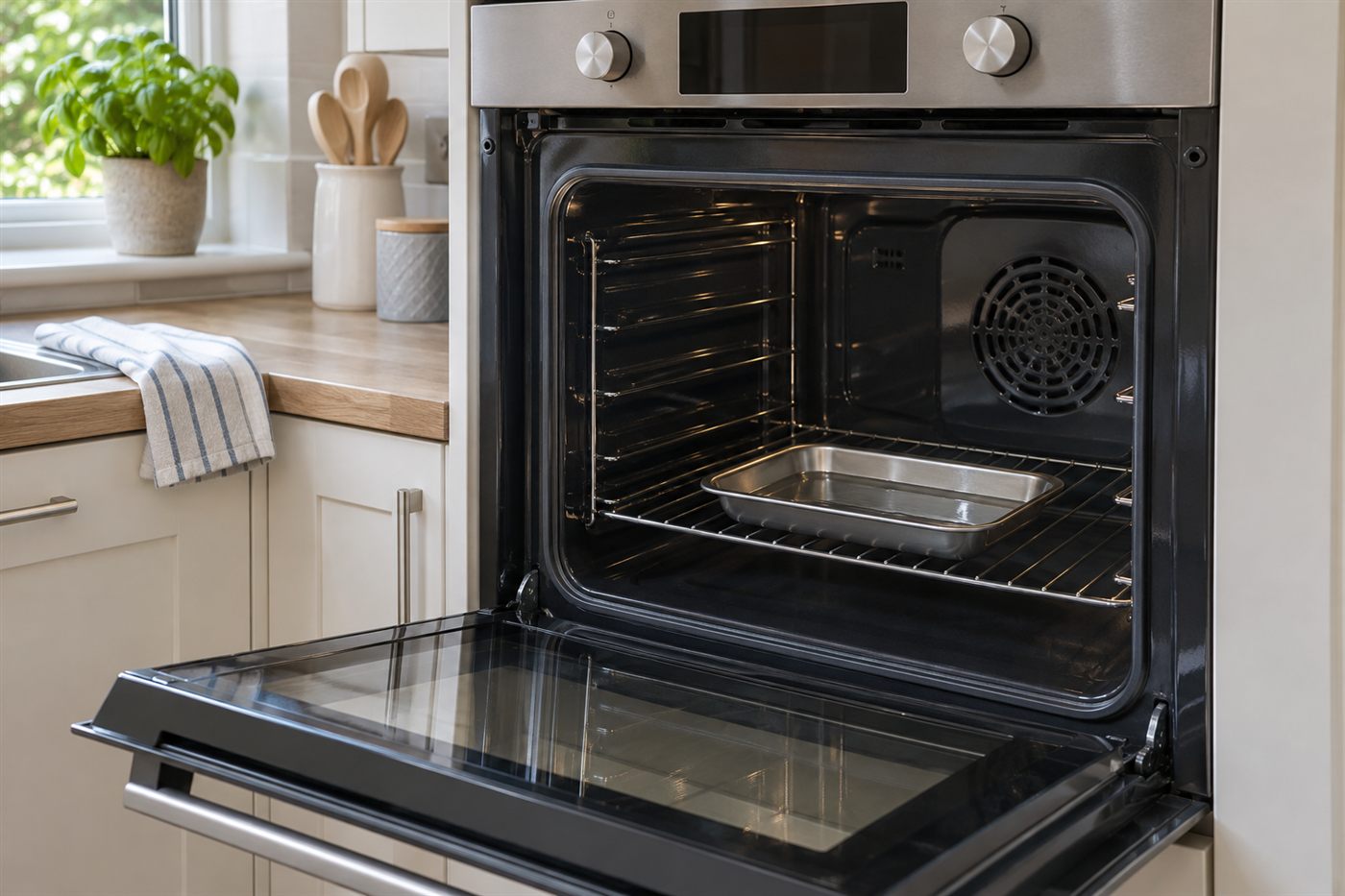
Steam-assisted oven cleaning is often advertised as a convenient way to make wiping easier. That description is useful when the oven has light, recent residue and the programme is used as its manufacturer intends. It becomes misleading when a thick layer of baked-on grease is expected to disappear without further work. Water vapour can soften some deposits, but the appliance still needs a final wipe and the result depends on the surface, the food spill and how long it has been heated.
There is no single steam-clean routine for every oven. One model may have a dedicated programme and a water recess; another may specify a particular tray and quantity of water. Some ovens have a separate steam-cooking function that is not meant to be used as a cleaning cycle. Before adding water, identify the exact model and read its care instructions. That prevents a small maintenance task from becoming a wet electrical problem.
What the setting is designed to do
A steam-clean or hydrolytic programme uses heat and water to create moisture inside the cavity. The aim is to loosen light soil so it can be wiped from compatible surfaces after the oven has cooled enough to handle safely. It is generally a lower-temperature, shorter process than pyrolytic cleaning. That difference matters: steam does not burn deposits into ash, and it will not repair a scratched surface or remove staining that has penetrated a finish.
The setting is most helpful soon after cooking, when a splash has not been repeatedly baked on. A light film on smooth enamel may respond well. A carbonised crust at the back of the cavity, grease inside a door assembly or a stained rack may need a different approach. Think of the programme as assistance with an ordinary wipe, not a replacement for every form of oven care.
Check the appliance before starting
Make sure the oven operates normally and is cool enough for the preparation described by the manual. If the door seal is torn, a panel is loose or the oven shows a fault, deal with that issue first. A cleaning programme is not a way to test whether a faulty appliance is safe. Remove loose food and any accessories the manufacturer says should come out. Some trays or rails may stay; others should be washed separately. Do not assume that a photograph of a similar oven gives the correct removal list for yours.
Use only the water quantity, position and vessel specified for the model. Pouring extra water onto the cavity floor can put liquid where it does not belong. Do not add washing-up liquid, vinegar, fragrance or oven cleaner unless the manual explicitly permits it. A household product may foam, leave a residue or affect a specialised coating. Also check whether the programme needs the door closed throughout and how long the appliance must cool before wiping.
Prepare the kitchen as well as the oven
Clear the area in front of the oven so you can open the door and wipe the cavity comfortably afterwards. Put a clean, soft cloth and a suitable container for used water nearby. Keep children and pets away while the appliance is running and cooling. The setting may be gentler than pyrolysis, but the door, steam and water can still be hot. If the manual advises ventilation, arrange it before starting rather than reaching across a heated door to open a window later.
Plan to finish the job. If you start the programme just before leaving home or preparing another meal, softened residue may be left in place until it dries again. Read the expected run and cool-down time, then allow a short period for wiping and drying. A small, completed clean is more useful than running repeated cycles without removing what they have loosened.
Run the cycle by the manual, not by guesswork
Select the dedicated cleaning function if your oven has one. Use the specified amount of plain water in the specified place. Do not turn up the temperature or extend the programme because the first attempt did not remove a dark patch. The oven may use a controlled sequence that works differently from ordinary baking. If the instructions call for a particular container, a substitute may tip, obstruct airflow or fail to distribute moisture as intended.
Let the programme finish and follow any display prompts. Do not open the door into your face while steam is present. If the setting stops unexpectedly or shows a fault code, consult the manufacturer’s troubleshooting advice. A repeat cycle is not the right response to every error. Keep electrical openings and controls dry during any later wiping.
Wipe and dry the surfaces it has loosened
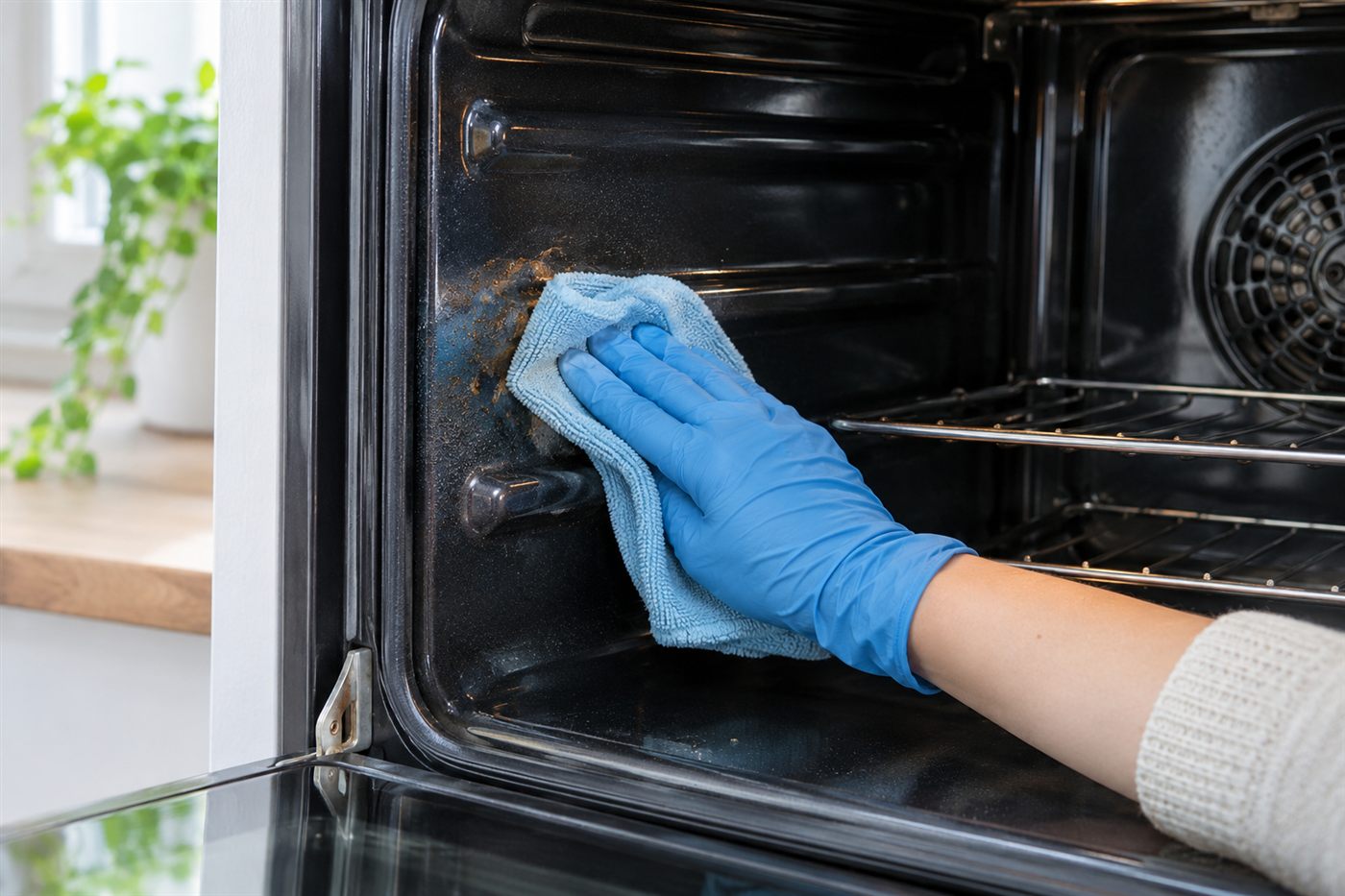
Wait until the oven is safe to open and touch, as directed. Use a soft cloth on the smooth surfaces that the manual identifies. You may find a damp film and softened food residue. Lift this away rather than pushing it into a fan opening, vent or light fitting. Rinse or change the cloth when it becomes greasy; otherwise you may spread a thin film back across the enamel. Remove remaining water from the approved recess or tray and dry the area in the way the manual describes.
Inspect the result in good light. A patch may be a removable deposit, but it could also be heat discolouration, a scratched coating or a stain that the steam cycle cannot reach. Avoid treating every remaining mark as evidence that the programme failed. If the manufacturer permits another gentle method on that exact surface, follow it. If the mark is on a catalytic liner, door seal or specialist coating, check that component’s separate care instructions first.
Why the door, racks and trays may still look dirty
The steam circulates within the cavity, but it does not necessarily clean the glass, hinges, rack supports or accessories to the same standard as the smooth walls. A tray may have baked-on fat that needs a material-specific wash. A rack may be chrome plated, enamelled or fitted with telescopic runners that should not be soaked. Marks between door-glass panes will not be reached by a steam programme. Do not prise apart the door unless your model’s instructions clearly support it and you can follow them safely.
If several surfaces need sustained attention, an oven cleaning appointment may be more useful than repeated steam cycles. Describe the model, the cleaning setting and the parts that remain dirty when asking for a quote. The scope should cover the accessible cavity, glass and suitable removable parts as agreed. A cleaner can tackle deposits; a faulty hinge, seal or control still needs the appropriate repair route.
Avoid the shortcuts that create new problems
More water is not automatically better. It can overflow a designed recess and reach areas that were never intended to be wet. Strong chemicals mixed with water may leave fumes or residue when heated. A metal scourer can permanently mark enamel or glass while removing a stain that was mainly cosmetic. Covering the oven floor with foil to catch future drips may obstruct heat flow or damage a finish if the manufacturer forbids it. Each shortcut should be checked against the manual before it becomes a habit.
It is also tempting to run the programme after every use. That may be unnecessary. The better routine is to notice what was cooked, inspect the cooled oven and deal with a small fresh spill on a compatible surface. Use the steam-clean setting at the interval and in the circumstances the manufacturer recommends. This keeps the feature useful without turning it into a response to every mark.
When to stop and seek another kind of help
Stop using the oven if you suspect an electrical fault, a damaged seal that affects operation, unusual smoke or another safety concern. A cleaning programme cannot diagnose these issues. If the cavity coating is flaking, cracked or badly damaged, ask the manufacturer or a suitable appliance specialist what can be replaced. If the oven is functioning normally but deposits remain beyond the steam setting’s reach, a professional clean can be discussed without assuming that every mark will disappear.
The most reliable measure of success is a cleanable surface treated in the way its maker intended. Steam-assisted cleaning has a clear place in ordinary upkeep: it helps loosen light residue and makes a final wipe easier. Knowing its limits saves repeated cycles, unnecessary products and avoidable damage. Keep the model instructions nearby, use the setting for the right level of soil and choose another method or service when the task genuinely calls for it.
Would you like help with the cleaning?
Tell Savvy Oven Cleaning about the appliance or surface, its condition and your postcode. You can discuss the scope and quote before booking.