
Oven Cleaning Advice
Cleaning an Oven with Catalytic Liners: A Careful Guide
Catalytic panels are designed to deal with some cooking fat, but they are only one part of an oven. Here is a careful way to identify the liners, clean the surrounding surfaces and know when to stop.
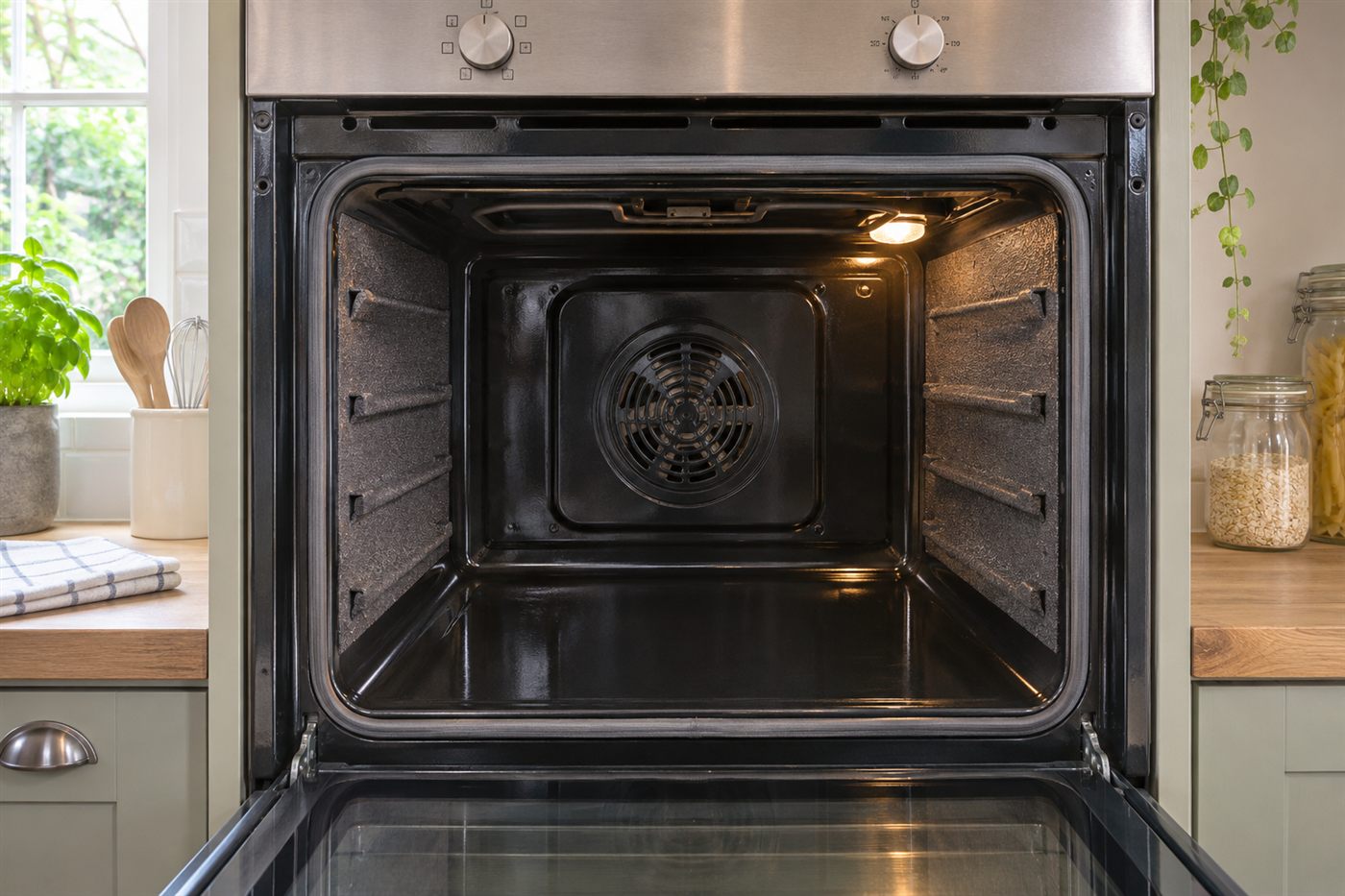
Catalytic liners can make oven care easier, but they do not turn the whole appliance into a self-cleaning box. The rough-looking panels are usually fitted to selected walls of the cavity. The floor, door, glass, racks and seals may have entirely different finishes. A method that is acceptable on smooth enamel could damage a liner, while leaving the other surfaces untouched simply allows grease to accumulate. The useful starting point is to identify each part before choosing a cleaning product or running a cleaning cycle.
What a catalytic liner actually does
A catalytic liner is a porous, treated panel intended to absorb and break down some cooking fat when the oven reaches the conditions specified by its manufacturer. It is generally fitted to side walls, the back wall or the roof, depending on the model. It does not necessarily deal with sugary spills, heavy food deposits or every mark left by roasting. The oven still needs ordinary care around the panels.
The exact operating temperature and duration vary. Some manuals ask for an empty heating period after cooking, while others describe a particular setting. Do not borrow a temperature from another brand’s instructions. Find the model number, read the care section and follow the method for that appliance. If the manual says the liners must stay dry or must not be treated with a chemical cleaner, that instruction takes precedence over a general internet tip.
Identify the liners before you touch them
A catalytic panel often has a matt, slightly rough surface rather than the glossy finish of standard enamel. Appearance alone is not proof: some modern coatings also look unusual. Check the appliance manual, parts diagram or the manufacturer’s product description. Note exactly where the panels start and stop. A back panel may sit behind the fan cover, and a side panel may be partly concealed by rack supports. Those arrangements do not mean that routine household cleaning should involve removing either component.
Look for separate instructions for racks, telescopic runners, trays and the door. These components are often removable, but their coatings and bearings can set limits on soaking or cleaning chemicals. Photograph the cavity before dismantling anything the manufacturer permits you to remove. That simple reference helps you put supports and shelves back in their correct positions.
Start with a cool and safe appliance
Wait until the oven is fully cool before wiping accessible surfaces. Hot enamel, glass and metal can cause burns, and adding liquid to a hot surface can make an avoidable mess. Remove food and loose crumbs carefully. Use a soft cloth or brush only where the manual permits it. Do not spray cleaner into the fan, vents, light fitting, heating elements or controls. If a spill has reached a part you cannot access safely, do not improvise a dismantling method.
Good light matters. A torch can reveal whether the apparent stain is on the removable oven floor, the door edge or the liner itself. Put a protective cloth on the worktop if you are taking out a permitted tray or rack. Keep dirty components away from food preparation areas and wash your hands after handling them. These are modest steps, but they prevent the clean from spreading grease around the kitchen.
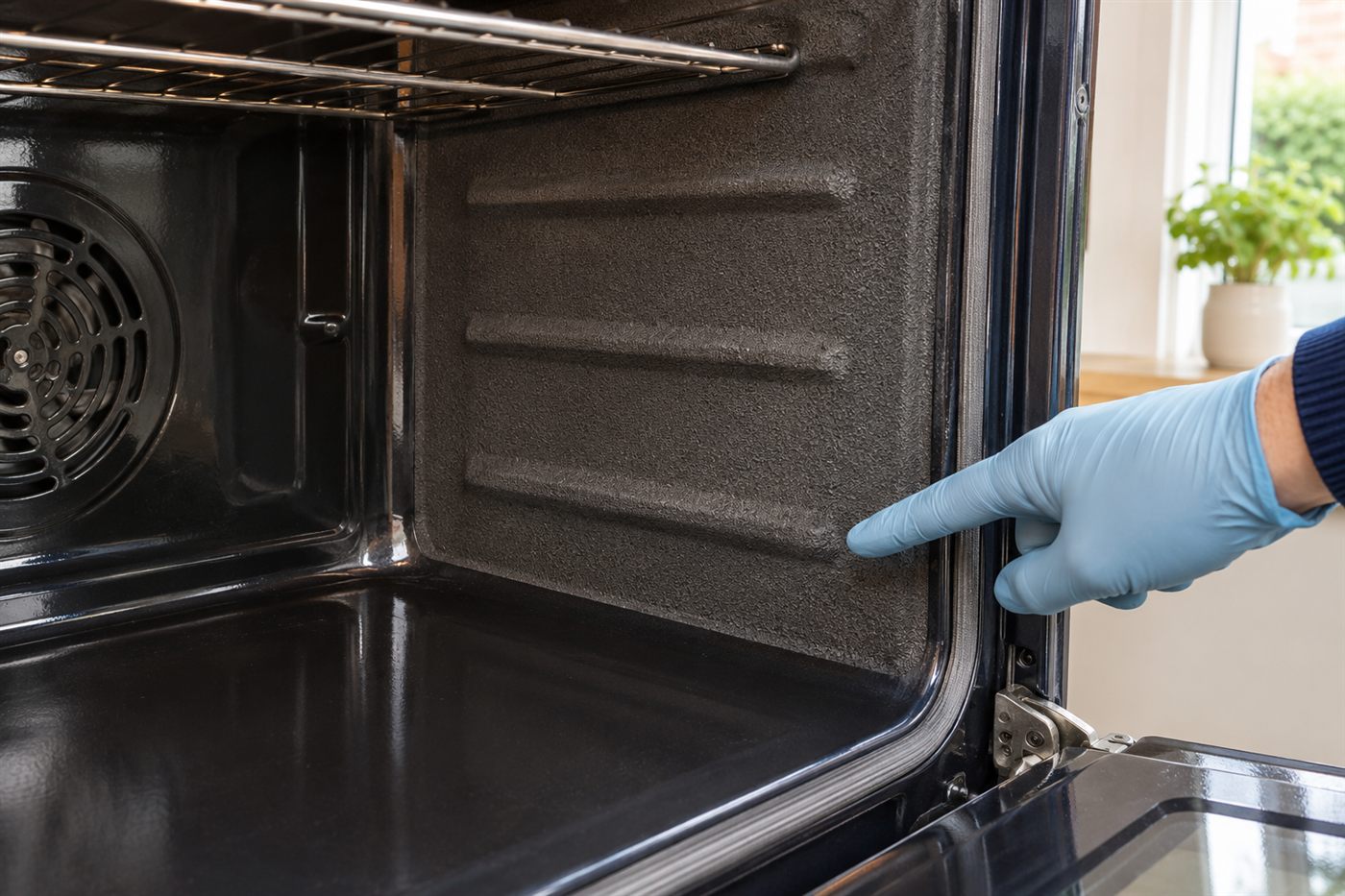
Care for the catalytic panels as the manual directs
Many catalytic liners are intended to do their work through an approved heating cycle rather than direct scrubbing. A rough sponge, metal scourer, oven scraper or heavy application of caustic cleaner may damage the surface that makes the panel useful. Even a product sold as an oven cleaner is not automatically suitable. Read both the product label and the manual; if either excludes catalytic surfaces, keep that product off the liner.
If the manual permits gentle wiping, do only what it describes. Avoid saturating the panel and do not assume that a persistent dark patch needs more force. A liner can retain discolouration after grease has been treated. Cosmetic uniformity is a poor measure of whether a catalytic surface is functioning. Where the manufacturer calls for a heat cycle, remove any parts it specifies, ventilate the kitchen as directed and allow the oven to cool completely afterwards.
Clean the other surfaces separately
The door glass, smooth enamel floor and removable shelves often need the ordinary cleaning attention that catalytic panels cannot provide. Work by material. A fresh food spill on smooth enamel may be easier to wipe after cooling than the same deposit left for several cooking sessions. A glass door may have surface grease on its accessible face or a mark between panes. The latter needs a model-specific assessment; do not prise the door apart because a video makes it look simple.
Oven racks should be treated according to their finish. Telescopic runners may have moving parts and lubrication that a long soak could affect. The door seal needs a gentle approach and should not be pulled from its channel simply to clean behind it. If you are unsure which fittings are suitable for removal, leave them in place and ask for advice. Our oven cleaning service in London can be discussed with the appliance model and its particular fittings in mind.
What to do with a heavy spill
First establish whether the spill sits on a catalytic panel or on another surface. Do not run an automatic cleaning cycle over a thick pool of food or grease without checking the manual. Some residues can smoke or leave a smell when heated. Remove loose material from permitted surfaces after cooling, following the appliance instructions. Avoid pushing debris into openings or under the liner edge.
A sugary spill is especially worth identifying because it behaves differently from cooking fat. If it has hardened on smooth enamel, an approved method may allow staged softening and removal. On a catalytic panel, the manufacturer may give different advice or recommend replacement if the coating has been compromised. Resist the temptation to solve every stubborn patch with a blade. Scratches and chipped coatings are harder to deal with than a mark that remains visible.
Know when the liner is worn or damaged
Discolouration alone does not establish failure. More concerning signs include a panel that is flaking, loose, cracked or visibly missing part of its coating. Do not keep heating an oven with a loose component without checking the manufacturer’s advice. Record the model number and a clear photograph, then contact the manufacturer or a suitable appliance specialist about replacement parts and safe use. Cleaning cannot repair a broken panel.
Persistent smoke, an unusual electrical smell or an operating error is not simply a cleaning problem either. Stop using the appliance if you suspect a fault and obtain the appropriate technical help. A professional cleaner can assess accessible deposits and agree a cleaning scope, but should not be expected to certify the oven or repair its controls. Keeping those roles separate protects both the appliance and the person using it.
A practical routine after cooking
Once the oven is cool, check for spills on the non-catalytic floor, door and tray. Deal with accessible fresh residue using the method allowed for those surfaces. Note any liner care cycle in the manual and use it when needed rather than automatically after every meal. Keeping a tray beneath food that may drip can help, provided it does not obstruct airflow or conflict with the oven instructions. Do not line the cavity floor with foil unless the manufacturer expressly permits it.
When a wider clean is due, make a small inventory: liner locations, rack type, door construction and any visible damage. This information makes a service enquiry more useful than saying only that the oven is dirty. Ask what is included and whether unusual parts or heavy deposits affect the quote. The aim is an appliance that is clean where cleaning is appropriate, with its specialist surfaces treated according to their design.
Would you like help with the cleaning?
Tell Savvy Oven Cleaning about the appliance or surface, its condition and your postcode. You can discuss the scope and quote before booking.