
Care behind the clean
About Savvy Oven Cleaning
A cleaner oven starts with understanding what you cook with. We help London households arrange oven and appliance cleaning around the equipment they actually own, with a clear conversation about the work before a visit.
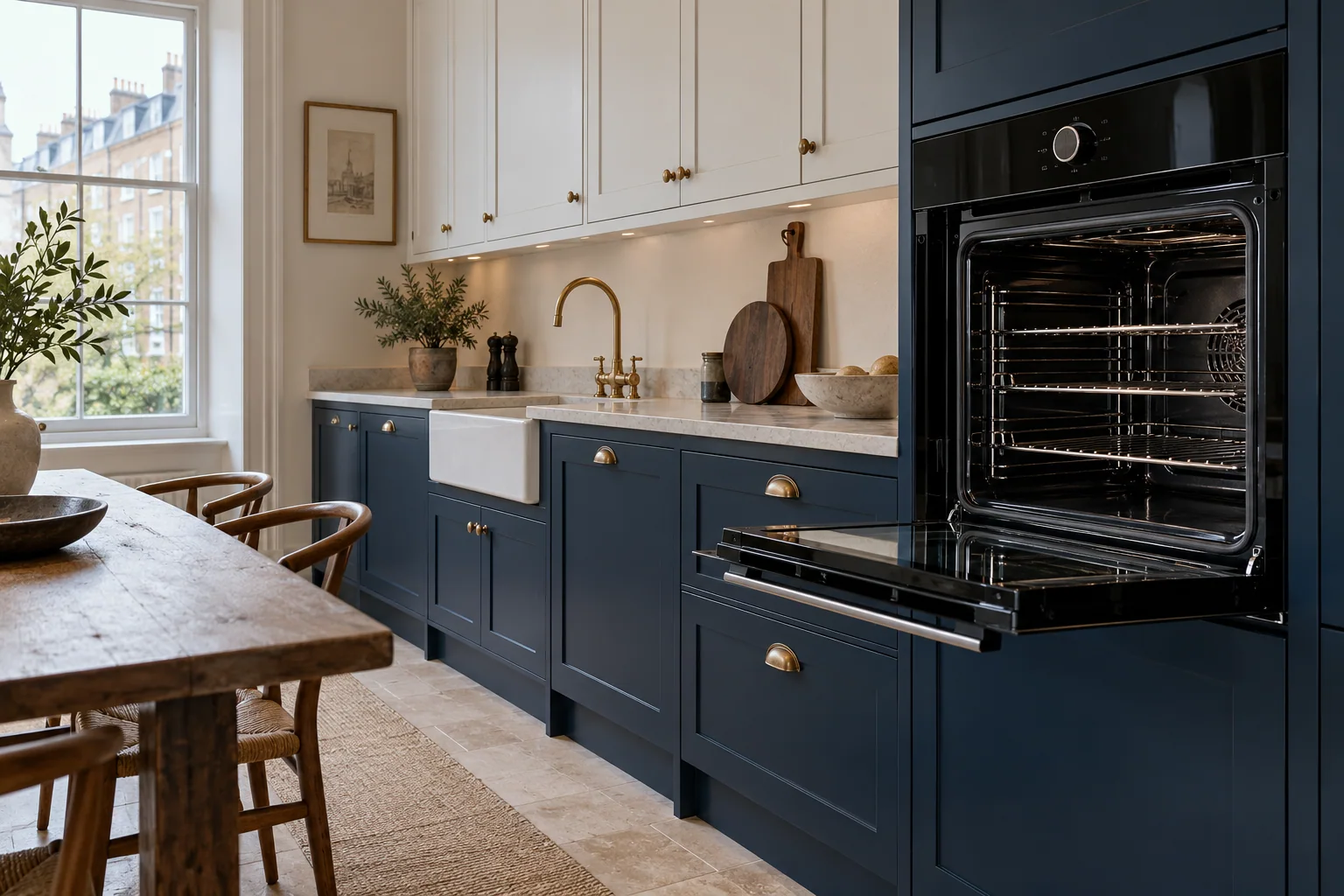
An oven is more than the door you can see
The glass might be the first thing you notice, but cooking leaves its mark throughout an oven. Fat collects on racks, spills harden on the floor and residue gathers around trays and side supports. Our approach looks at the appliance as a whole rather than treating a shiny front as the finish line. That means discussing both the visible surfaces and the parts hidden behind a rack or tray. The work that makes sense for one oven may not suit another, even when the doors look similar.
We want you to understand the scope before booking. A single cavity, a double oven, a range cooker and an AGA are different jobs. The number of compartments, the material of the liners and the way the glass is fitted all matter. Tell us what you have, what concerns you and whether anything is damaged. A useful conversation about those details is a better starting point than a promise that every appliance will be treated in exactly the same way.
What we mean by a careful clean
Care begins with knowing when a component can be removed safely and when it should stay in place. Door construction, fan covers, self-cleaning liners and seals vary between manufacturers. We do not assume that a part should come off simply because it appears removable. The appliance instructions and its condition should guide the approach. Mention stiff hinges, loose glass, damaged enamel or a seal that is already coming away so those issues can be considered before cleaning starts.
Cleaning also has limits. Removing cooking residue cannot repair a failing thermostat, restore damaged enamel or replace scratched glass. An existing mark may become easier to see once grease has been lifted. If you are unsure whether a problem is dirt or damage, describe it when you enquire. We would rather help you ask the right question than let you expect a repair from a cleaning appointment. Electrical faults, gas concerns and persistent operating problems need the appropriate qualified repair specialist.
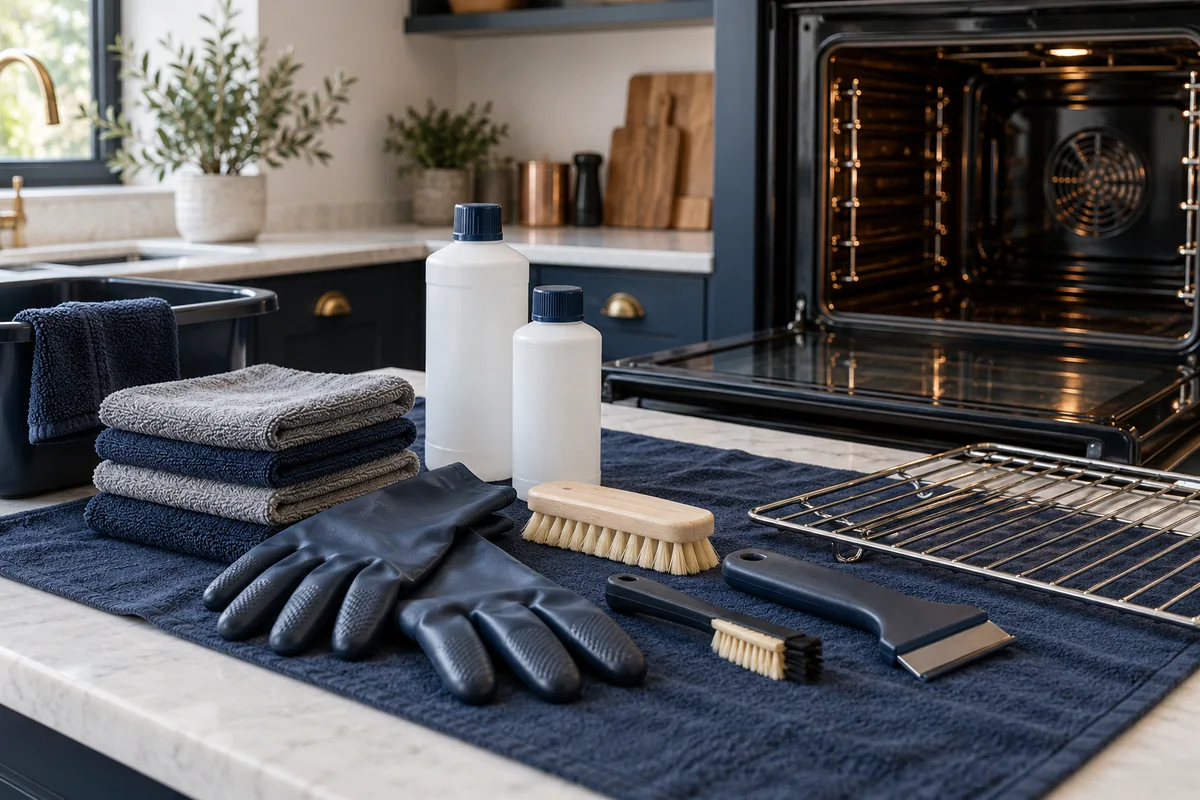
Clear conversations, practical appointments
You should know what is included in the proposed work, which extras have been discussed and what the total relates to. Racks and trays are easy to overlook when comparing quotes, as are a separate hob, an extractor or a second cavity. Explain which appliances need attention and how many removable pieces you want cleaned. Ask about access, parking and any arrangements that may affect the visit. Keep the booking confirmation so everyone has the same record of the agreed appointment.
We also want practical details to be straightforward. A narrow hallway, stairs, a difficult parking arrangement or a kitchen shared with other occupants can change how a visit is organised. These are useful things to mention, rather than problems to discover at the door. If a landlord, letting agent or family member is arranging access, agree who can answer questions about the appliance and approve any change to the scope. Clear instructions help keep the visit focused on the cleaning.
Services that fit different kitchens
Our oven work sits alongside AGA cleaning, BBQ cleaning, fridge cleaning, commercial kitchen cleaning and tile and grout cleaning. Each requires its own conversation. A fridge appointment involves empty shelves and safe food storage; a BBQ needs information about its fuel type and grill construction. Commercial premises need a discussion about operating hours and the exact equipment involved. Choosing the relevant service helps you describe the job accurately and gives you a more useful starting point for a quote.
Some requests are time-sensitive. If you need an oven cleaned before guests arrive, before a tenancy handover or around a kitchen project, say so at the outset. Same-day service depends on actual availability and the work required; a requested time is not a confirmed appointment. A little flexibility can make it easier to find a suitable visit, but keep the oven available and allow for any preparation discussed when booking. Never arrange cooking around an assumed arrival time.
Care advice between appointments
We prefer to explain what a clean involves: the surfaces, the removable pieces and the questions worth asking. Our guides cover everyday oven care, kitchen cleaning and BBQ preparation so that you can look after your equipment between visits. The advice is intended to help with ordinary maintenance. Your manufacturer’s instructions remain important, particularly for catalytic liners, pyrolytic functions, specialist finishes and unusual accessories. There is no single household cleaning recipe that is suitable for every oven.
The same principle applies to results. A heavily used cooker with worn liners has a different starting point from a newer appliance with light deposits. Photographs can help explain what needs attention, but a picture alone may not reveal the construction or condition of a component. We aim for useful, specific expectations about the appliance in front of us. If a particular area matters most to you, such as the view through the glass or baked-on tray deposits, mention it before the visit.
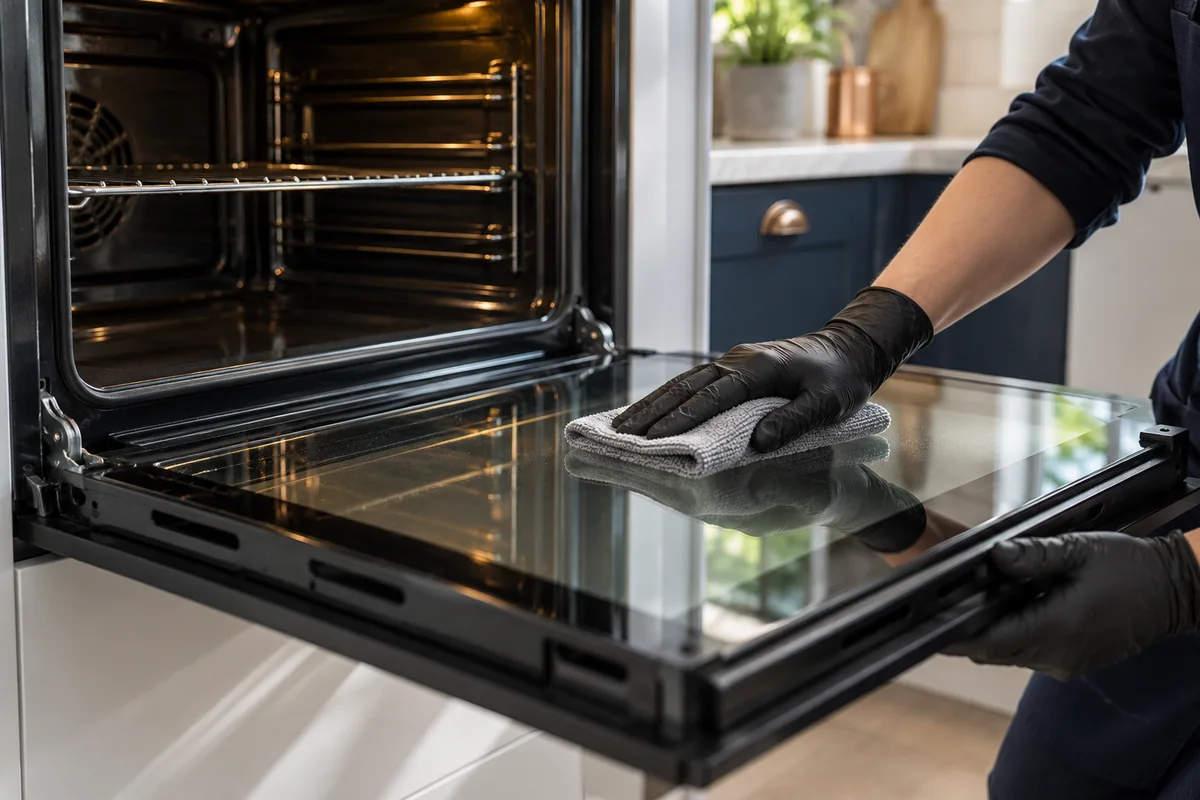
Keeping the kitchen manageable afterwards
An occasional thorough clean works best alongside small habits that fit normal cooking. Once the oven has cooled and the instructions allow it, deal with accessible splashes before repeated heating makes them harder to remove. Use a suitable roasting dish to catch drips, avoid covering vents and keep the door seal free from loose crumbs. Check the manual before using any cleaning product, scraper or abrasive pad. A gentle method that suits the surface is more valuable than the strongest product on the shelf.
There is no universal calendar for professional cleaning. Think about how often the oven is used, the food you cook and whether residue is beginning to affect visibility or create unpleasant cooking smells. A household roasting several times a week may need attention sooner than someone who uses the oven occasionally. If you notice smoke, an unusual smell or a fault, stop and assess the cause rather than assuming cleaning alone will solve it. Safety and proper appliance operation come first.
Talk to us about your oven
Call 020 3404 2255 with your postcode, appliance type and preferred appointment options. A make and model, approximate width and a description of the condition are helpful if you have them. You do not need technical vocabulary: telling us that there are two separate doors, three racks and a tray with heavy deposits is useful information. We can then discuss the relevant service, the likely scope and the details that need confirmation before you book.
If you are comparing options, use the table below as a checklist for the conversation. A clear answer about inclusion is worth more than a vague promise of a complete transformation. Ask what happens if a component cannot be removed, whether an extra appliance is priced separately and what preparation is needed. Our aim is a booking you understand and a cleaning visit organised around your kitchen, with enough information for you to make a comfortable decision.
What to discuss before choosing a cleaning visit
| Your situation | Useful detail | Question to ask |
|---|---|---|
| Single or double oven | Cavities, width, racks and trays | What is included in this appliance quote? |
| Specialist cooker | Make, model, liner and heat type | Which parts can be cleaned safely? |
| Multiple appliances | Hob, extractor, fridge or BBQ | Are these separate items in the quote? |
| Shared access | Who will be present and who can approve changes | How will the visit be coordinated? |
Your questions, answered
Do I need to know my oven model?
It helps, but you can start with a description of the appliance and its compartments. If possible, find the model label without moving a heavy cooker or removing fitted panels. The manual or purchase record may also contain it.
Can I combine oven cleaning with another service?
Tell us about the other appliances or surfaces when you enquire. The scope, timing and price need to reflect each item. Do not assume that a hob, extractor, fridge or BBQ is included in an oven appointment.
Will cleaning fix an oven that heats unevenly?
Cleaning removes residue; it is not a repair service. Uneven heating can have several causes. If the appliance is behaving unusually, consult its instructions and an appropriate repair specialist rather than expecting cleaning to correct an operating fault.
What should I mention about existing damage?
Tell us about loose fittings, chipped enamel, cracked glass, damaged seals and any part that does not work normally. These details help the condition and cleaning approach to be considered before work begins.
How can I make an enquiry more useful?
Have your postcode, appliance type, preferred timing and list of extras ready. Explain your main concern and any access restrictions. Ask for the agreed scope and full booking details to be clear before confirming the visit.
Talk it through with Savvy
Tell us what needs attention.
Have your postcode, appliance or surface details and preferred day ready. We can discuss the work and quote before you book.