
Oven Cleaning Advice
Pyrolytic Oven Cleaning: What to Check Before Running the Cycle
A pyrolytic cycle can reduce some oven residue at very high heat, but safe preparation is model specific. Use this checklist to inspect the appliance and its surroundings first.
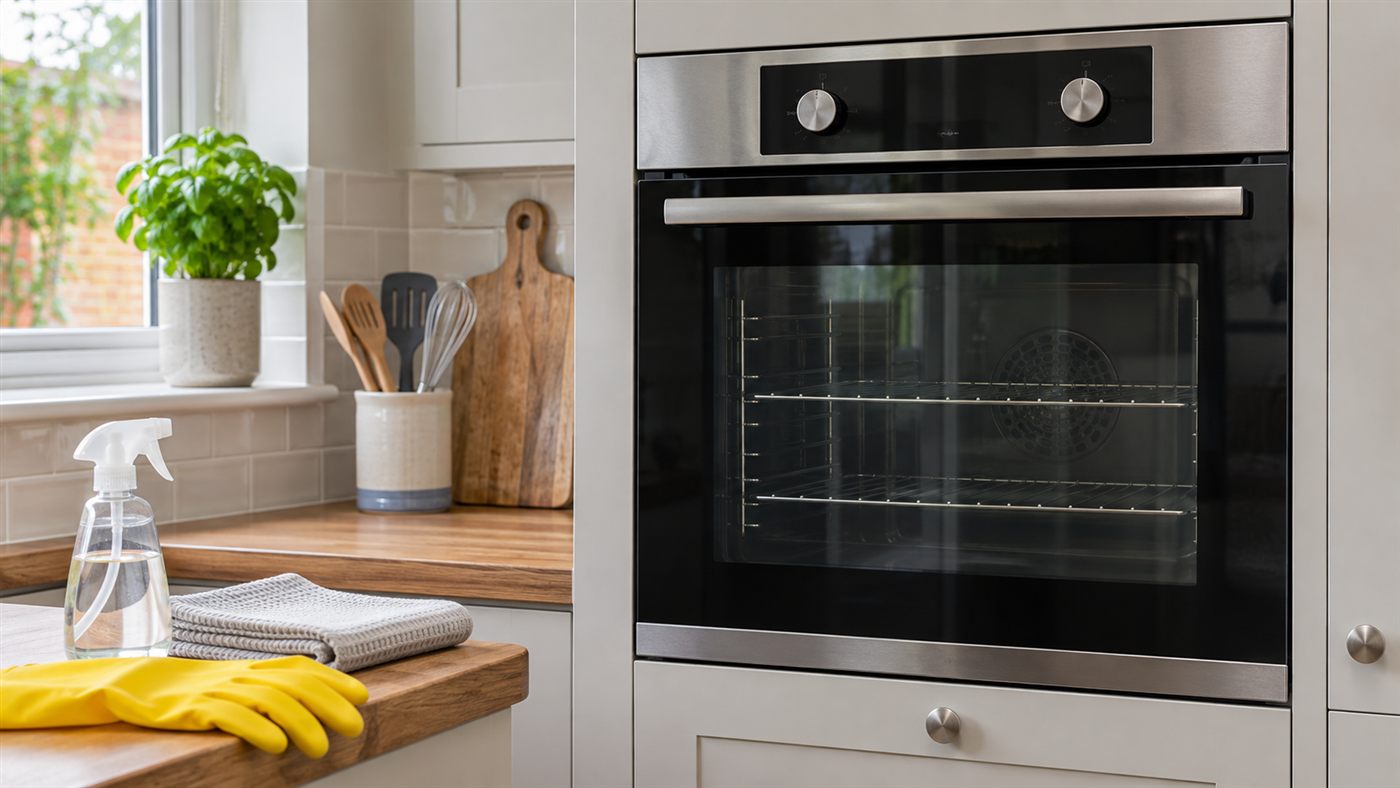
A pyrolytic oven cleans its cavity by reaching a much higher temperature than normal cooking. Residue is reduced to material that can be wiped away after the appliance has cooled. That sounds like a simple button press, yet the preparation matters. The cycle locks the door, heats surrounding surfaces and may produce smells as deposits break down. Different models also have different rules about racks, runners and trays. The sensible approach is to check the manual and the condition of the oven before you select a programme.
Confirm that your oven has a pyrolytic programme
Do not identify a cleaning system by the word “self-cleaning” alone. Catalytic liners, steam-assisted cleaning and pyrolysis work in different ways. Find the model number and the manufacturer’s user manual. Look for a named pyrolytic programme and its instructions. If a display offers several cleaning levels, the manual should explain which one suits light or heavy residue and whether the appliance needs any particular preparation.
Check that the oven operates normally. A damaged door seal, cracked glass, loose panel, fault code or unusual smell while cooking deserves attention before a high-temperature cycle. Do not use pyrolysis as a test of a faulty appliance. If the manual says a component must be replaced or a fault assessed first, follow that direction. Cleaning is not a substitute for repair.
Read the removal list for your exact model
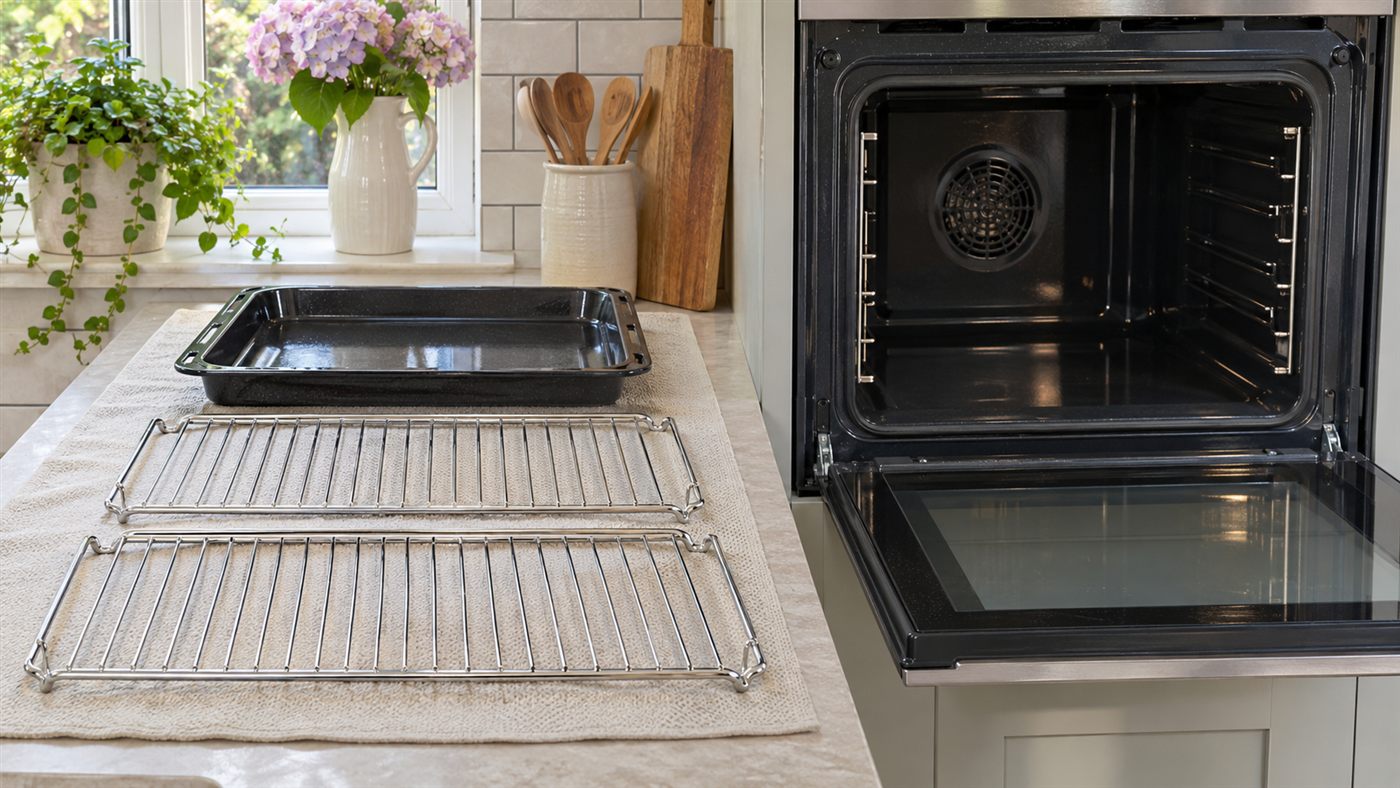
Many manufacturers require racks, trays and shelf supports to be removed before pyrolysis. Some supply accessories designed to remain in place. The difference is not visible from a photograph. Metal can discolour, coatings can suffer and telescopic runners can be particularly sensitive to intense heat. Follow the list in your own manual, including any exceptions for a dedicated pyrolytic accessory.
Put removed parts on a protected surface and keep their order clear. A quick photograph of the rack positions helps with refitting. Do not leave oven gloves, foil, baking paper, food, loose utensils or a roasting dish inside. If the manual calls for removing a side rail or filter, use only the documented method. Never force a stubborn fitting merely to get the cycle started.
Remove loose debris before heating
Allow the oven to cool, then take out accessible crumbs and loose pieces of food as the manual advises. A large pool of fat or a thick sugary spill may smoke heavily during a high-temperature cycle. Some manufacturers instruct users to wipe away heavy deposits first. The goal is not to scrub the cavity spotless before the programme, but to remove material that should not be heated in bulk. Use only a method approved for the oven’s finish.
Keep water and cleaning products out of vents, fan openings, controls and electrical fittings. Do not spray a general oven cleaner into the cavity as a “boost” for pyrolysis. Product residues can react badly to intense heat, and the manufacturer may prohibit them. If a previous cleaner was used, consult the manual for what to do before running the cycle. Guessing is particularly unhelpful where fumes and heat are involved.
Prepare the room around the oven
Ventilate the kitchen in the way the appliance instructions recommend. Open a suitable window or use the room’s ventilation if it is available and safe to do so. Keep children and pets away from the oven while the programme runs and while it cools. The door may lock automatically, but accessible outer surfaces and nearby fittings can still become hot. Avoid planning the cycle when the kitchen is busy with cooking or people moving around the appliance.
Check nearby items. Tea towels, paper, cleaning bottles and anything leaning against the oven should be moved away. In a compact kitchen, clear a route so nobody brushes against the hot appliance. If the manual specifies clearances or ventilation requirements, follow them. A built-in oven should already have been installed for its intended operation; a cleaning cycle is not the moment to discover that an air opening has been blocked by stored items.
Choose the programme and let it finish
Select the programme described for the amount of residue in your manual. There is no benefit in assuming that the longest cycle is always best. Start it only when you can leave the oven undisturbed for the full run and cool-down period. Do not try to open the door while it is locked. The lock is a safety feature, not a fault to work around. If the appliance stops and shows an error, use the troubleshooting guidance for that model rather than repeatedly restarting it.
Some smell or a little haze can occur as deposits are treated, but significant smoke or an unusual electrical smell calls for a cautious response. Follow the manufacturer’s emergency or stop instructions and keep people away. If you suspect an appliance fault or fire, seek the appropriate help. Do not assume that every alarming sign is simply evidence that the cleaning cycle is working.
Wait for complete cooling before wiping
The door may remain locked after the heating phase until the oven is safe enough to open. Wait for the programme to finish and the appliance to cool as directed. Once it is cool, the manual may advise wiping the remaining ash with a soft damp cloth. Keep the cloth only lightly damp and avoid pushing residue into vents or fittings. If a patch remains, check whether it is removable residue, permanent staining or a surface that needs a different approved method.
Wash and dry any removed accessories by their own care instructions before refitting them. Check that racks and supports sit correctly. A moving runner should not be forced if it no longer travels normally. If the oven remains locked, displays an error or behaves differently when returned to ordinary use, consult the manufacturer or a qualified appliance technician. A cleaner cannot resolve a control or locking fault through further scrubbing.
Understand what pyrolysis does not clean
The programme mainly addresses residue inside the cavity. It does not wash a removed tray, polish the exterior control panel or necessarily clear deposits between door-glass panes. It cannot reverse scratches, chipped enamel or heat-related wear. Racks and runners often need separate attention, and their allowed method may be gentler than the cavity treatment. Set a realistic expectation: a self-cleaning function reduces particular deposits, but it does not maintain every part of the appliance.
If the accessories, accessible glass and other surfaces still need a thorough clean, consider an oven cleaning service and describe the pyrolytic model before booking. The agreed scope should distinguish ordinary cleaning from repair, and the technician should know which components the manufacturer permits to be handled. Heavy build-up or damaged parts should be mentioned during the enquiry rather than discovered halfway through the appointment.
Make the next cycle easier
After cooking, allow the oven to cool and remove accessible fresh spills from surfaces the manual permits you to wipe. Use a suitable roasting dish to contain drips without blocking the oven’s airflow. Check the floor and door before residue has been heated repeatedly. This modest upkeep often means that a later cleaning programme has less work to do. It also gives you a chance to notice a damaged seal or loose fitting before running a high-temperature cycle.
Keep the manual or a digital copy available and record the model number. When you buy a replacement tray or rack, check whether it is approved to stay in during pyrolysis. If several people share the kitchen, make sure the person starting a cycle knows the removal list and the cool-down time. A safe routine depends on the actual appliance, not on a rule remembered from a different oven.
Would you like help with the cleaning?
Tell Savvy Oven Cleaning about the appliance or surface, its condition and your postcode. You can discuss the scope and quote before booking.